Doomscrolling, Netflix, Video Games and More: How the French Are Turning Away From Reading

french woman reading a book

A new French study reveals a significant decline in book reading among the French population. This once-cherished pastime seems to be losing its appeal, potentially leading to serious consequences.

Fresh data from a survey conducted by the Centre national du livre (CNL) has been released, and it paints a concerning picture: the French are increasingly abandoning reading.

The Centre national du livre (CNL), or National Book Centre in English, is a French public administrative institution (établissement public à caractère administratif) operating under the authority of the French Ministry of Culture (Ministère de la Culture). Its primary mission is to support and promote the book industry and reading in France and abroad.

Worrying Results: The French Just Don't Want to Read Anymore!

In short, the study shows that reading is declining across the board in France, with the exception of those aged 65 and over.

For keen observers, this isn't exactly breaking news.

French Reading Figures 2025

The most significant drop is observed in the 50-64 age group (-13 points, a massive shift!) and the 35-49 age group (-8 points).

Unsurprisingly, younger French people are also reading less, although manga remains popular.

French Reading Figures 2025

Another interesting statistic: 15% of French people read in digital format (either exclusively or in combination with physical books). As for audiobooks, 32% have listened to one at some point.

French Reading Figures 2025

Here's how the study was conducted:

The conclusion of this study is very pessimistic:

> In a world full of constant stimuli and in a context where all signs are alarming, only clear, determined actions can help safeguard a space favorable to the pleasure, reflection, and tranquility that books and reading fundamentally bring us.

Why Is This Happening? Doomscrolling, Netflix, YouTube, Instagram, Video Games, etc.

Di Caprio Once Upon a Time in Hollywood

If the French aren't reading, how are they entertaining themselves?

Predictably, they're spending more time in front of screens.

This explains why the 50-64 age group is reading less. Just a few years ago, people in this age bracket (born from 1975 onwards) were still holding out. It's important to remember that they didn't get mobile phones and internet access until they were 25-40 years old. So, it took time for their screen consumption habits to change, but it's now happening!

As a result, this generation now has access to services like Netflix (10 million subscribed households in France), Prime Video (9 million), and Disney Plus (5 million), to name just a few (these figures are from 2024).

When you add YouTube, which has over 40 million French users, TikTok (15 million), and Instagram (26 million), it becomes clear that screens are taking up an increasingly large part of French people's lives – source.

There are also video games, with 38.3 million French people aged 10 and over playing video games, at least occasionally, representing 70% of the population – source.

This also explains why seniors aged 65 and over are less affected: they generally consume less digital content and have more traditional entertainment habits: radio, television, and books.

Finally, the recent phenomenon of "doomscrolling" (the practice of endlessly scrolling through social media or news sites to read – often – negative news) makes it easy to understand why the French are reading less.

What Are the Consequences for the French?

kid doom scrolling on a smartphone

The consequences of declining reading are so numerous that they could fill a book!

However, I'm going to skip the economic considerations and instead talk about what it does to you if you stop reading!

No longer reading leads to significant problems for your brain:

  • Loss of cognitive abilities, particularly the ability to understand complex texts and ideas.
  • Memory atrophy.
  • Loss of critical thinking.
  • Loss of concentration and attention.
  • Lack of knowledge: reading allows us to learn things.
  • Loss of the ability to express oneself correctly.

Not reading also has consequences for your health:

  • Increased stress and anxiety.
  • Increases sleep problems.
  • Decreases your empathy.
  • You live a shorter life!

Read: all the benefits of reading.

These consequences are unfortunate, but the French are caught in a vicious cycle linked to the overconsumption of social media and alternative entertainment, almost all of which require spending long hours in front of a screen.

There seems to be no escape, and the slow decline of reading in France seems inevitable, especially with the arrival of younger generations who are all reading less than their elders.

The French can always take comfort in the fact that they are not alone in the world, but the decline is no less real!

Original French Article : https://www.liseuses.net/doomscrolling-netflix-et-autres-comment-les-francais-se-detournent-tous-de-la-lecture/

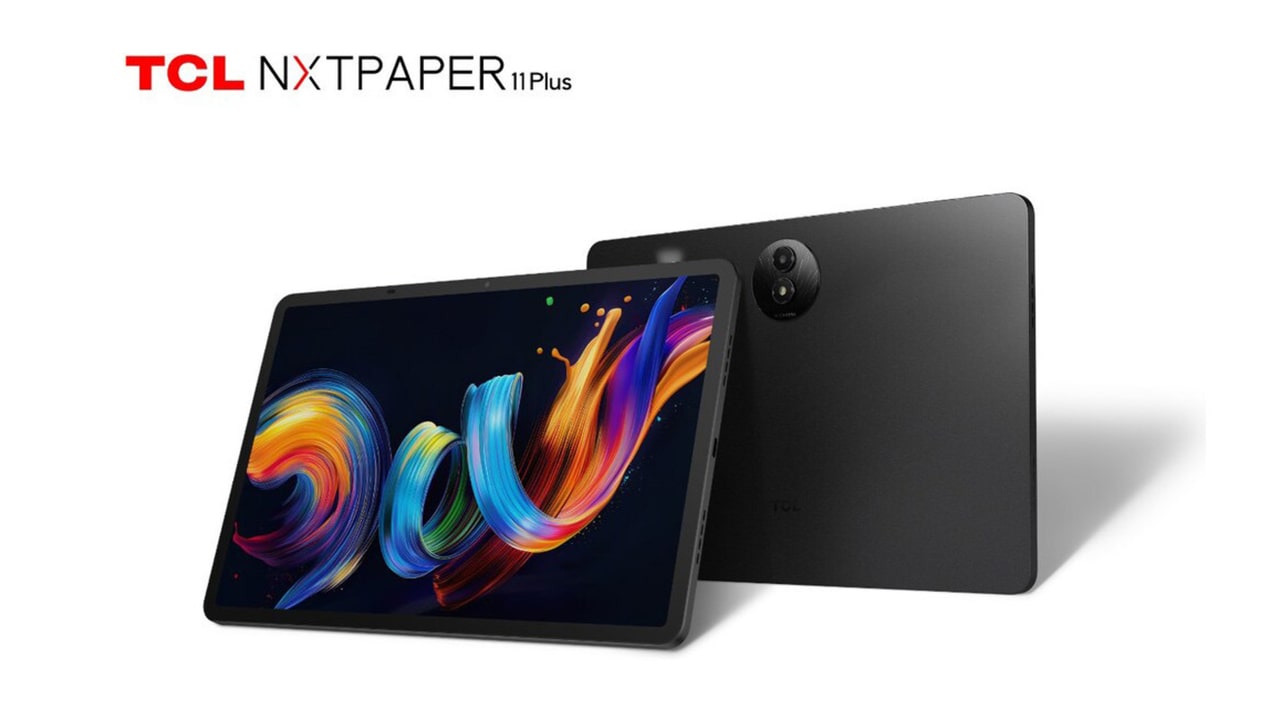
Could TCL’s new NXTPAPER screens be the big thing in 2025?

new nxtpaper 11 plus for tcl 2025

TCL has been working hard for years to bring NXTPAPER screens to its smartphones and tablets. So far, the success has been so-so. But at the Mobile World Congress 2025, TCL announced some interesting new products, like the TCL 60 smartphones and NXTPAPER 11 Plus tablets.

For four years now, this Chinese company has been offering devices with its own NXTPaper screen tech. This tech turns an LCD screen into something that looks like an e-ink screen.

When it was first shown in 2021, it wasn't that impressive.

But TCL hasn't given up! Almost every year, they've made improvements to their products. And this new 2025 line looks much more promising!

In the past, NXTPaper screens struggled with a slow "e-ink" mode. The color "smartphone" mode also wasn't as good as the screens from other brands.

TCL is still using LCD as the base tech, but the new TCL 60 smartphone range seems to have made big improvements in both of these areas.

tcl 60 series of smartphone with new 2025 nxtpaper screens

The color screen looks good (based on videos we've seen). And early reviews praise the quality of the "reflective" mode, which displays in black and white for better reading. It's supposed to be like reading on paper!

TCL's software lets the device and screen work in three different modes:

  • "Regular mode": For enjoying color and contrast like a modern smartphone screen.
  • "Color Paper mode": A middle ground, like a color E Ink screen such as Kaleido 3.
  • "Ink Paper mode": A black and white mode for reading. TCL says the experience is similar to a real e-reader.

It's important to know that TCL doesn't call it "E Ink" because it's a different technology. E Ink is what you find in e-readers like Kindle, Kobo, Pocketbook, or Boox.

The TCL range, which will include smartphones (TCL 60) and tablets (NXTPaper 11 Plus), also runs on Android.

So, you can use your favorite Android reading apps like Kobo, Kindle or Pocketbook to enjoy your ebooks and digital magazines on these TCL devices.

The big question is: Is the screen as good as it sounds?

The reviews out there are from people who cover general tech. So, we're still a bit cautious. But we think this could be a step forward.

If TCL can offer a good alternative to e-readers in a smartphone or tablet, it could create healthy competition.

Right now, major e-reader brands use e-ink screens made by E Ink, which has a monopoly due to patents. This keeps e-reader prices relatively high.

If TCL offers a good alternative, their devices could compete with e-readers. This could force e-readers to offer more features or lower their prices.

Another important point: TCL could sell these devices to people who don't already read on an electronic device. These people could discover digital reading and ebooks, which might lead them to buy a dedicated e-reader later on.

It's great news that TCL is continuing to improve its NXTPaper tech. I'm hoping to review these devices this year and share my thoughts with you!

These new devices are expected to arrive in Spring 2025, but the TCL website doesn't have them listed yet: https://www.tcl.com/

Why we can’t read full books anymore (hint: blame it on your phone!)

girl reading book

Okay, let's be real for a sec. In a world buzzing with notifications and endless entertainment, it's easy to get distracted. But have you noticed that it feels like people are reading less than ever before?

Well, it's not just a feeling. A recent study dropped a bombshell: a whopping 54% of American adults might be reading at or below a sixth-grade level.

That's definitely something to think about. This drop in reading ability seems to be connected to changes in our schools and the way technology and social media have crept into our daily lives.

(This article is inspired by this great video from Cole Hastings)

A Little History Lesson on How We Learned to Read

So, how did we even get here? Well, way back when, before the 70s, most schools taught reading using "phonics."

You know, sounding out words, matching sounds to letters – the whole shebang. It gave us a solid foundation for understanding what we were reading. But then things changed, and schools started using something called the "whole language approach".

The idea was that reading should feel natural and fun, and that we'd pick it up just by being around books. Sounds nice, right? But unfortunately, it didn't exactly pan out. Kids started struggling with reading comprehension and fluency, and reading abilities across the board started heading south.

Turns out, that old-school phonics stuff actually works! Studies have shown that teaching kids to sound out words helps them read better overall.

Mississippi even went back to phonics in 2013, and guess what? Their reading scores jumped! Go figure.

How Changes in School Policies Messed Things Up

It wasn't just teaching methods that changed things, either. Remember "No Child Left Behind"?

That law made schools test kids every year, which was supposed to make them more accountable. At first, things seemed to improve, but once "Every Student Succeeds Act" came along and eased up on the pressure, test scores kind of dipped again.

It seems like schools were so busy prepping kids for standardized tests that they forgot to make reading fun or interesting.

And that's a problem! Kids started reading shorter snippets instead of diving into whole books, which hurt their ability to think critically and made them less excited about reading anything longer than a tweet.

Check this out: back in 1984, about 35% of 13-year-olds said they read for fun. Now? It's down to just 14%! Crazy, right?

The Tech Monster in the Room

We can't talk about this without talking about our phones.

I mean, let's be honest, how many times a day do you get sucked into a TikTok vortex or scroll through Twitter (X.com now) or Youtube for way longer than you planned?

It's hard to resist! For a lot of kids, checking social media is way more appealing than cracking open a book.

Plus, all that online noise makes it harder to focus and tell what's real from what's fake.

It's like our brains are getting trained to skim headlines instead of digging into real information.

Why Low Reading Levels Are a Big Deal

Okay, so maybe people aren't reading "War and Peace" anymore. So what, right? Well, actually, low reading skills can cause some serious problems.

Studies show that people who struggle with reading are more likely to be unemployed, have health problems, and even end up in poverty.

It's a cycle that's tough to break. On the flip side, boosting reading skills could give our economy a shot in the arm and improve everyone's well-being.

Being able to understand and think critically about what we read is super important in today's world. It helps us make good decisions and be informed citizens.

When people can't read well, it hurts not just them, but our whole community.

So, What Can We Do About It?

Alright, enough doom and gloom. What can we do to turn things around? First off, we need to rethink how we teach reading in schools.

Let's bring back the stuff that works, like phonics, and make sure teachers have the tools they need to do their jobs well. We also need to get kids reading longer stuff, not just snippets, and cut down on distractions in the classroom.

Another big issue is that a lot of teachers are feeling burned out and leaving the profession. We need to fix that by making teaching a more sustainable job. When teachers are happy, they're more engaged and present for their students.

Finally, let's make reading fun again! Encourage kids to put down their phones and pick up a book.

Start with stuff they enjoy, even if it's not super "serious," and gradually work up to more challenging material. The goal is to make reading a habit and something to look forward to.

The Bottom Line

So, yeah, America's reading rates are a little scary right now. But it's not too late to change things.

By improving how we teach reading, reducing distractions, and making reading a priority, we can help turn the tide.

It's time to get excited about books again and help future generations develop a lifelong love of reading. Let's work together to make literacy a top priority – one awesome book at a time!