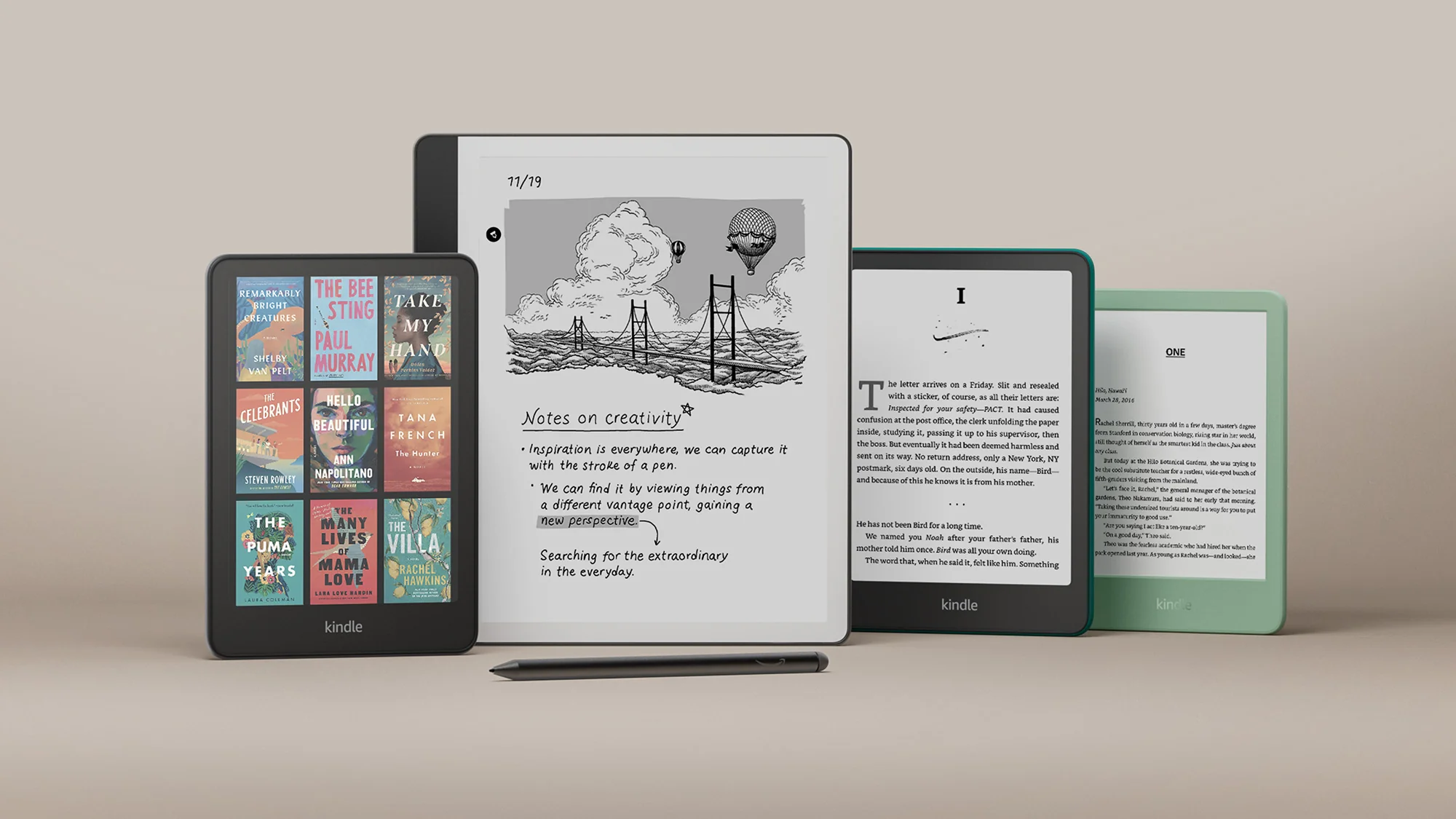
For years, Nook e-readers have been on the American (and sometimes British) market. But for months, even years, now, their e-reader lineup has been falling behind. 2025 is looking particularly concerning, as there's only one two e-readers left in the Nook catalog.
Barnes & Noble is a major player in the USA, with a huge chain of bookstores all across the country.
So, it makes sense that the brand would have the resources to dominate the digital reading space. The Nook brand was created years ago, and it's seen its share of ups and downs.
We remember when Nook released a groundbreaking e-reader back in 2012: it was the first one to have a front light, and it was really well-designed for e-ink screens.
That same year, Nook signed a strategic partnership with Microsoft to expand in the digital reading sector.
But then, just a year later, in 2013, Barnes & Noble announced they were ending the Nook e-readers! How do you explain that? It was a strategic shift to focus on print and their bookstore chain, rather than digital services, which were booming at the time…
Since then, Barnes & Noble has relaunched their e-reader line, but you can't help but notice that it's still really underdeveloped, with only 2 e-readerw : a simple, effective, but basic one and a larger with 7.8" screen.
Clearly, Nook is losing steam. It's easy to see, since the brand still hasn't launched, or even announced, a color e-reader model.
While all the other players in the market have been offering color e-readers for months or even years, Nook is sticking to its guns and refusing to move forward.
While it's not a sure thing that the Nook brand is doomed again, it seems pretty obvious that it's lagging behind, and its survival is in jeopardy if it doesn't innovate quickly.
Looking for an alternative to Calibre, the well-known ebook management software? Okay, first: why? But if you are, there's a new, equally free piece of software called Colibri.
So, Colibri is a promising new open-source software option that might just win you over. Although still in active development, Colibri already offers features that will let you organize and enjoy your ebook collection, and even share it.
Available for free and open source (the software is modifiable and hosted on Github), Colibri stands out with its features geared towards managing your ebook library online and making it accessible to everyone via the internet.
Therefore, this is definitely a digital book management solution, but one focused on sharing, with features designed with that in mind:
Simple Library Management: Easily import your ebooks, update their metadata, and enjoy a well-organized library, accessible from all your devices.
Automatic Metadata Retrieval: Colibri automatically retrieves information about books, authors, and publishers from public databases. No more spending time manually filling in each field! (Something Calibre already offers)
Easy Search Integration: Colibri integrates search services to easily index and search for content within your library.
Seamless Passkey Authentication: Log in to Colibri using Windows Hello, Touch ID, Face ID, or other similar authenticators, thanks to Passkey technology.
Book Collections: Create themed collections to organize your books according to your preferences.
Colibri is designed to work online, so you'll need the technical skills to install it. It can be run on Docker, Cloudflare, Vercel, AWS, or directly on a Node.js server.
Although the software is still under development, it already allows you to put an ebook library online, which would be ideal for family sharing or for smaller organizations, such as libraries or media centers, that want to make documents accessible.
Another interesting use would be providing digital documents and professional documentation within a company.
So, Colibri is a promising project that's worth keeping an eye on. It offers an interesting alternative to Calibre, with a more modern approach and increased online hosting flexibility.
However, for use on a single computer, without sharing features, and total flexibility plus compatibility with e-readers, Calibre remains the gold standard and a must-have.
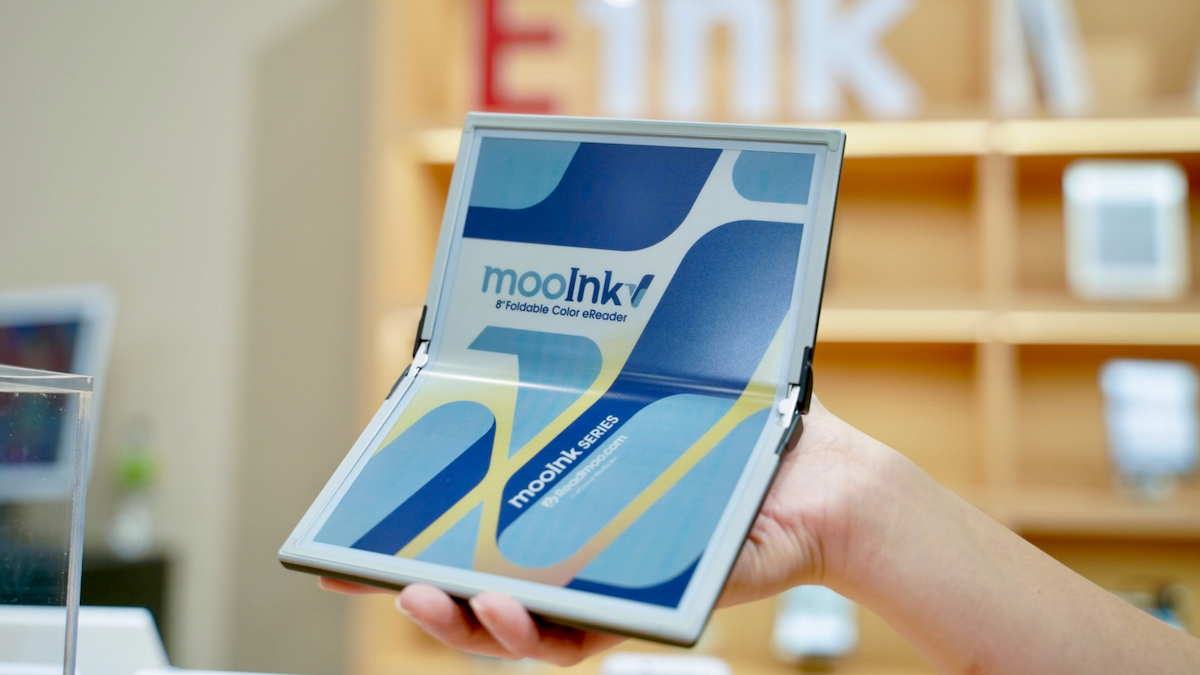
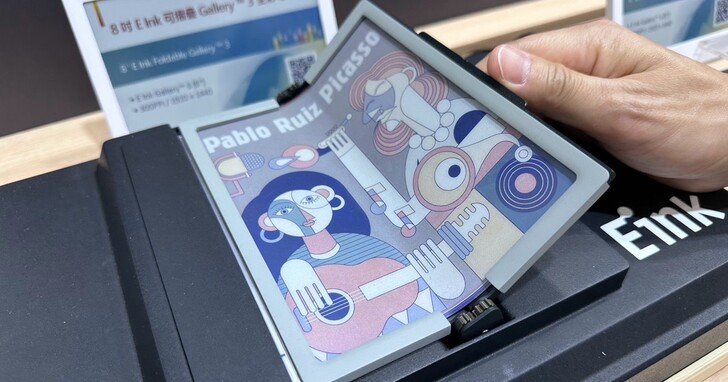
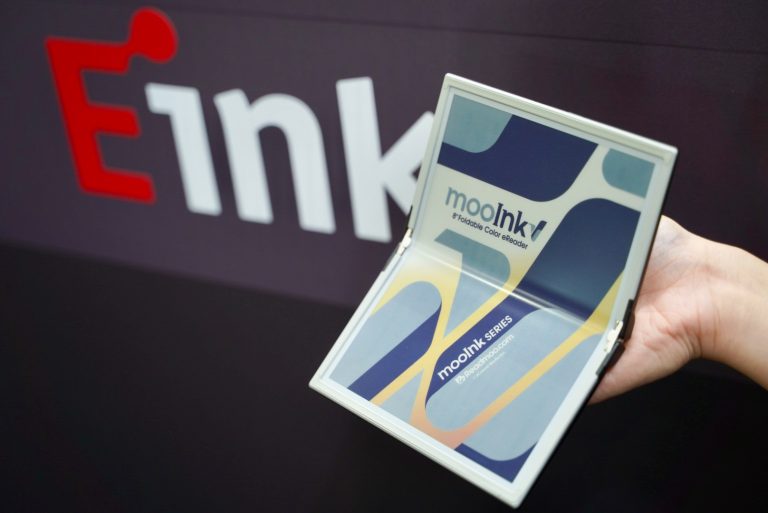
Taiwanese company Readmoo is making waves with the announcement of their upcoming MooInk V, a foldable e-reader co-developed with E Ink.
Featuring an 8" E Ink Gallery 3 screen that bends in the middle for ultimate portability, this device aims to revolutionize the e-reader landscape.
According to Readmoo, the MooInk V is the result of 9 years of development and has endured over 200,000 bending tests.
The MooInk V boasts a Gallery 3 screen for richer color representation compared to traditional Kaleido 3 screens. The device features an aluminum-magnesium alloy casing with a matte finish, and weighs in at 255 grams.
However, the MooInk V reportedly lacks a frontlight. There is also no word on pricing or availability yet, and initial distribution is expected to be limited to China.
Picture: the first folding e-reader from Readmoo/MooInk
This raises a critical question: is the MooInk V a genuine innovation, or a carefully crafted mirage?
In a market dominated by larger screens, the focus on portability has waned. Major players aren't exactly rushing to shrink their devices. The fact that this e-reader brand never released it's foldable e-reader, raises the question: Is there really a demand for foldable screens, especially considering the likely premium price tag?
A Ploy for Investors?
Picture: this picture is a fake and is only here to illustrate this article. All other pictures have been provided by Readmoo
Could the announcement of the MooInk V be more about securing investment than delivering a revolutionary product? The e-reader market is competitive, and a splashy announcement of a novel product could entice investors to pour capital into Readmoo, allowing them to continue their e-reader production.
The lack of concrete details surrounding pricing, availability, and even the presence of a frontlight, raises concerns. Could the MooInk V be a showcase piece designed to impress, rather than a commercially viable product ready for mass production?
Only time will tell if the MooInk V lives up to the hype or fades into the realm of vaporware.
For now, potential consumers and investors should approach this announcement with cautious optimism, remembering the broken promises of foldable e-readers past.
A new French study reveals a significant decline in book reading among the French population. This once-cherished pastime seems to be losing its appeal, potentially leading to serious consequences.
Fresh data from a survey conducted by the Centre national du livre (CNL) has been released, and it paints a concerning picture: the French are increasingly abandoning reading.
The Centre national du livre (CNL), or National Book Centre in English, is a French public administrative institution (établissement public à caractère administratif) operating under the authority of the French Ministry of Culture (Ministère de la Culture). Its primary mission is to support and promote the book industry and reading in France and abroad.
Worrying Results: The French Just Don't Want to Read Anymore!
In short, the study shows that reading is declining across the board in France, with the exception of those aged 65 and over.
For keen observers, this isn't exactly breaking news.
The most significant drop is observed in the 50-64 age group (-13 points, a massive shift!) and the 35-49 age group (-8 points).
Unsurprisingly, younger French people are also reading less, although manga remains popular.
Another interesting statistic: 15% of French people read in digital format (either exclusively or in combination with physical books). As for audiobooks, 32% have listened to one at some point.
Here's how the study was conducted:
1001 individuals aged 15 and over were interviewed between January 21st and February 4th, 2025.
The sample was selected based on the following variables: gender, age, region, urban area size, and profession.
> In a world full of constant stimuli and in a context where all signs are alarming, only clear, determined actions can help safeguard a space favorable to the pleasure, reflection, and tranquility that books and reading fundamentally bring us.
Why Is This Happening? Doomscrolling, Netflix, YouTube, Instagram, Video Games, etc.
If the French aren't reading, how are they entertaining themselves?
Predictably, they're spending more time in front of screens.
This explains why the 50-64 age group is reading less. Just a few years ago, people in this age bracket (born from 1975 onwards) were still holding out. It's important to remember that they didn't get mobile phones and internet access until they were 25-40 years old. So, it took time for their screen consumption habits to change, but it's now happening!
As a result, this generation now has access to services like Netflix (10 million subscribed households in France), Prime Video (9 million), and Disney Plus (5 million), to name just a few (these figures are from 2024).
When you add YouTube, which has over 40 million French users, TikTok (15 million), and Instagram (26 million), it becomes clear that screens are taking up an increasingly large part of French people's lives – source.
There are also video games, with 38.3 million French people aged 10 and over playing video games, at least occasionally, representing 70% of the population – source.
This also explains why seniors aged 65 and over are less affected: they generally consume less digital content and have more traditional entertainment habits: radio, television, and books.
Finally, the recent phenomenon of "doomscrolling" (the practice of endlessly scrolling through social media or news sites to read – often – negative news) makes it easy to understand why the French are reading less.
What Are the Consequences for the French?
The consequences of declining reading are so numerous that they could fill a book!
However, I'm going to skip the economic considerations and instead talk about what it does to you if you stop reading!
No longer reading leads to significant problems for your brain:
Loss of cognitive abilities, particularly the ability to understand complex texts and ideas.
Memory atrophy.
Loss of critical thinking.
Loss of concentration and attention.
Lack of knowledge: reading allows us to learn things.
Loss of the ability to express oneself correctly.
Not reading also has consequences for your health:
These consequences are unfortunate, but the French are caught in a vicious cycle linked to the overconsumption of social media and alternative entertainment, almost all of which require spending long hours in front of a screen.
There seems to be no escape, and the slow decline of reading in France seems inevitable, especially with the arrival of younger generations who are all reading less than their elders.
The French can always take comfort in the fact that they are not alone in the world, but the decline is no less real!
In the fast-evolving world of e-readers, dominated by giants like Kindle and Kobo, it’s easy to forget the pioneers and the bold design experiments that pushed the boundaries.
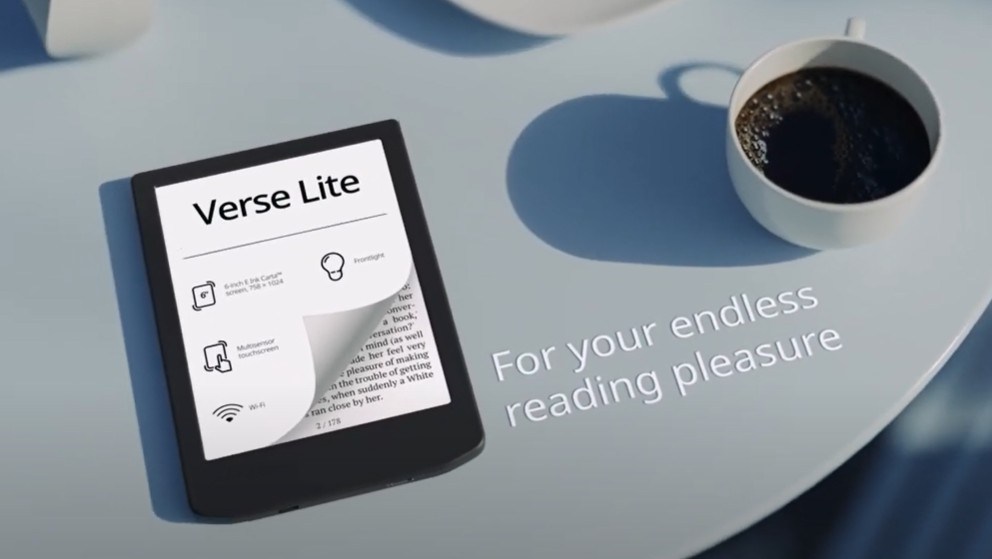
Pocketbook is finally offering an affordable e-reader that cleverly complements its range of devices dedicated to ebook reading. In this review, I’ll explain whether the Pocketbook Verse Lite is a good e-reader, despite some cost-saving measures in its design.
Okay, let’s talk about turning your ebooks into audiobooks! We’re diving into the world of “text to speech” (TTS) or “speech synthesis“. Basically, it’s all about getting your computer to read aloud to you.
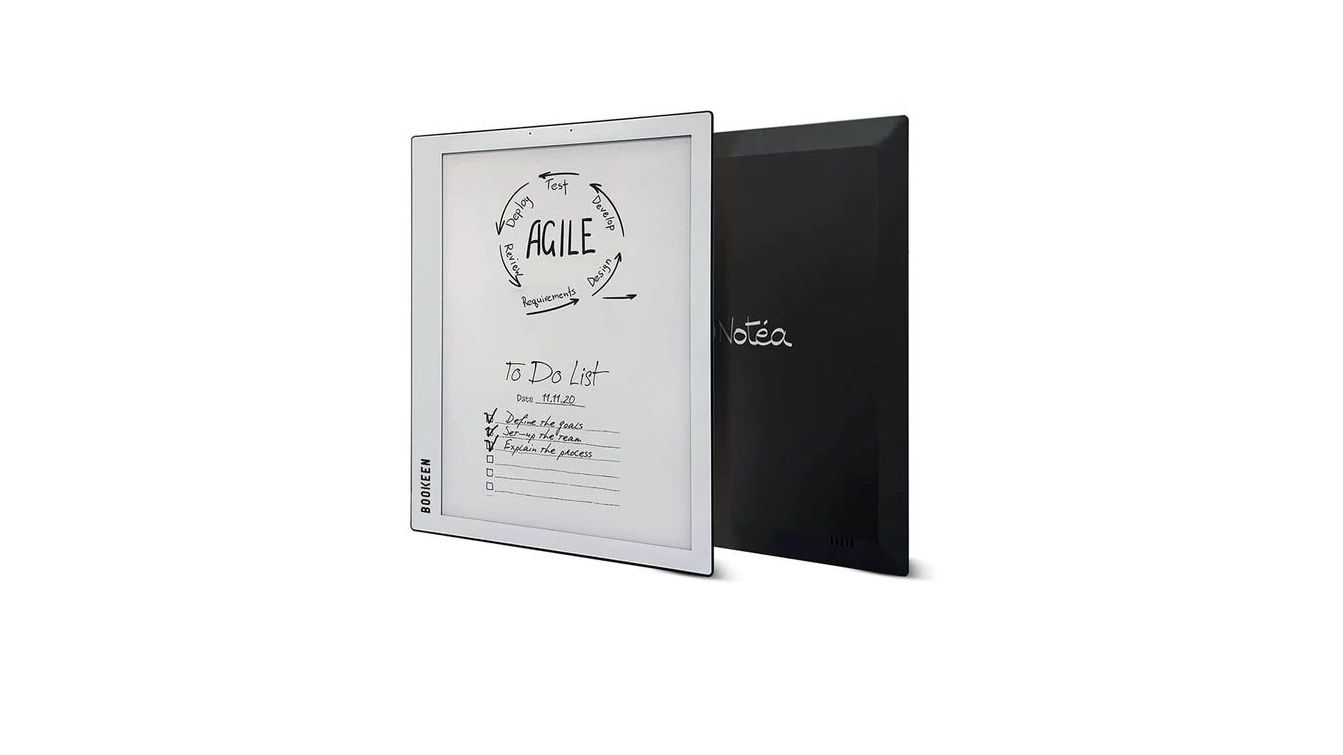
It’s the end of the road for the popular Bookeen Notéa, which is expected to bow out this year and will no longer be offered by the French brand Vivlio. But don’t worry, support will still be available!
So, you have a Kindle eReader (or tablet) and you’ve probably noticed your ebooks stay right there on your device. But maybe you’d like to download them to your computer for a backup, just in case!