Nicolas Lorenzon is the French leading expert in e-readers since 2012 and also the creator of the website www.liseuses.net. Nicolas Lorenzon is also in charge of the pictures and the Youtube channel and the relationship with e-readers brands. See this page for more informations.
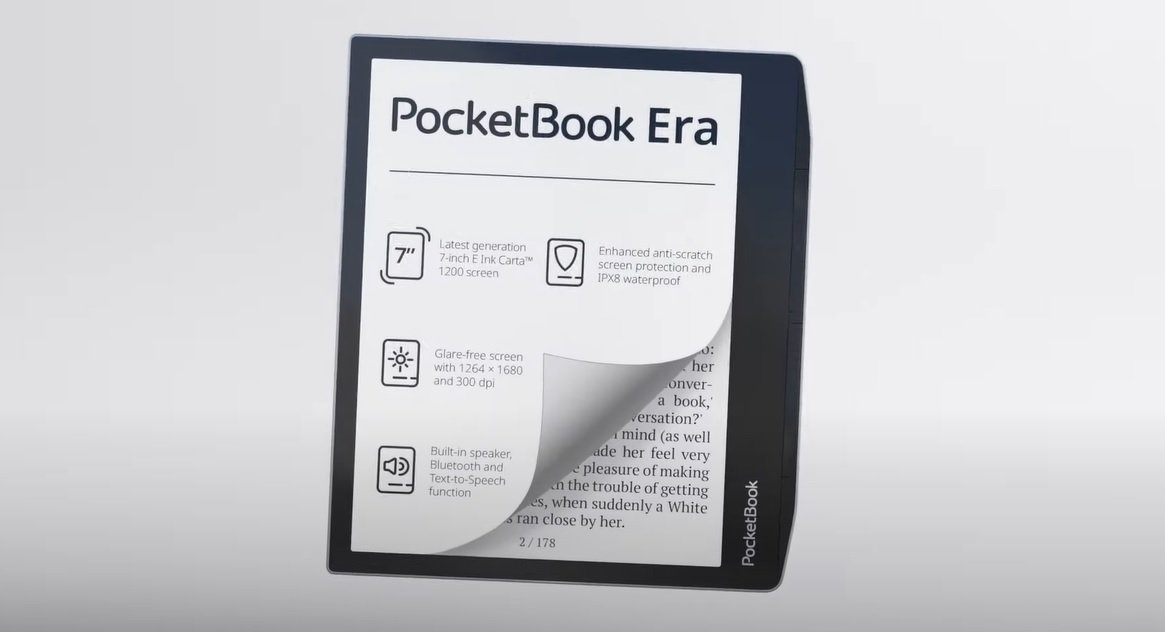
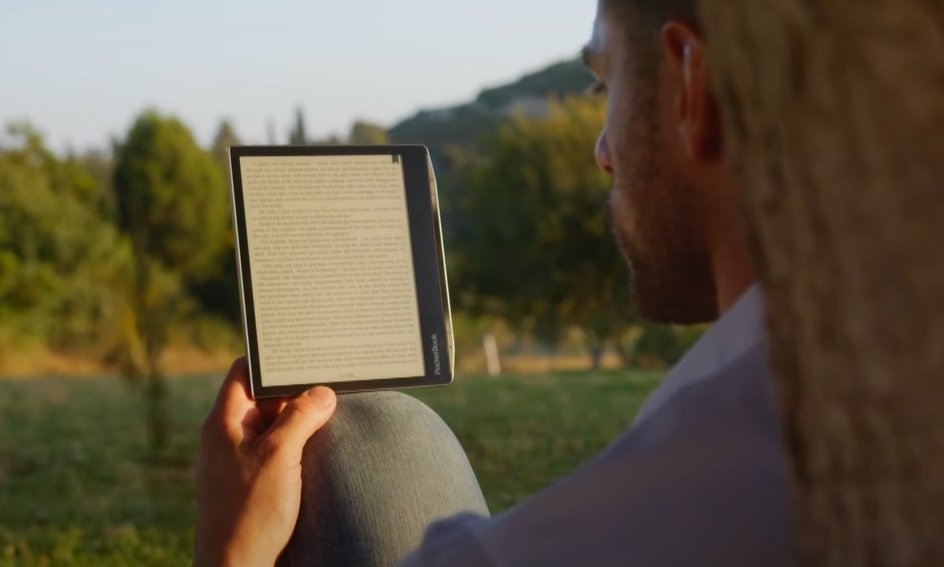
Pocketbook is offering a new e-reader called Pocketbook Era. And there's going to be some change!
With its 7-inch screen, this new Pocketbook Era e-reader will go head-to-head with the new Kindle Paperwhite and Kobo Libra 2.
The screen features the very latest in electronic ink (E Ink Carta 1200), and special attention seems to have been paid to integrating the screen into the case, and to the lighting, which features color temperature adjustment (blue light filter).
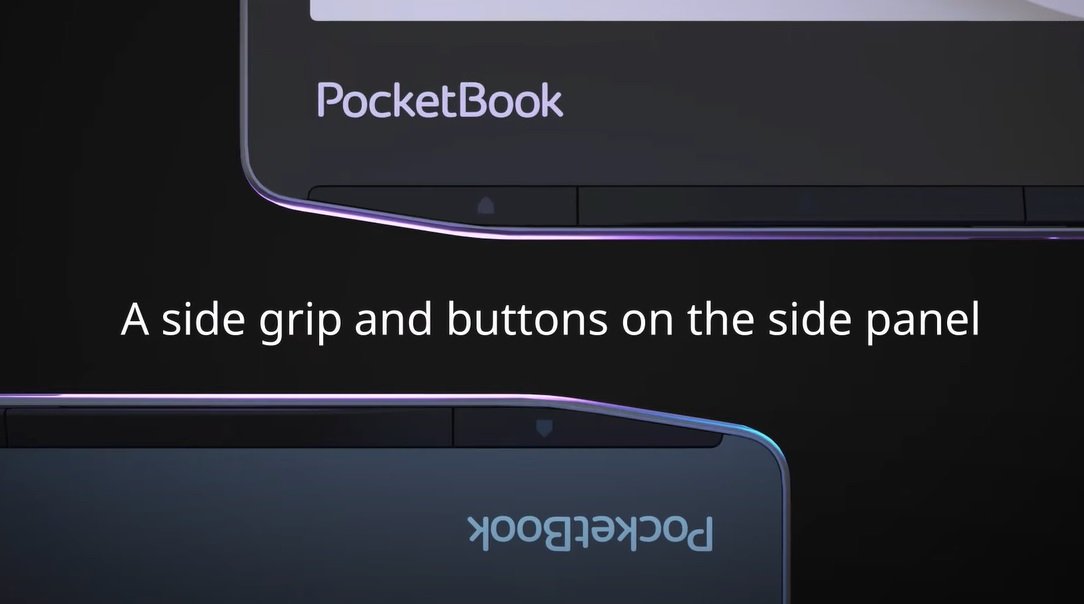
The Pocketbook Era's new design is reminiscent of the Kobo Libra 2, with buttons on the side and a grip that suits both right- and left-handed users.
The e-reader is also waterproof, which already makes it an excellent alternative to the two competing e-readers.
But Pocketbook has finally integrated something really useful in its Pocketbook Era e-reader: speakers.
These speakers let you take advantage of the text-to-speech function to transform a classic ebook into an audio book! In addition, it is also possible to listen to audiobooks directly from the Pocketbook Era.
You can still use the Bluetooth function to connect headphones, speakers and even use your e-reader in a car.
Pocketbook Era technical specifications
Two options are available for the Pocketbook Era e-reader:
A version priced at around $200 with 16 GB storage
A version at around $250 with 64 GB storage
Technical specifications :
7-inch E Ink Carta 1200 display, color temperature-controlled illumination, touchscreen
Audiobook formats: as yet undisclosed (probably MP3)
My opinion of the Pocketbook Era e-reader
For the moment, it's difficult to give an opinion on this e-reader until I've had it in my hands.
But knowing the history of Pocketbook and its products, it seems clear that we have a fine e-reader that will undoubtedly be listed among the best e-readers of the year.
This Pocketbook Era is more complete than the Kindle Paperwhite and Kobo Libra 2, the two flagship e-readers of 2022 and 2023.
My only downside comes from the price, which at first glance seems a little high ($200) compared with the competition for the addition of speakers.
But speakers with a waterproof e-reader must represent an additional technical difficulty that may justify the price.
All in all, it's a good e-reader, and only the Pocketbook InkPad 4 overshadows it with its larger screen and similar features at a similar price.
The Pocketbook InkPad 4 is Pocketbook’s new large-format e-reader with a 7.8-inch screen. It’s a “top-of-the-range” e-reader, with a beautiful screen and advanced features for demanding ebook lovers.
Boox returned in late 2024 with a new iteration of its compact e-reader: the Boox Palma 2, an E Ink reading device designed to easily slip into any pocket. So, while this is indeed a review, the Boox Palma 2 isn’t strictly just an e-reader – it’s much more than that!
Kaleido technology has been around for a few years now. While it still holds real promise for color e-readers, we’ve yet to get a real glimpse of this future. Will the Kaleido 3 color screens finally revolutionize the e-reader market?
One thing seems certain: the future of the e-reader will involve color.
Indeed, it’s the last great technological wall separating digital reading from a reading experience superior to paper.
Without true color as vivid as a paper print, it’s currently impossible to consume comics, photography books and magazines without the need for a color tablet and its rapidly eye-weary screen.
E Ink was the first company to offer e-ink screens for e-readers. It has therefore been working for years on adding color to its screens.
One of the major advances was the arrival of Kaleido technology. This made it possible to add color rapidly, while retaining the advantages of electronic ink (energy savings, reading comfort, reading without lighting).
How does the Kaleido screen work?
E-readers are able to display colors with a Kaleido screen, which is the name of the screen sold to device manufacturers by E Ink.
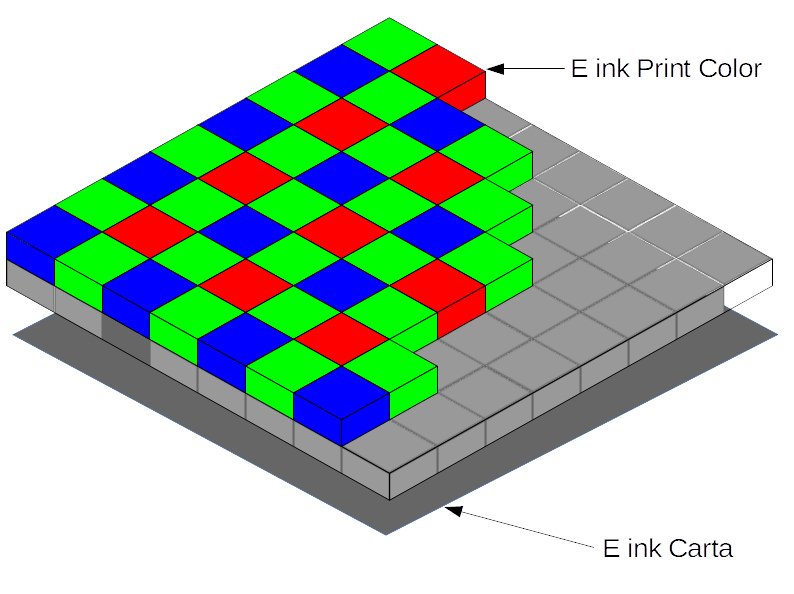
First of all, the technical basis of the Kaleido (or Print Color) device is indeed a Carta-generation e-ink black and white screen. This is the screen used in today’s black and white e-readers.
This FCA is well known to screen designers, and its French name is "Matrice de filtres colorés". It’s a mosaic of colors (red, green and blue) on top of the black-and-white screen.
Each point (or pixel) on the screen can then take on the color white, black, blue, green or red.
To obtain different shades of color, the screen then combines different colors to obtain the desired hue from among 4096 possibilities.
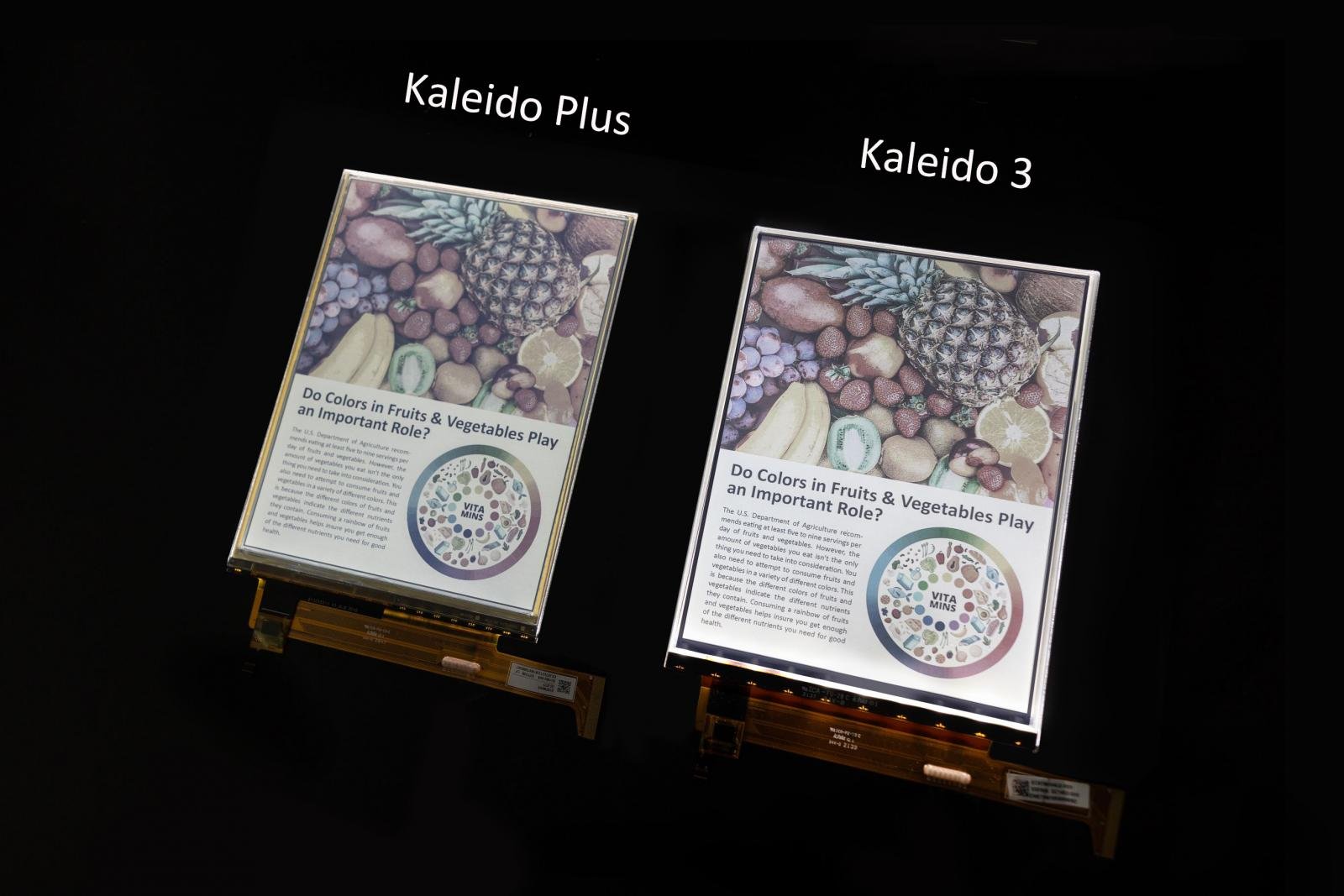
The Kaleido screen has since been updated with Kaleido Plus technology, then Kaleido 3 to improve color display.
The need for a Kaleido 3 screen
Kaleido technology is not without its drawbacks. The main one is that color reproduction is paler than on paper, LCD or LED screens.
For this reason, new versions of these screens have been appearing over the past 4 years.
After a Kaleido 2 (or Kaleido Plus) version that was ultimately rather confidential (there’s the Pocketbook Inkpad Color, which seems to be equipped with such a screen), the E Ink Kaleido 3 technology is now available.
Yes, this screen is now available for e-reader brands who want to embed it in a machine.
Here’s what’s new in Kaleido 3:
30% more vivid colors than the Kaleido 2/Plus version
E Ink ComfortGaze lighting technology, which promises a significant reduction in blue light emission
A diagonal available in 7.8", 10.3" and 13.3" sizes
This all sounds very pleasing, but I do have a few technical concerns, and there are always some annoying limitations.
Firstly, I haven’t found any information about 6- to 7-inch screens using Kaleido 3. Does this mean that this technology will be reserved for larger screens and, therefore, more expensive e-readers?
If so, that’s a real shame, because I think a 6-inch Pocketbook Color with an up-to-date screen and a price still under $200 would be a really good e-reader.
On the other hand, one of the limitations of these color screens is the lower resolution for color display. It seems that this is still the case with Kaleido 3, and we’re still limited to 4096 colors.
This aspect of the technology can be annoying when displaying photographs and pictures – for example.
E-readers using this screen are mainly designed by Asian brands, and are not widely distributed worldwide.
It is worth noting, however, that the recently released Pocketbook InkPad Color 2 still uses an E Ink Kaleido™ Plus screen, which seems to indicate that the price of Kaleido 3 screens is too high, or that the quantities manufactured are too low, for these screens to be integrated into e-readers distributed widely around the world.
So, the Kindle and the iPad are two very different tools. Even if you can do many things with iPad, the Kindle has one major advantage for reading ebooks: its e-ink screen.
The Kindle: a screen that’s much better for the eyes
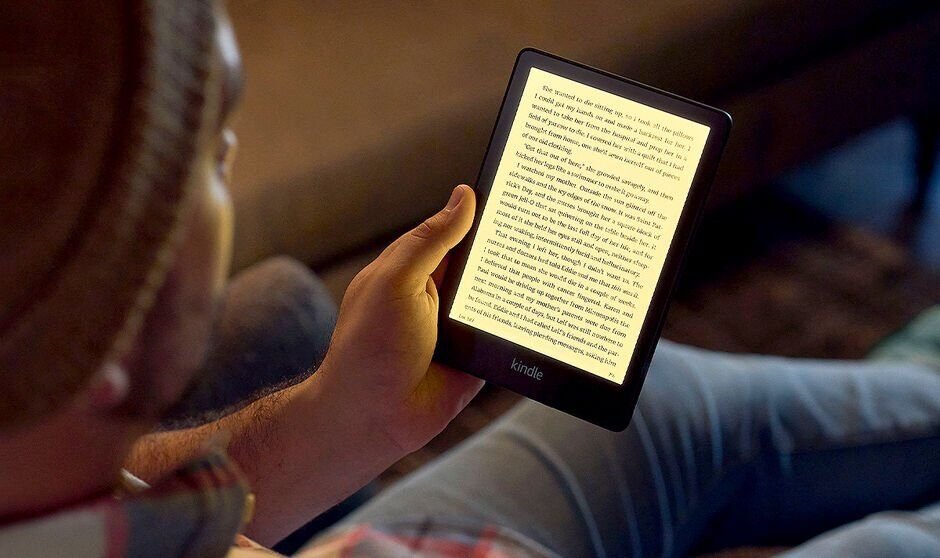
The Kindle’s e-ink screen is designed to mimic a paper printout.
As a result, the pages of text displayed on your e-reader give you a reading sensation very close to that experienced when reading a paper book.
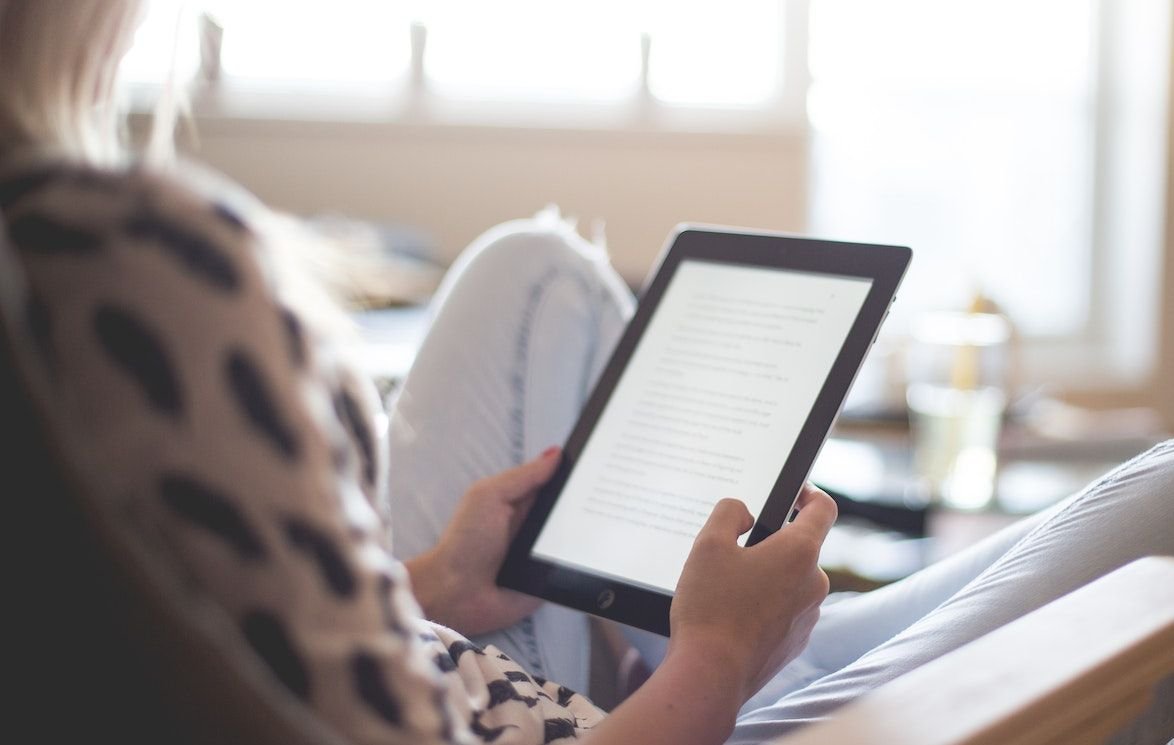
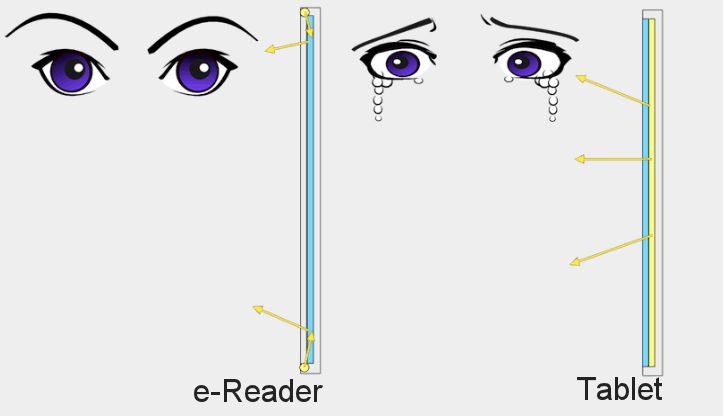
What’s more, the iPad’s lighting is very aggressive on the eyes. In fact, its illumination is placed under the screen, which means that the light reaches your retina directly (and with a certain intensity).
This is not the case with a e-reader, which has a different type of lighting placed on the edges of the screen, which first illuminates the screen, as you can see in the diagram below:
Harvard Study Shows E Ink’s ePaper Is Up to Three Times Healthier for Your Eyes Than LCD Screens
Even better: you can read on a Kindle with the lighting switched off – something you can’t do on an iPad.
Simply put: you can read for hours on a Kindle without experiencing eyestrain, which is not possible with an iPad.
Kindle: other benefits of the e-reader
In addition to having an e-ink screen better suited to reading and a lower price, the Kindle e-reader also has another advantage: [it has a much longer battery life].
A simple recharge of a Kindle e-reader takes a few hours, and you’ll be able to read ebooks for weeks.
An iPad discharges very quickly, and you’ll need to recharge it several times a week.
Yes, it better for eyes to read on Kindle
In conclusion, here’s why reading on a Kindle e-reader is better for your eyes:
The e-ink screen mimics paper and doesn’t tire the eyes
The battery life of a Kindle is much longer than that of an iPad.
You should also know that there’s more than just the Kindle e-reader out there: on this site, you’ll find a guide to the best current e-readers of all brands, if you want to buy a model that’s right for you.
E-readers use a special type of screen known as electronic ink. Unlike the screens used on smartphones, tablets and PCs, e-ink is based on a completely different technological approach, enabling a paper-like display.
In this article, we’ll look at how does e ink works, and its advantages and disadvantages compared with other screen technologies.
What is electronic ink (e ink)?
Electronic ink is the name given to a technology that enables characters and illustrations to be displayed on a surface, with the aim of closely resembling a paper print.
Electronic ink is also known as "electronic paper", "electronic ink", "e ink" or "e paper".
As with paper printing, e-ink does not require lighting to operate. The surface of electronic ink is reflective in the sense that it is sunlight (or an artificial light source) reflected from the screen that enables us to see what is displayed.
E-ink can be used on a variety of surfaces, but is mainly used on a plastic surface, which can be rigid or flexible.
Today, the main manufacturer of screens using electronic ink is the Asian company E-Ink Holding, more often referred to as "E-Ink" or "e ink".
Today, electronic ink displays are used in e-readers, watches, display panels, smartphones, tablets and computer screens.
Who invented e ink?
E-ink was invented in 1997 by MIT researcher JD Albert.
It was at MIT, in 1997, that JD Albert discovered how to make an electronic ink display.
At the time, he hadn’t yet imagined the e-reader as we know it. But what he had in mind was far more impressive: a book made up of e-ink pages that could be flipped through!
In retrospect, it sounds complicated, but that’s what JD Albert was trying to achieve at the time, as Albert explains in an interview:
"Often, when working on a new technology, it helps to set bold goals."
So, even if the vision of a multi-screen device with pages that can be turned has not come to fruition, e-ink is the main technology that drives all e-readers.
How does e ink work?
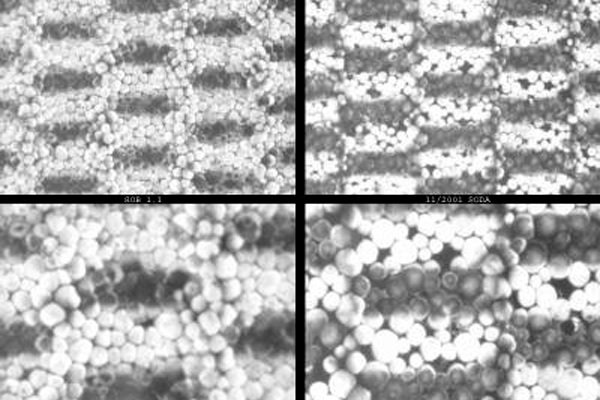
Electronic ink is made up of sphere-like microcapsules. These capsules are sandwiched between two plastic plates (rigid or flexible).
Inside each sphere are oil and small particles that are electrically charged.
A particle can be negatively charged (giving it the color black) or positively charged (giving it the color white).
When a negative electric current is applied to a capsule, the white particles are placed at one end of the capsule, while the black particles are placed at the other. This is the process that enables the display to switch from black to white.
To obtain different shades of gray, a more or less intense electric current is applied: 100% white; 75% white and 25% black; 50% white, 50% black; 25% white, 75% black and 100% black.
Once the electric current has been applied, the particles remain in place. This means that the e ink does not need to be supplied with energy once the text and images have been printed.
An e-ink screen is therefore made up of millions of capsules.
This technology is also known as "electrophoretic display".
Color e ink displays are produced on the same basis as monochrome electrophoretic displays.
The color comes from a filter that is added on top of the screen and the millions of capsules.
This filter is actually a matrix of filters that enables the display of 4096 colors.
Today, there are a number of different color e-ink screen technologies: Spectra, Gallery 3 and Kaleido (Kaleido 3 being the main ones.
How does the lighting work on e ink screens?
E-ink screens don’t need a backlight source to function.
However, ereader manufacturers have chosen to include a light source to facilitate reading in dark environments. A light source also provides greater contrast on the screen.
E-ink screen lighting uses LEDs placed all around the screen.
Unlike LED, LCD or OLED screens, which use a lighting system placed beneath the screen, the light produced by the illumination of an e-ink screen does not strike the user’s retina directly, as you can see from the following diagram:
The brightness of the lighting on e-ink screens can be adjusted, and manufacturers have also integrated a system for adjusting the lighting color temperature to act as a blue-light filter.
What are the advantages of e-ink?
Electronic ink is visually close to a paper print. Displays using this technology are therefore suitable for reading text.
Once e ink printing has been carried out, there is no need to supply power to the screen, which retains its display.
On the other hand, an electric current is required for each change made to the screen. As a result, e-ink screens consume very little energy. As a result, devices using them have longer battery life than those using more conventional screen technology.
What are the disadvantages of e-ink?
Although e-ink is very energy-efficient, it has the disadvantage of being slower than other display technologies. Refreshing an e-ink screen is therefore slower.
While technological advances have greatly improved this point, e-ink is still too slow to display video in good conditions.
The other major shortcoming is color display. Color rendering is well below that of LED, LCD or OLED screens.
Finally, these screens are more expensive to manufacture. The price of large diagonal screens (8 inches and over) is therefore very high compared with competing display technologies.
Two new e-readers exclusive to France are announced: the Vivlio Light and the Vivlio Light HD.
There’s a little-known French company in the USA called Vivlio. Vivlio distributes Pocketbook e-readers in France following a legal dispute between the French paperback brand "Pocket" and e-reader manufacturer Pocketbook.
In a nutshell: Pocketbook does not have the right to sell "Pocketbook" e-readers under this name in France.
This created an opportunity for Vivlio to develop a range of e-readers aimed primarily at France.
Vivlio uses Pocketbook e-readers, but modifies the interface and adds a French online bookshop, enabling French-language books to be downloaded directly onto the e-reader after purchase.
Vivlio has been around for a number of years, and has enjoyed considerable success in France, where the brand is appreciated locally as a good alternative to the Kindle and Kobo e-readers.
Since September, Vivlio has been releasing 3 new e-readers in France.
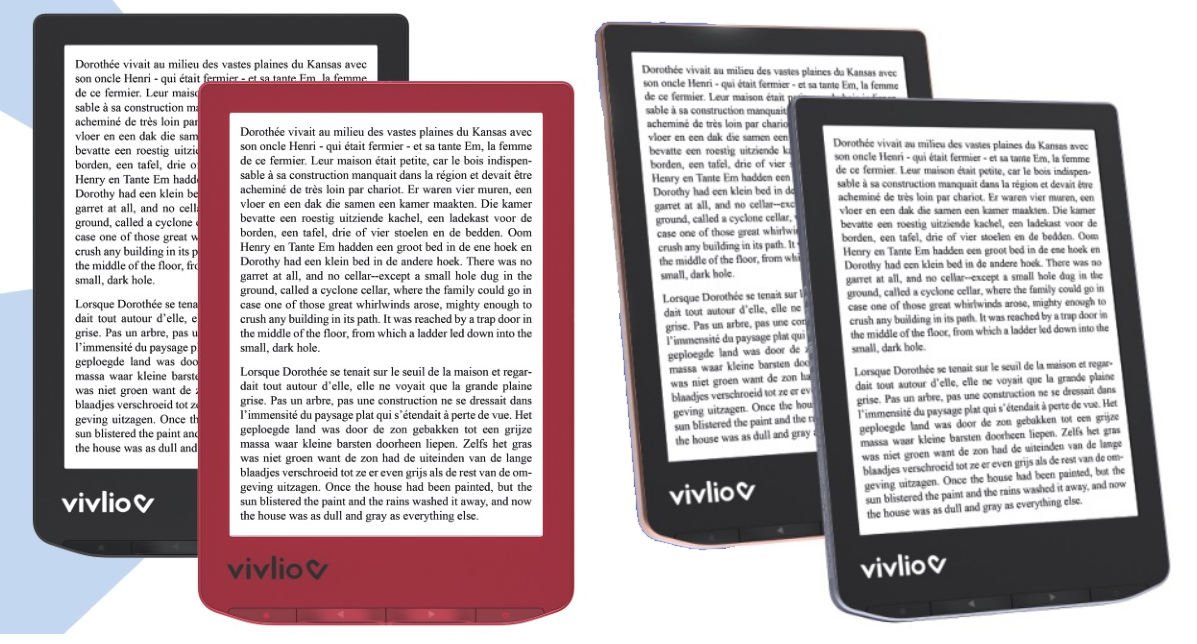
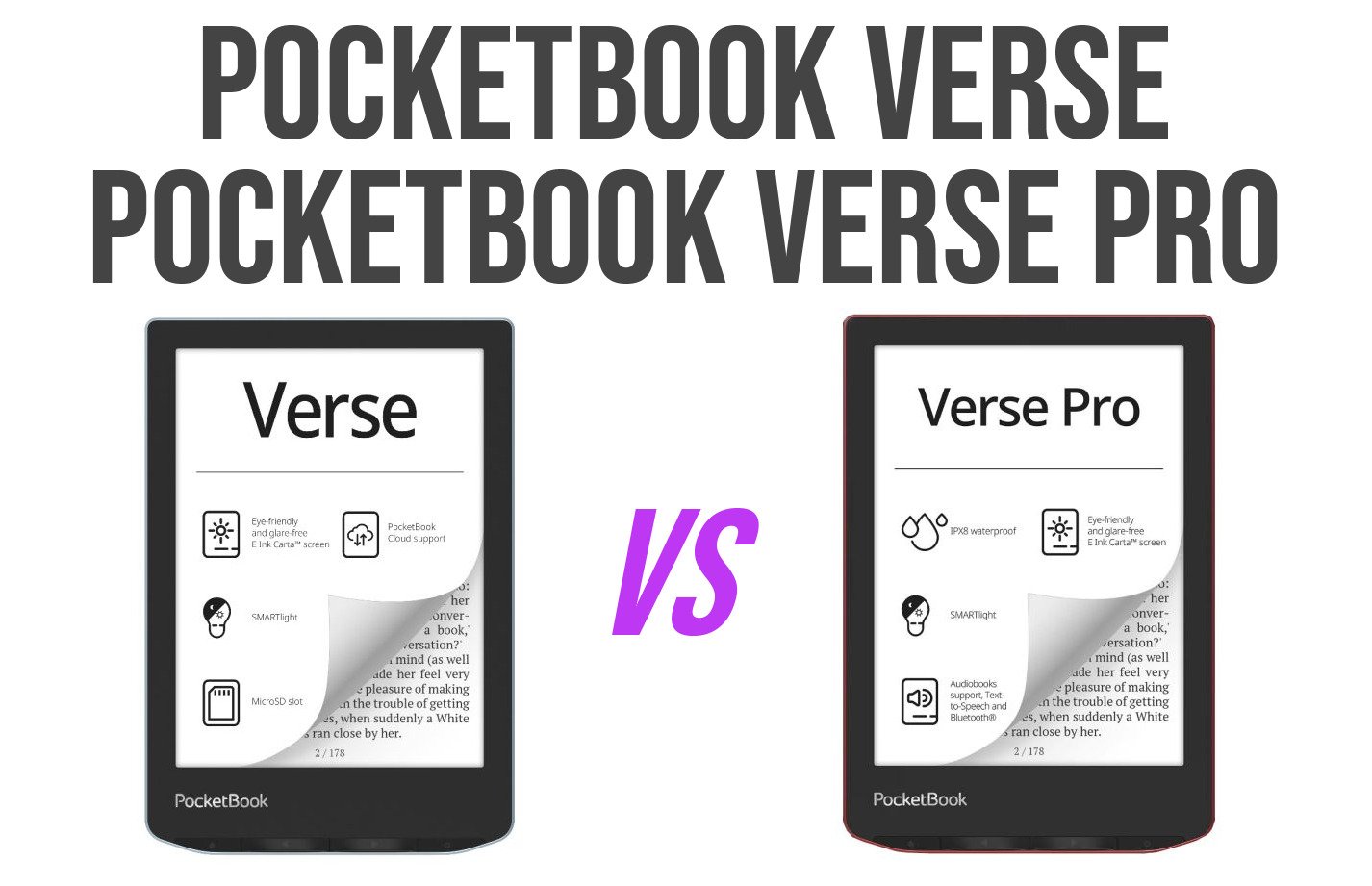
For these new readers, Vivlio has decided to completely change the name of the Pocketbook model. The Vivlio Light is a Pocketbook Verse, while the Vivlio Light HD is a Pocketbook Verse Pro.
The hardware used is identical, with only the brand name changing. The physical buttons under the screen are the same, as are the technical specifications of Pocketbook models.
On the software side, there may be slight differences between Vivlio and Pocketbook e-readers. In fact, Vivlio checks that all the reader’s functions are properly translated and that everything works in French.
So we’ve seen some Vivlio e-readers that didn’t activate the little video games found on some Pocketbook e-readers.
Apart from these details, Vivlio e-readers offer the same reading experience as Pocketbook readers.
After years spent in the shadow of the paper book, the last years has allowed everyone to understand the benefits of e-readers and ebooks. Perhaps it’s time to reconsider. Do you prefer digital books (ebooks) or paper books? And which is better?
E-readers and ebooks as a viable alternative to paper books
There’s no denying that the ebook can help book lovers when a bookshop is no longer accessible.
This may be because a bookshop has closed, or because an epidemic has forced booksellers to lower their curtains.
But more often, it’s simply because people live far from cities and bookshops. So they order their books over the Internet, or use digital books (ebooks) to continue reading.
Here are the main advantages in favor of the ebook:
Ebooks are easy to access: all you need is an Internet connection
Today, I believe that the ebook is no longer the scarecrow it may have been just a few years ago. We need to put an end to the stupid fantasy that digital books (ebooks) will replace paper books.
We’re forgetting the major innovations that have turned the economics of paper books on their head. Here are just a few of them:
Large-scale printing
Paperbacks, which lowered the price of books (but didn’t make more expensive books disappear)
Supermarket distribution of books in a lot of countries
Library: no need to buy books, just borrow them
Paper books are also a "passion" object. People buy them for the pleasure of the object, for the pleasure of building up a fine library, and for the pleasure of lending or giving.
Unlike other cultural media such as DVDs and CDs, sales of paper books have not fallen dramatically with the arrival of smartphones and e-readers (since around 2007), as shown by this graph showing the evolution of the number of copies of books sold (in millions) :
So it’s not the e-reader and ebooks that will kill the paper book.
In any case, it’s more likely that the death of the paper book will come from a law, a political decision or a natural cause (such as an epidemic, an ecological problem, a paper supply problem, etc.).
Ebook or traditional printed book: there’s no winner
Objectively speaking, there are advantages to reading on paper, just as there are to reading ebooks on e-readers or other reading devices.
In both cases, there are also disadvantages.
So it’s time to put the differences aside and not stigmatize some (who love the traditional paper object) and others (who love soulless devices and put bookshops out of business with their ebooks).
On the contrary, showing that there are different ways of reading also means showing that we can continue to read whatever happens.
Because seeing someone reading an old paperback of Albert Camus should make us as happy as someone reading a Stephen King on an e-reader.
At a time when Netflix, social networks and smartphone apps are taking up more and more of our time, every person who reads is a victory to be savored.
Whether you choose the ebook or the paper book, you’re right either way. The most important thing is to read.
Pocketbook now offers two reading devices that share the same name: Pocketbook Verse and Pocketbook Verse Pro. Let’s take a look at the differences between these two models to help you make your choice: Pocketbook Verse or Pocketbook Verse Pro?
The debate on blue light and tools to reduce this light source is not over. But, following various queries from readers, I decided to investigate whether or not a blue light filter is necessary on e-readers with a light.
The answer is as follows: on an e-reader the blue light filter is useful if the lighting is activated, but the blue light of e-readers illuminations is less violent than that of other devices with LED screens, which makes it less harmful to health.
And we'll see in detail how I arrive at this conclusion.
What is blue light?
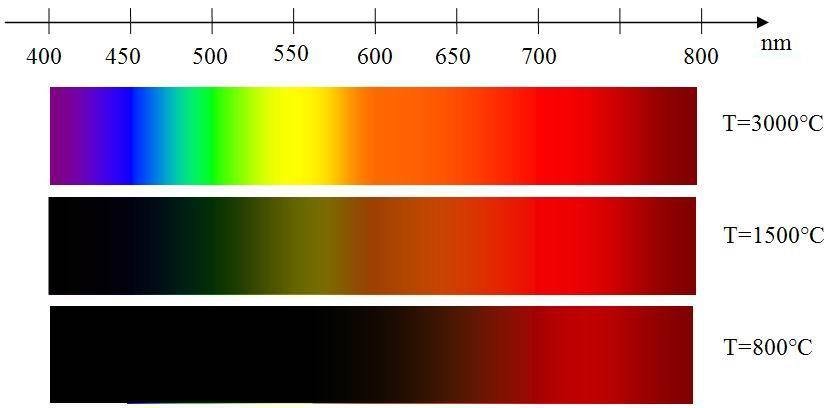
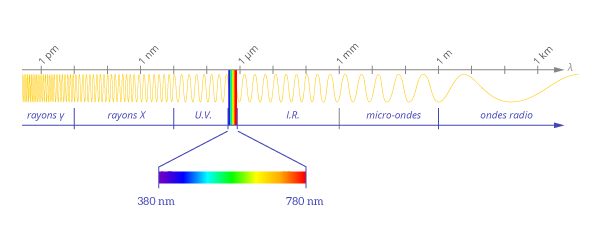
Blue light is light with a wavelength below 445 nanometers.
This is because light is a wave, and the shorter the wavelength, the more blue the color. On the other hand, the longer the wavelength, the more reddish the color. Blue light therefore has a very short wavelength.
The problem is: the shorter the wavelength, the greater the energy. So it's this energy linked to the color blue that's harmful.
Is blue light dangerous?
There are now numerous studies on the subject, and it's safe to say that blue light is indeed not good for your health.
There are several reasons for this.
Firstly, the earliest study showed that blue light could deregulate the body's internal clock. This clock, known as the circadian rhythm, regulates sleep.
That's why we recommend not using a smartphone, tablet or TV before bedtime: the avalanche of blue light received by the body (especially the eyes) can prevent us from sleeping.
But there's a potentially more serious reason: a study shows that the photons that make up blue light can damage retinal cells. The photons create oxidation in the retina, releasing molecules that are harmful to the eye.
So you see: too much blue light could reduce our eyesight and even damage the retina.
These in-depth studies show that there is indeed a health risk associated with exposure to blue light.
The problem is that this risk is heightened by the use of LED technology, which is now found everywhere from public lighting to smartphones to the frontlights of e-readers…
Why is there debate?
What's interesting about this issue is the debate in the scientific community about blue light.
As we've just seen, exposure to blue light is proven to be harmful to the human eye and the internal clock.
However, this light comes from LEDs, a technology used to reduce energy consumption and therefore rather good and useful for the environment.
So the question is:
> Should we pollute more and ban or avoid LED lighting – given that we don't have a better solution at the moment?
Of course, there's no question of banning or advising against it, because the studies haven't settled a major question: how long and at what frequency and power must you be exposed to blue light before it causes irreversible damage to the eye?
In fact, to date, there are no proven cases of health problems linked to blue light in humans. All the data we have is based on controlled laboratory studies.
Some study on blue light impact on health
Here are some links to studies I found online, where available. Keep in mind that some articles may be behind a paywall, depending on your access to academic journals:
The problem with tablets, smartphones and e-readers
The screen of a tablet or smartphone is often close to the face and eyes. Does this mean there's no danger to our eyes?
Not entirely, if the lighting is located high up and at a good distance from our eyes, devices such as smartphones, computers, tablets and even e-readers are used just a few inches from our face.
In this case, exposure to blue light is much greater and potentially much more dangerous.
How can we protect ourselves from blue light?
On more and more computer devices, there are solutions for reducing or "filtering" blue light from screens.
For example, you can install the f.lux software on your computer, or use the night mode available on more and more devices (called Blue shade at Amazon on fire Tablets, for example).
You can also use blue-light-filtering glasses (most opticians now offer this option) or buy highly effective, low-cost glasses specially designed for this purpose.
Blue light and e-readers: is there a danger?
For several years now, the main e-reader models have been equipped with a lighting system that allows you to change the tint of the screen to suppress, or attenuate, blue light.
On the other hand, other manufacturers have chosen not to integrate this type of option into their equipment, which raises a few questions: is there a danger for e-readers?
The first thing to understand is that the screen of an e-reader looks nothing like the screen of a tablet or smartphone.
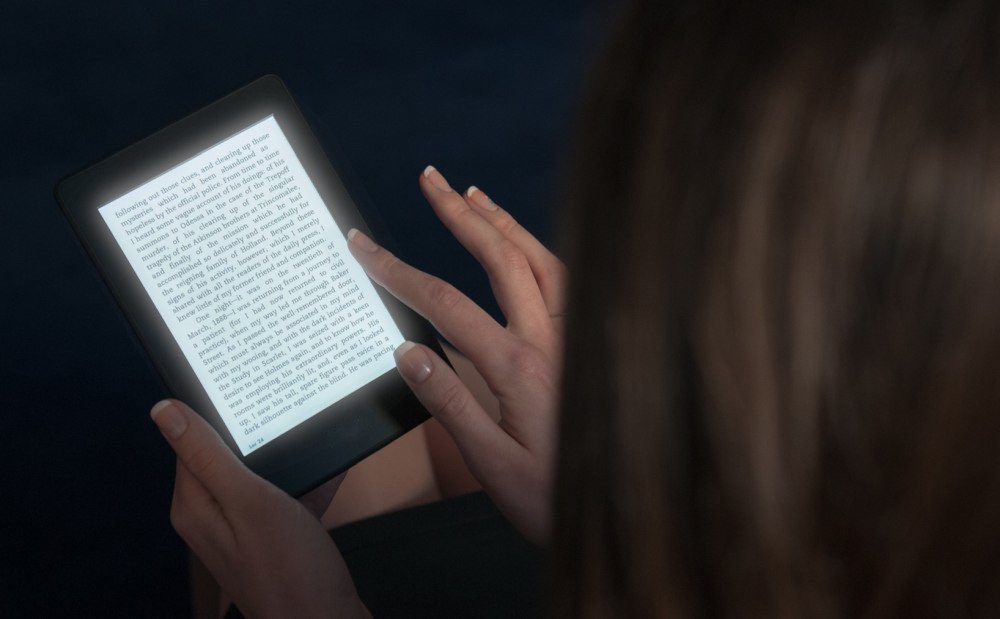
The light sent by a smartphone (or tablet) LED screen arrives directly in the eyes, whereas with a ereader, the light is first reflected by the screen.
LEDs are widely used to illuminate the screens of e-readers.
These LEDs produce a white light that combines green, red and blue, which means that there is indeed some blue light.
However, the light loses some of its energy when it hits the screen. What's more, in my experience, e-readers produce far less light than smartphones or tablets, with the lighting set to minimum.
But this doesn't totally eliminate the problem: blue light remains.
This was demonstrated by a study which showed that people who read on e-readers with lighting had much more trouble sleeping than those who read without lighting or on a paper book.
The blue light filter is therefore useful on e-readers, even if the blue light emitted is less than on a smartphone or tablet.
Obviously, the problem only arises on a e-reader when you activate the lighting.
If you switch off the lighting, no blue light is emitted by the e-reader, which is still a big advantage over a tablet or smartphone.
Which e-readers have a blue light filter?
As we've seen, most e-readers come with a device to attenuate the blue light emitted by the lighting.