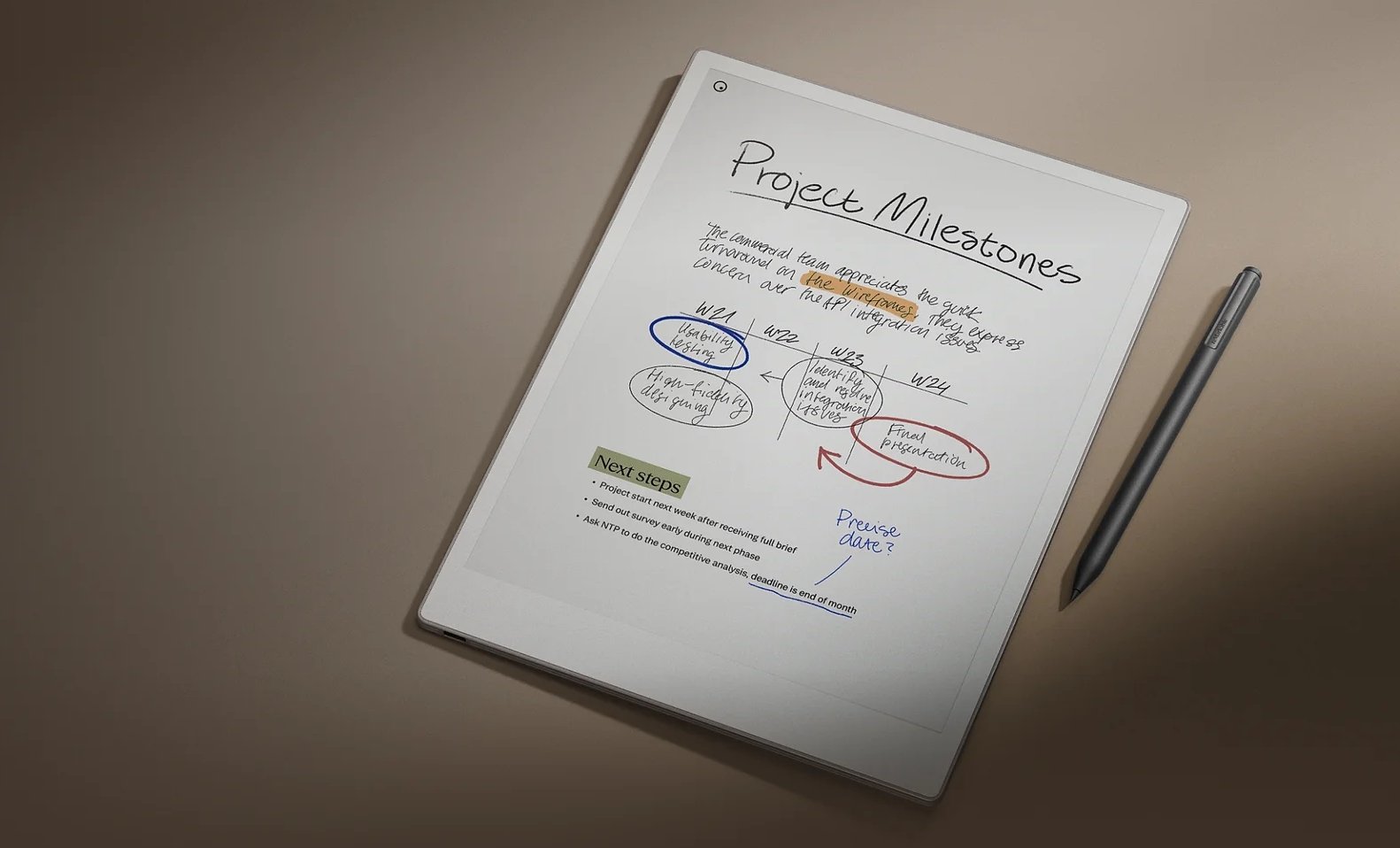
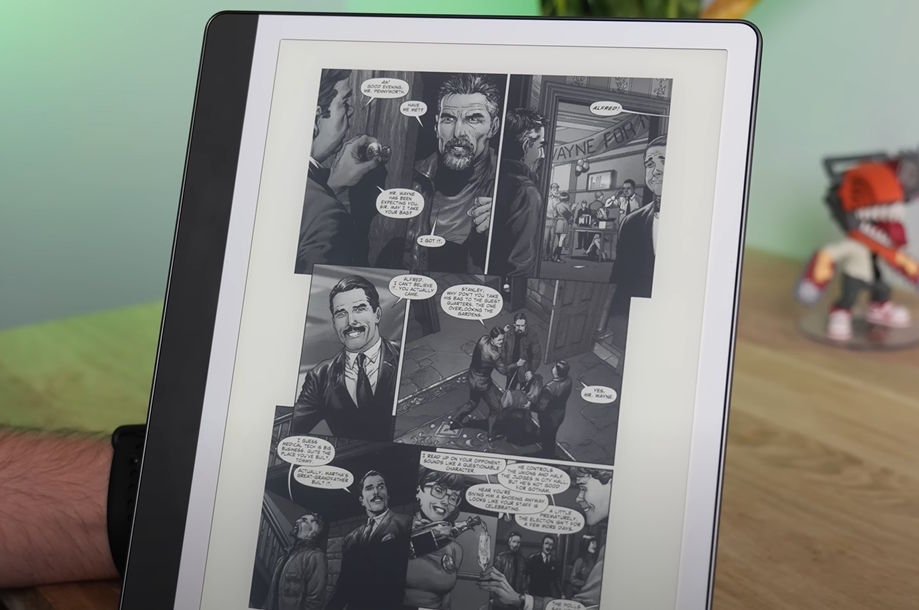
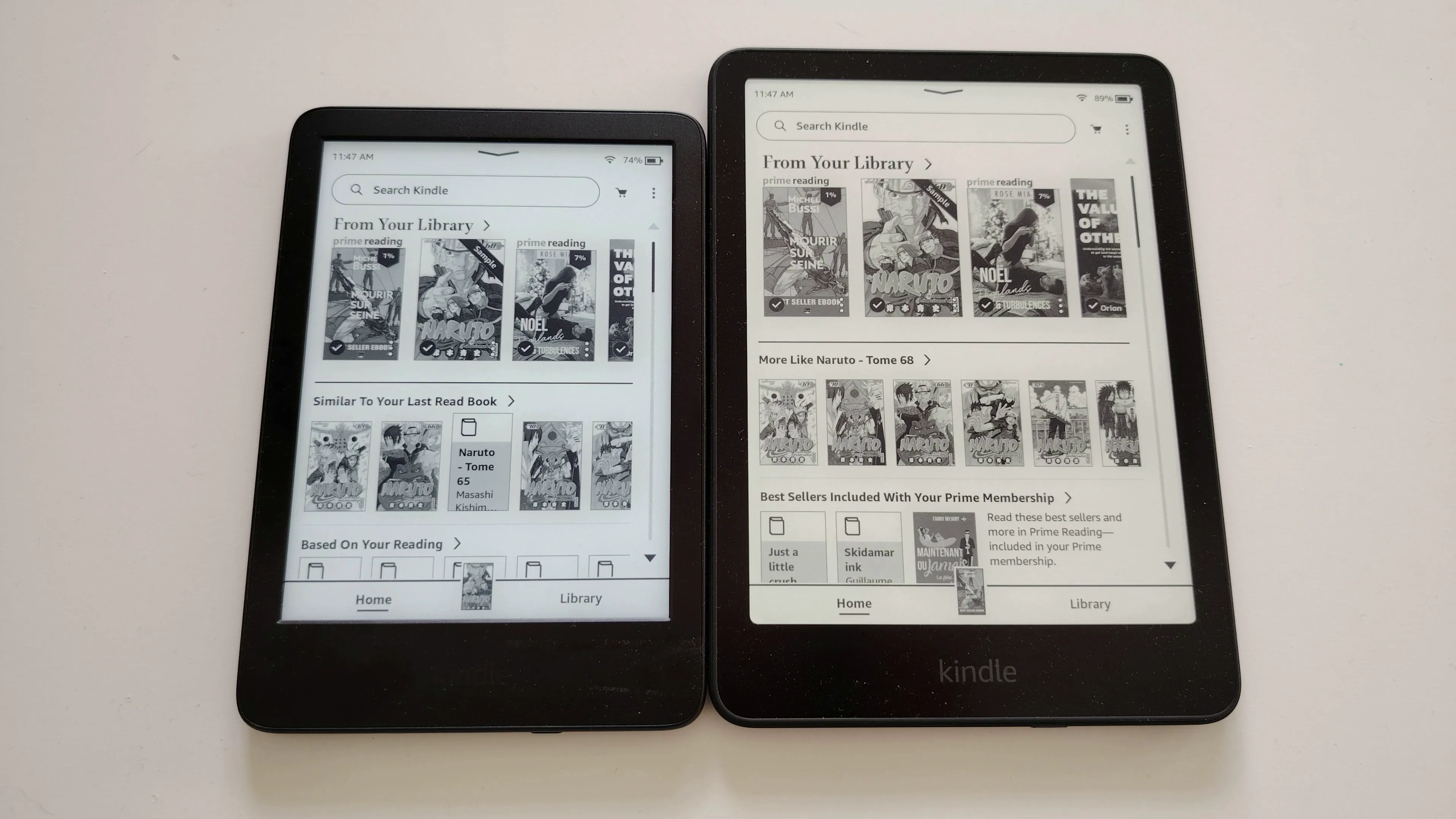
If you’re someone who loves technology and embraces the digital age, but when it comes to taking notes, you still reach for a pen and paper, you’re in for a treat! Today, we’re diving into a comparison of two impressive paper tablets: the ReMarkable Pro and the newly released Kindle Scribe 2nd Generation.
Amazon is back with a new version of its large-format e-ink tablet, the Kindle Scribe. Does this new version fix the issues of the first generation Scribe? That’s what I’m going to try to figure out in this article.
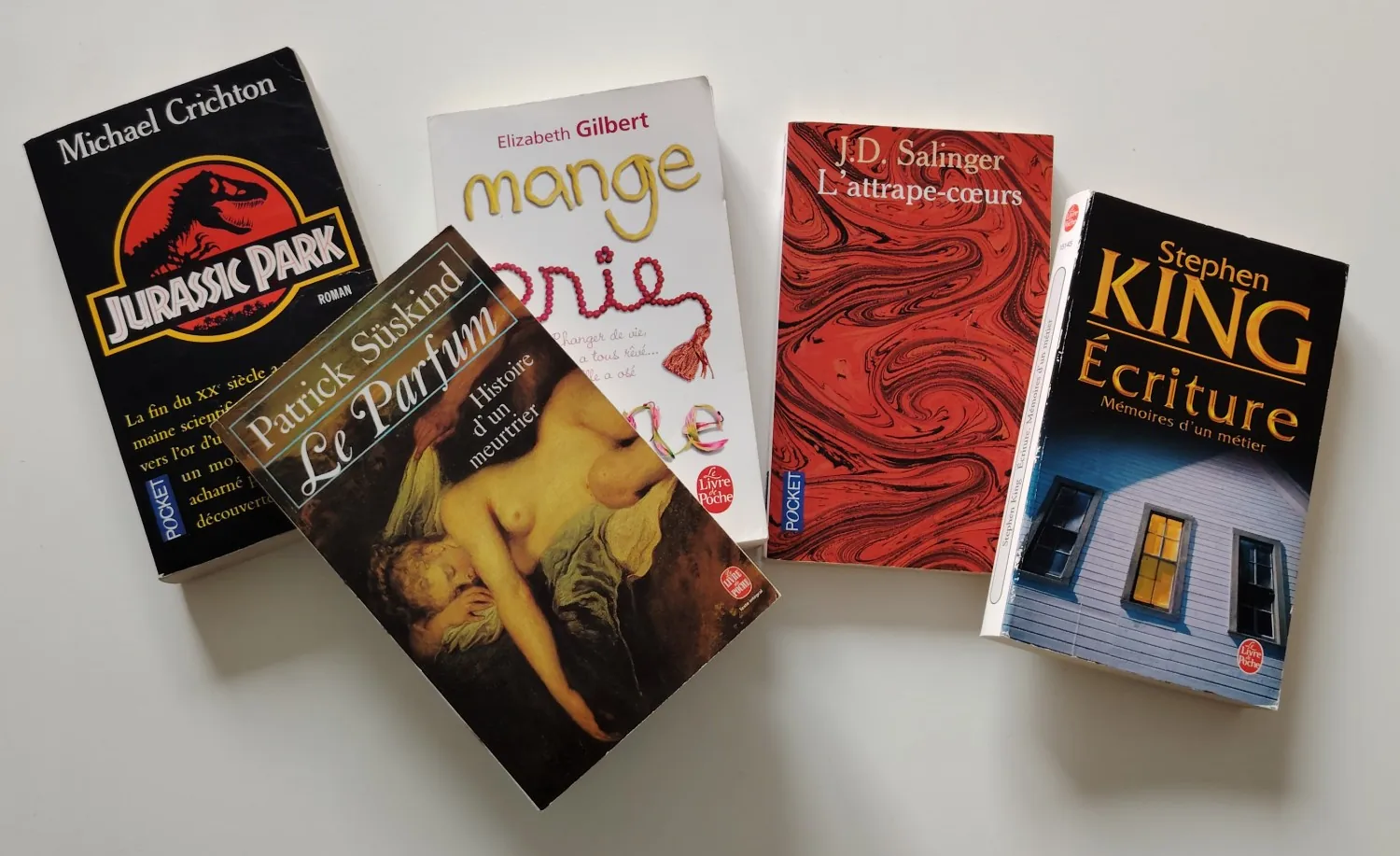
In France, the second-hand book market is estimated to be worth over 350 million euros. This financial opportunity attracts many who would also like to take a slice of the pie.
Last April, Emmanuel Macron proposed a tax on second-hand books to support authors and publishers, whose income mainly comes from the sale of new books.
However, the market for new books is in decline in France, with a slight increase of 1.16% in revenue in 2023, while the sale of copies has dropped by nearly 2%.
This raises the question of how to recover funds from the second-hand market, with the aim of providing additional compensation to authors and publishers.
However, legal experts point out that this could be legally complex and risky for competition, as it would be difficult to legally differentiate between online resellers, referral sites, and physical booksellers.
Taxing only online sales platforms could also create market imbalances.
Furthermore, implementing such a tax must comply with European regulations, which complicates the situation even more.
This is because, until now, the European directive 2001/29/EC stated that once a new book is sold, no rights can be asserted over it: the buyer fully enjoys the purchased work and can, for example, lend it to a friend or their children for reading.
This also allows the person to resell their book – just like one can resell a Toyota car without the manufacturer receiving a percentage of the sale.
To change this, it would first be necessary to establish copyright on second-hand books, which currently does not exist and complicates matters.
Ultimately, the debate highlights a broader issue regarding the sharing of value in the literary industry in France.
Instead of demonizing the second-hand market, which can attract new readers and stimulate the purchase of new books, France would be better off considering other solutions to support the book industry and promote reading, rather than adding new taxes that would further hinder the development of reading in this European country.
The brand Pocketbook offers a range of e-readers that stand out for their quality and performance. In this article, we will focus on two models that are particularly popular among readers: the Pocketbook Inkpad 4 and the Pocketbook Inkpad Color 3. Although they share many characteristics, they mainly differ in their screen technology.
Pocketbook is not allowed to distribute its e-readers in France. Here’s an explanation of this exceptional situation for the e-reader brand.
This situation dates back to 2016. Pocketbook decided to market its e-readers in France to compete with brands like Kindle, Kobo, and Bookeen (a French e-reader brand).
The dispute between the two companies was taken to the French courts, and the verdict was delivered in February 2017 in France: the brand Pocket won its case.
The pocket-sized book publisher thus triumphed in the battle against the e-reader manufacturer Pocketbook.
Since that day, Pocketbook has no longer been allowed to use that brand in France, as the court decided it conflicted with Pocket's trademark.
The reason given is simple: according to the justice system, there is a risk of confusion. Consumers might think that Pocketbook is associated with the publisher Pocket, which is already well established in France and in the minds of readers. Since 2017, the Pocketbook brand cannot be used in France!
The Pocket brand, which belongs to the Univers Poche group (Editis), was therefore victorious.
Pocketbook had already anticipated this decision by forming a partnership with the French company The Ebook Alternative (TEA) for the distribution of its e-readers.
Today, TEA still operates under the Vivlio brand and continues to offer Vivlio e-readers to French readers.
This story is one of many examples of France's protectionist nature regarding its print book industry.
France is one of the developed countries with the lowest market shares for e-book reading in the world.
As of 2023, e-book sales represented barely 10% of the industry's revenue in France, compared to around 20% in the USA – to name just that country.
In 2024, the Paperslate brand emerged offering two large-format e-reader models. Paperslate is a French brand that has just announced a new update that brings significant software improvements thanks to Artificial Intelligence (AI).
What is Paperslate?
These e-readers are not just any readers; they are designed for professionals who crave the experience of a large format electronic ink display.
Paperslate is backed by well-known figures in the digital reading community, the team led by Michael Dahan, who previously co-founded Bookeen, now under the French Vivlio brand of e-readers. With their extensive experience, they've crafted two new devices—the Paperslate and Paperslate Pro.
Targeting professional users, these e-readers boast a generous 10-inch black-and-white e-ink screen for viewing text almost as if it's on paper.
The conception is akin to devices like the Bookeen Notéa, Kindle Scribe, and reMarkable, which also cater to this particular niche, indicating room for multiple contenders in the market.
Let's delve into the essentials, starting with its pricing. The base model of the Paperslate retails at €349.99, a competitive rate that pits it strongly against established giants and smaller format e-readers alike:
It rivals the price of the Pocketbook InkPad Color 3.
It's close to the cost of the Kindle Colorsoft.
It's cheaper than both the reMarkable and the Kindle Scribe.
The Paperslate models maintain a monochrome display, focusing heavily on professional features:
A stylus supporting 4096 pressure levels, enhancing precision tasks.
Integrated layering system for note-taking on the 10-inch screen.
Capability to annotate PDF documents.
Document sharing functions with colleagues.
Running on Android 11, there remains a question on whether it will support additional app installations, including Google Play. Differentiation between the two models seems mainly in storage capacity:
Paperslate with 32GB for €349.99.
Paperslate Pro with 64GB for €429.99.
Each model includes a speaker and Bluetooth connectivity for audio content, supported by MP3 and WAV file formats.
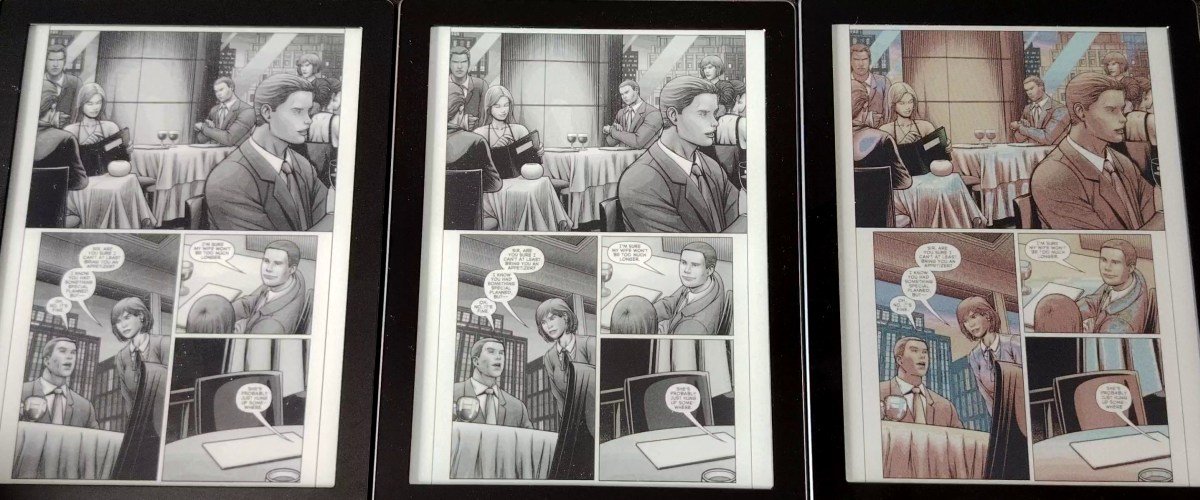
As for document compatibility, it supports PDF, EPUB, DjVu, and MOBI formats. However, it doesn't seem to cater to CBZ or CBR formats, typical for manga and comics, aligning with its professional orientation.
Available for purchase through their official site, https://paperslate.io/, Paperslate is positioning itself as a new competitor in the e-reader market with its features and attractive "low cost" pricing.
The 2025 Software Update that Boosts Your Productivity
Since April 2025, Paperslate has offered a software update with new features that provide a significant productivity gain for people who use Paperslate machines at work.
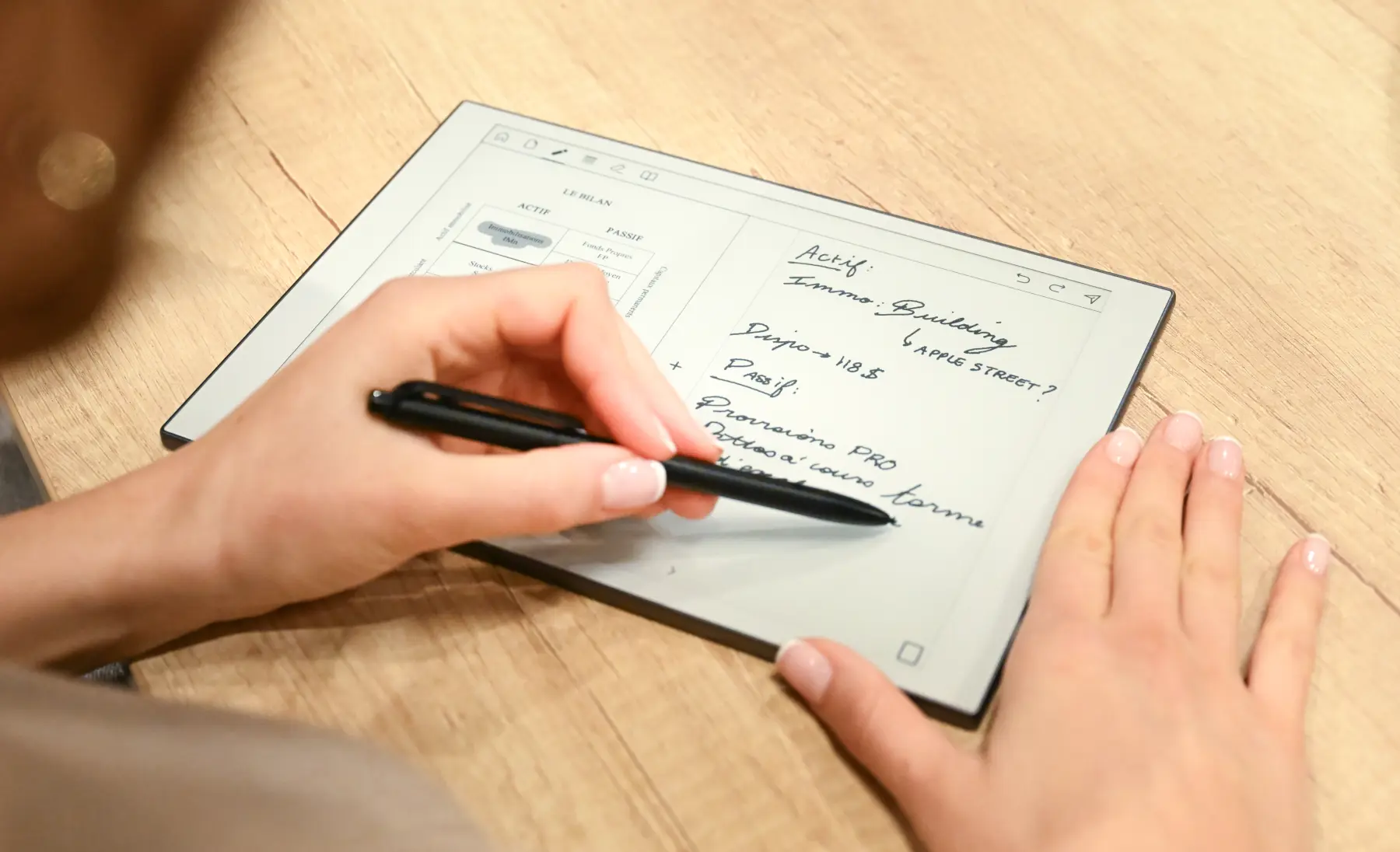
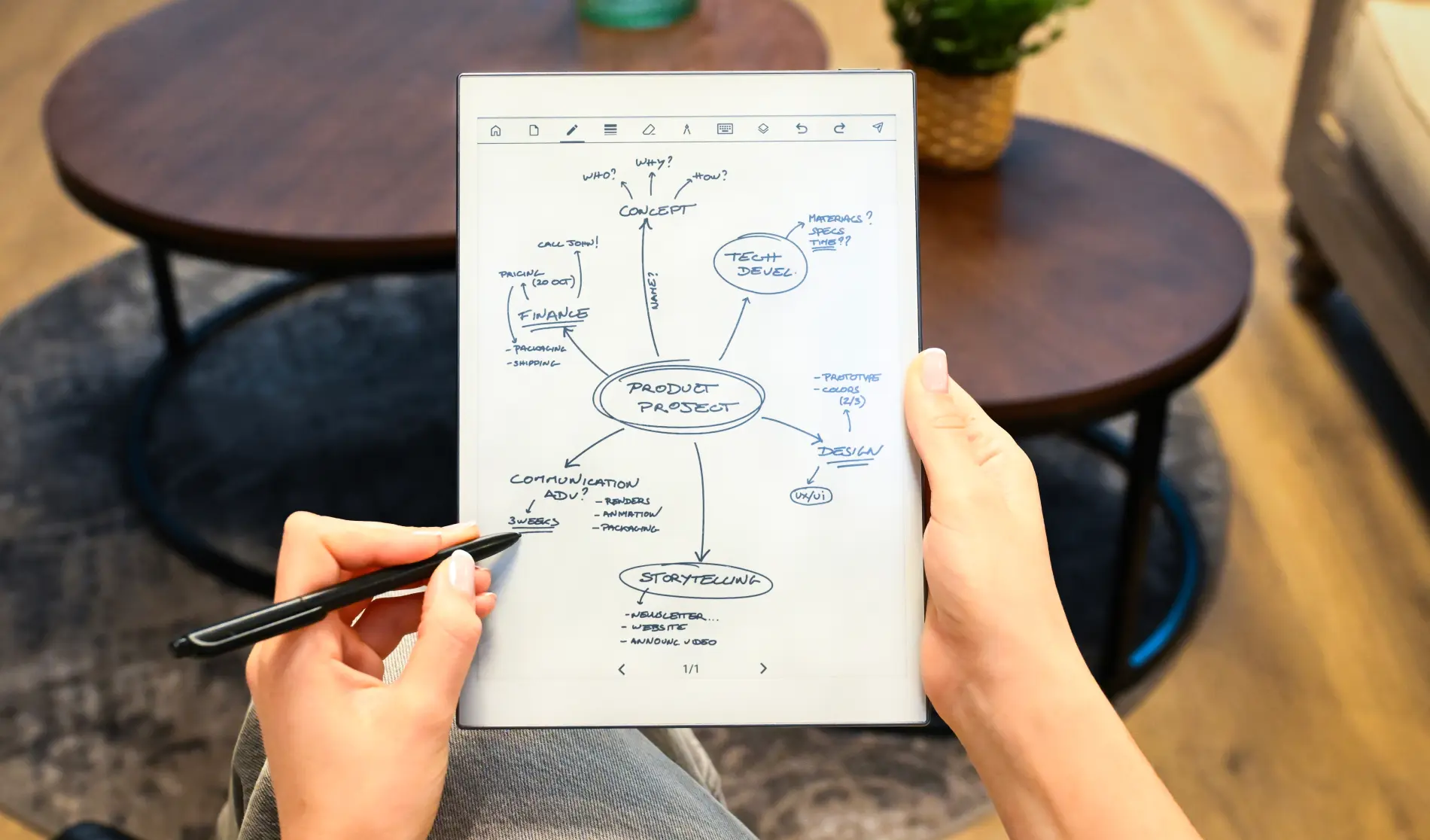
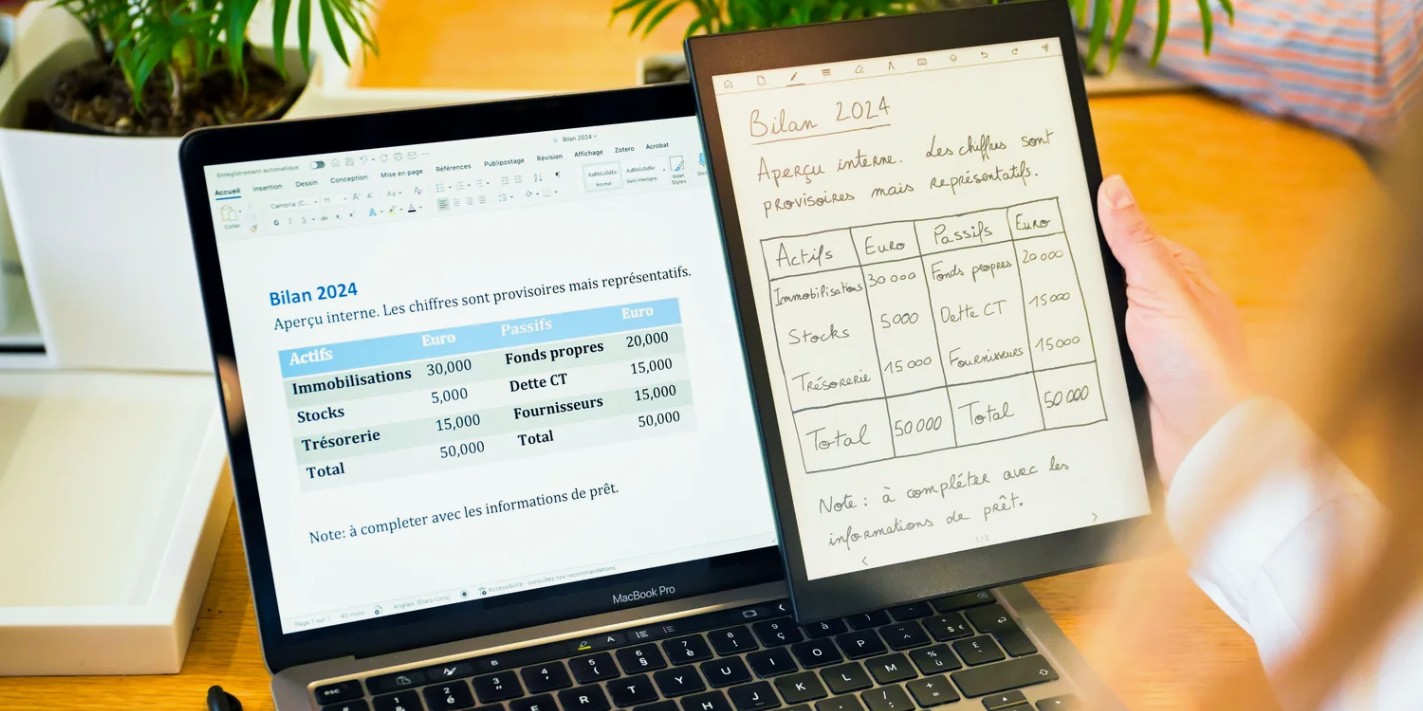
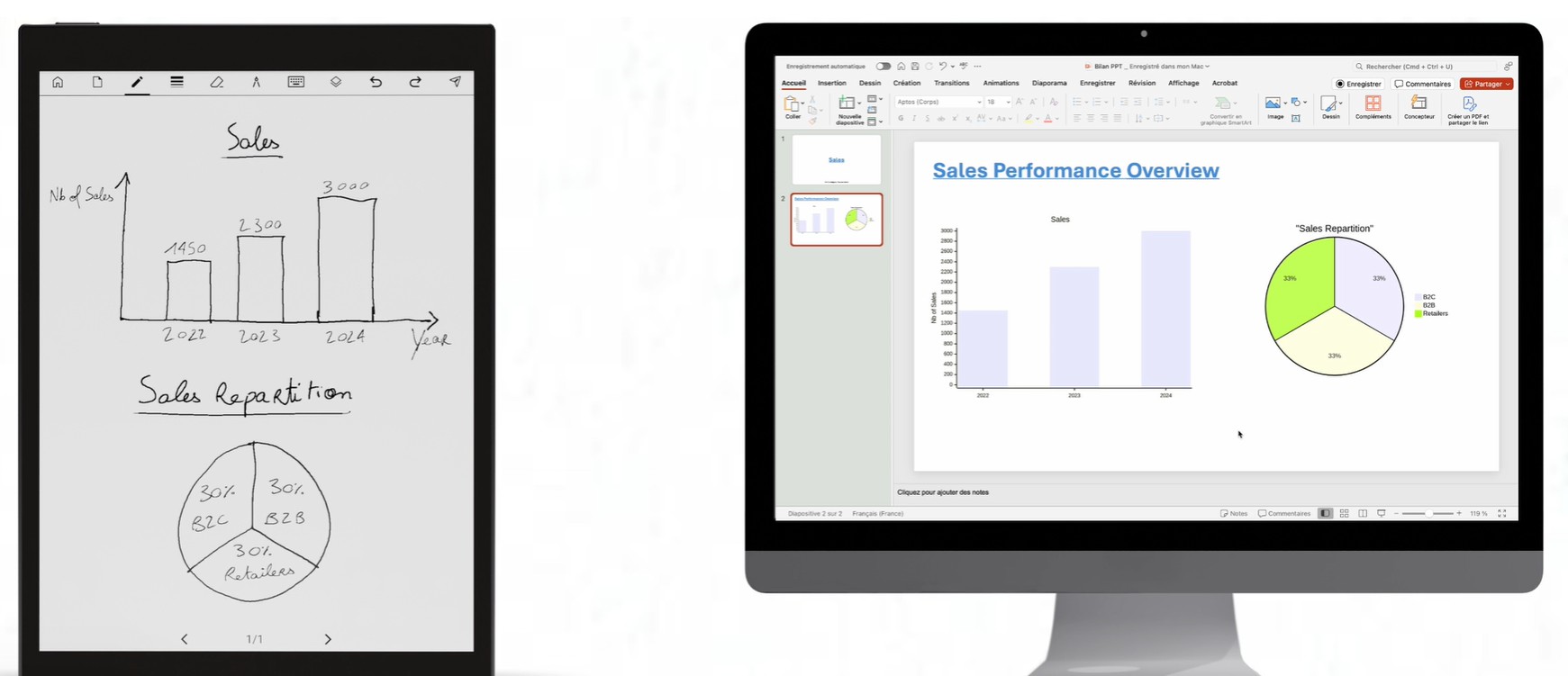
Thus, your machine can now use Artificial Intelligence (AI) that will help you convert your handwritten notes into usable and editable documents in a software suite such as Microsoft's Office Pack or an equivalent like Libre Office / Open Office.
This functionality therefore transforms documents entered using the stylus into Word or PDF documents.
This works for:
Text,
Mathematical formulas,
Timelines,
Mind maps and organizational charts,
Pie charts or histograms useful for presenting numerical data.
These new features are available in a "beta" test version for all Paperslate machine owners and are free of charge.
However, the company explains that some functions may become paid in the future depending on the resources required to run the AI models.
Note that Paperslate does not specify which AI model(s) are being used. Is it Claude? OpenAI / ChatGPT or Gemini? Perhaps we will find out in a few days.
To take advantage of these new features, you must update your Paperslate by connecting it to a Wifi network (internet connection is mandatory for AI transcription tools).
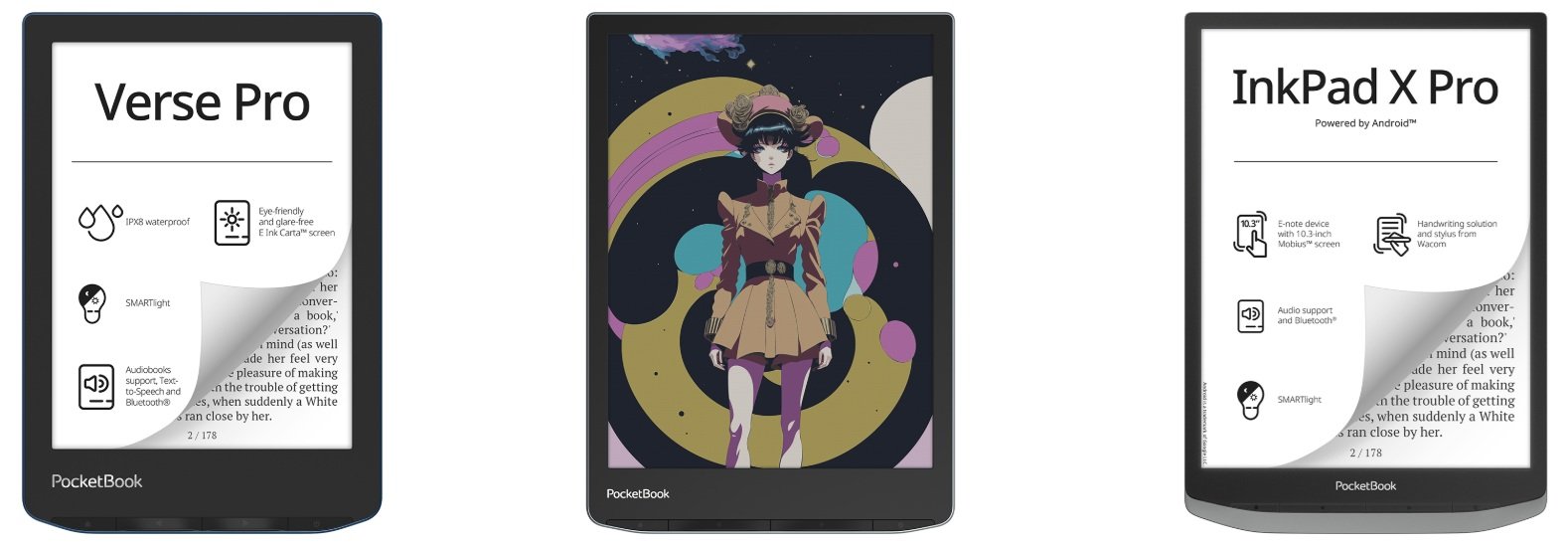
In the world of digital reading, e-readers have revolutionized the way we access books with their electronic ink screens. The Pocketbook brand offers several models tailored to various needs and preferences. In this article, we will explore the differences between the Pocketbook Verse, Pocketbook Verse Pro, and Pocketbook Verse Pro Color e-readers to help you choose the one that best fits your usage.
It features a French interface and a library boasting hundreds of thousands of books in French.
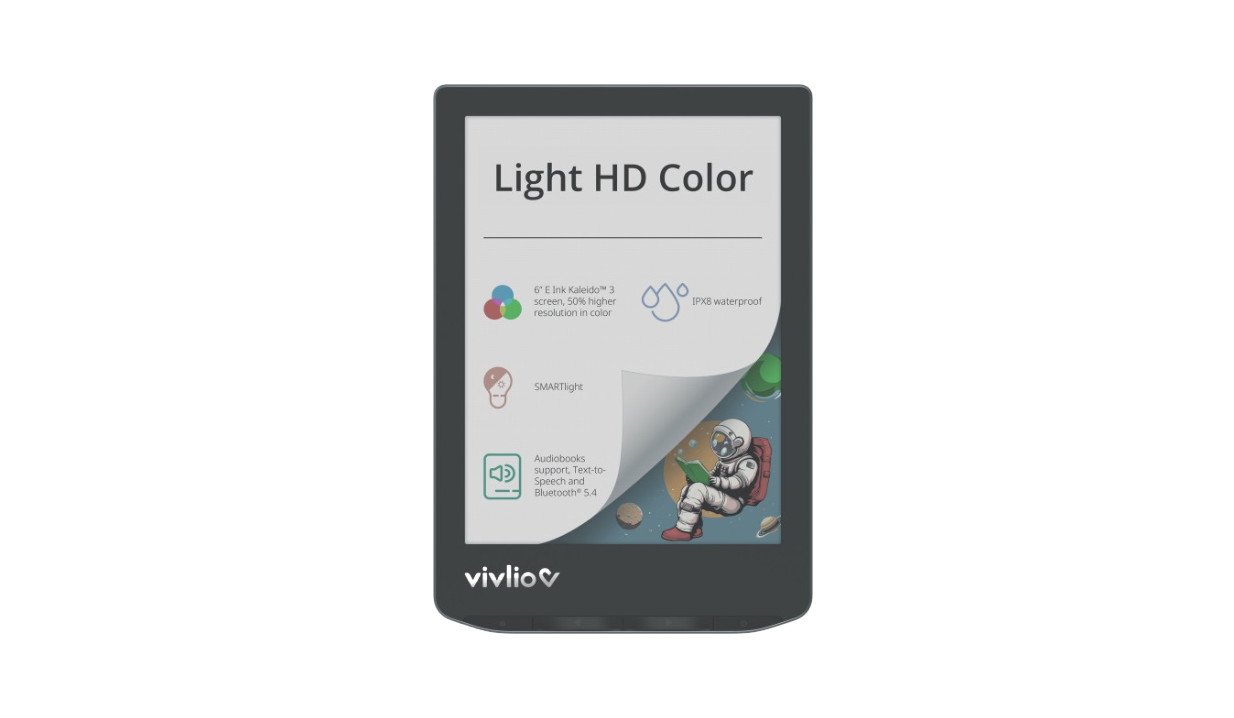
During my review (in French), I noted the superiority of the Vivlio Light HD Color e-reader in terms of color display compared to its competitors.
It's worth mentioning that this e-reader is truly intriguing, in France, with its color e-ink screen and affordable price.
Maintaining a compact 6-inch format while offering premium features from Vivlio (such as text-to-speech), this e-reader has established itself in France.
The Vivlio brand has also gained popularity in recent years, and its French identity appeals to readers who wish to support local businesses and distance themselves from brands like Kindle (American) or Kobo (Canadian-Japanese).
However, it's unfortunate that the stock for this e-reader has been limited. In defense of Vivlio, it’s not the only issue faced with color e-readers this fall; the Kindle Colorsoft has also encountered difficulties.
With the numerous color e-reader models released in recent months, it's clear that E Ink, the supplier of the screens, may be overwhelmed and likely cannot provide screens in nearly unlimited quantities, unlike the historical black-and-white models.
Fortunately for fans of the Vivlio brand and color e-ink, the Vivlio InkPad Color 3 is still available. This is a French version of the Pocketbook InkPad Color 3.
RD Invest and Finovam Gestion, two major players in private equity in France, have announced a €1 million investment in BiblioOnDemand, a digital bookstore. This investment aims to support companies in the technological and cultural sectors, addressing the growing needs of libraries and documentation centers.
Their objectives include developing new features for the BiblioOnDemand platform and expanding its network of partners. RD Invest, through its Nord Création fund, focuses on improving access to quality digital content, while FINOVAM 2 from Finovam Gestion targets the EdTech sector.
Founded in 2023 by Marie-Delphine Foudriat, a digital strategy expert, BiblioOnDemand offers a wide collection of eBooks, audiobooks, podcasts, and videos, totaling nearly 3 million pieces of content available to libraries, schools, and businesses.
To counter the decline in printed book consultations, BiblioOnDemand is launching BoodIA, an artificial intelligence that provides reliable and personalized responses.
The company is committed to fighting misinformation and ensuring equitable access to knowledge.
With the support of RD Invest and Finovam Gestion, BiblioOnDemand aims to strengthen its position in the global digital content market.