Fujitsu Quaderno A4C: A Japanese Rival to ReMarkable

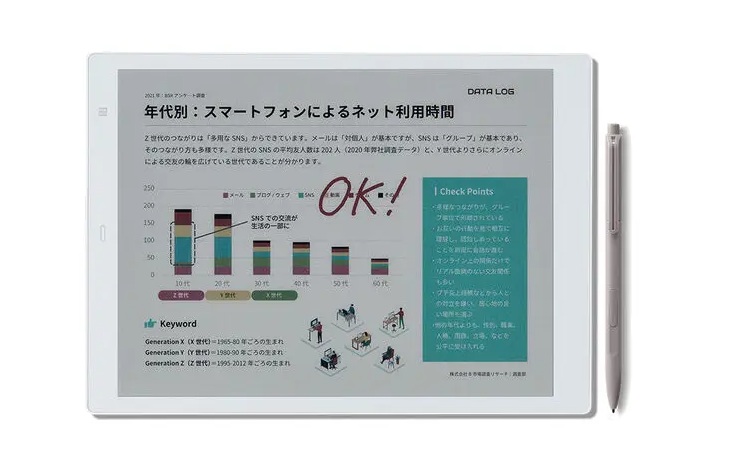
Fujitsu Quaderno A4C

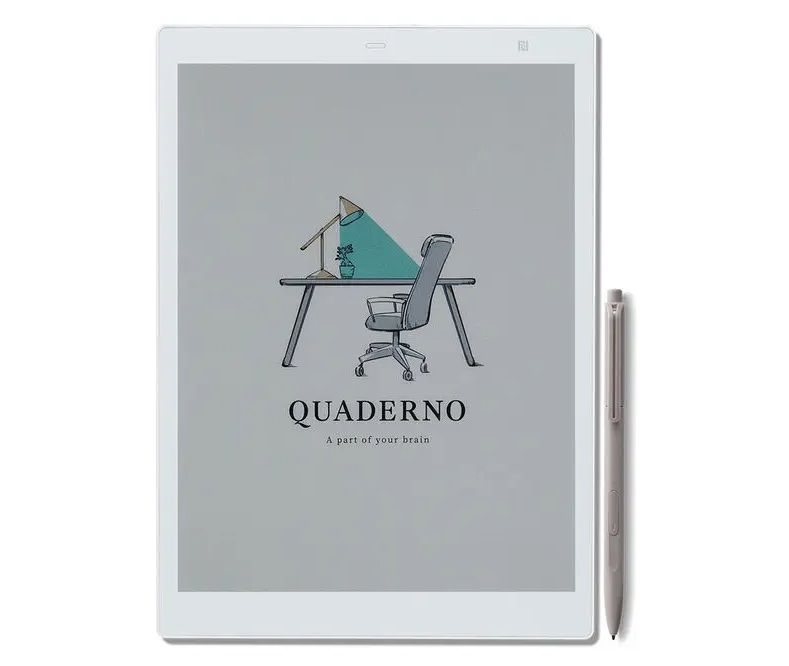
Brace yourselves because 2025 is bringing more digital notepads aimed at boosting productivity. Fujitsu plans to make a mark with its latest gadget, the Fujitsu Quaderno A4C.

The Quaderno line isn’t new; it’s been around for a few years and comes in two sizes: A5 and A4. The naming, using paper sizes, is no coincidence since the brand targets businesses focused on going paperless.

So, what is this Fujitsu Quaderno A4C all about?

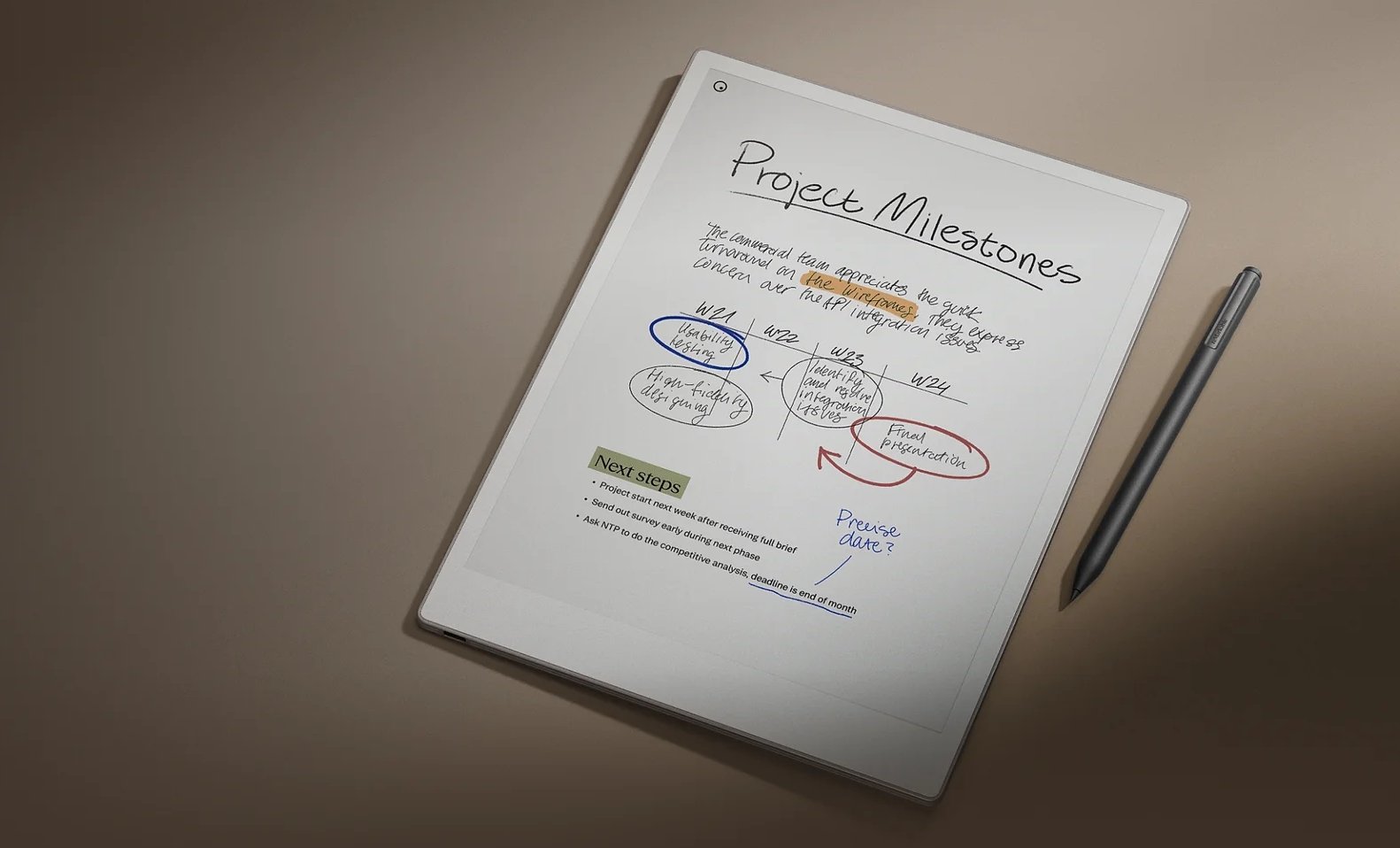
It’s a digital device featuring a 13.3-inch colored e-ink display with Kaleido 3 technology. This means it sports the latest in colored e-ink screens and seems to target the ReMarkable Paper Pro head-on.

The Fujitsu Quaderno A4C comes with a stylus that uses Wacom’s battery-free pressure system.

Here are its technical specs:

  • 13.3-inch Kaleido 3 (color) screen with a black-and-white resolution of 1650 x 2200 pixels (207 dpi, but just 103 dpi for color)
  • Capacitive touch layer with Wacom stylus
  • 32 GB of storage
  • USB-C
  • WiFi
  • Bluetooth
  • Weight: 368 grams
  • Dimensions: 222.8 x 301.11 x 5.7 mm
  • Supported format: PDF
Fujitsu Quaderno A4C

Feature-wise, the Quaderno A4C seems bare-bones!

It’s only compatible with PDF files, so forget about loading ePub files without converting them first — a bit of a downer.

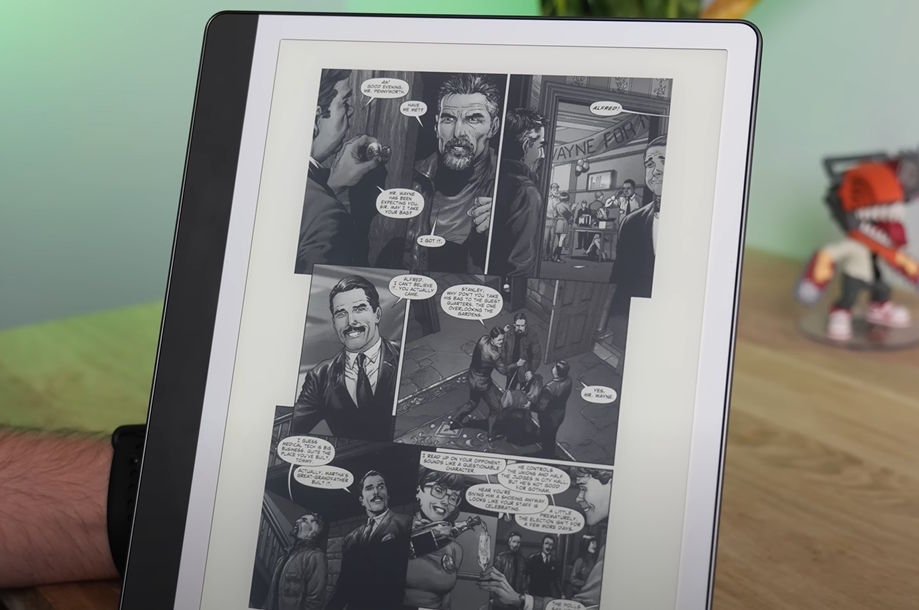
But remember, it’s built for the corporate world. Thankfully, you can take notes on PDF documents, even in color. But if it plans to compete with the likes of ReMarkable, Kindle Scribe, or Kobo Elipsa, it might need a bit more.

It seems like the Fujitsu Quaderno A4C is primarily targeting Japanese businesses, who tend to be pretty traditional. Using a Japanese product to handle important documents might be reassuring in terms of minimizing industrial espionage risks. Remember, Sony has offered similar products aimed at Japan for a long time.

For those of us living outside Japan, though, this device might not be too appealing. It will be available sometime in March 2025 with a steep price tag of $719.99. See also : best alternatives to the reMarkable

Official site: https://fujitsuquaderno.com/

France’s Challenge in Taxing Second-Hand Book Sales

french used books

In France, the second-hand book market is estimated to be worth over 350 million euros. This financial opportunity attracts many who would also like to take a slice of the pie.

Last April, Emmanuel Macron proposed a tax on second-hand books to support authors and publishers, whose income mainly comes from the sale of new books.

However, the market for new books is in decline in France, with a slight increase of 1.16% in revenue in 2023, while the sale of copies has dropped by nearly 2%.

This raises the question of how to recover funds from the second-hand market, with the aim of providing additional compensation to authors and publishers.

An amendment proposal has been made in October 2024 to tax sellers of second-hand books (or rather the online platforms that offer them, like Momox) to compensate for the economic losses suffered by authors.

However, legal experts point out that this could be legally complex and risky for competition, as it would be difficult to legally differentiate between online resellers, referral sites, and physical booksellers.

Taxing only online sales platforms could also create market imbalances.

Furthermore, implementing such a tax must comply with European regulations, which complicates the situation even more.

This is because, until now, the European directive 2001/29/EC stated that once a new book is sold, no rights can be asserted over it: the buyer fully enjoys the purchased work and can, for example, lend it to a friend or their children for reading.

This also allows the person to resell their book – just like one can resell a Toyota car without the manufacturer receiving a percentage of the sale.

To change this, it would first be necessary to establish copyright on second-hand books, which currently does not exist and complicates matters.

Ultimately, the debate highlights a broader issue regarding the sharing of value in the literary industry in France.

Instead of demonizing the second-hand market, which can attract new readers and stimulate the purchase of new books, France would be better off considering other solutions to support the book industry and promote reading, rather than adding new taxes that would further hinder the development of reading in this European country.

In France, new books are taxed at 5.5%, and their prices are fixed, meaning that every bookstore must sell the book at the same price throughout the French territory.

There's no doubt that this tax affair won't stop there, and with the country in political crisis (Prime Minister resignation), it's easy to imagine that those in power, led by their publisher friends, won't stop there.