Maybe you downloaded a giant fantasy saga or a comprehensive textbook. While these tomes offer hours of reading material, navigating them on your e-reader can be cumbersome. In this tutorial, we will see how to split an EPUB file into multiple chunks.
Continue readingCategory Archives: Blog
USA: digital book sales exceed $1 billion by 2023

The figures for the US book market have just come in, and one piece of news is sure to delight digital book lovers: ebook sales topped the billion-dollar mark in 2023.
This is an impressive figure: in the USA, in 2023, digital books of the ebook (text) type brought in over a billion dollars (+0.6%)!
This figure covers sales of digital books for e-readers, of course, but also sales of ebooks to be read on computers (PDF documents), smartphones and tablets (ebooks from the apps from Google and Apple).
While printed books are holding up remarkably well, with estimated sales of almost $9 billion by 2023, the same cannot be said for physical audiobooks. Unsurprisingly, sales of physical audiobooks (in CD form) are down to a paltry $12.9 million.
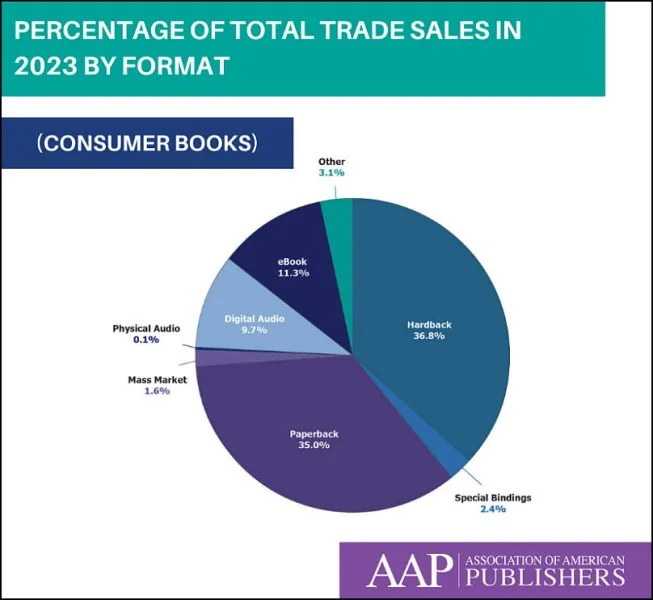
Now, if we add up all these figures, we see that the book market is slightly down by 0.3% over the year 2023.
The market is therefore holding steady, with digital sales continuing to increase year on year.
These figures come from the AAP (Association of American Publishers). Source : https://publishingperspectives.com/2024/03/aap-statshot-in-2023-us-revenues-were-12-6-billion/
How to merge multiple ebooks into one single file?
Ever downloaded multiple ebooks of the same story, but wished you had them all in one file? Or maybe you have short stories you’d love to combine into a neat anthology.
Continue readingHow to configure your e-reader for optimal reading?
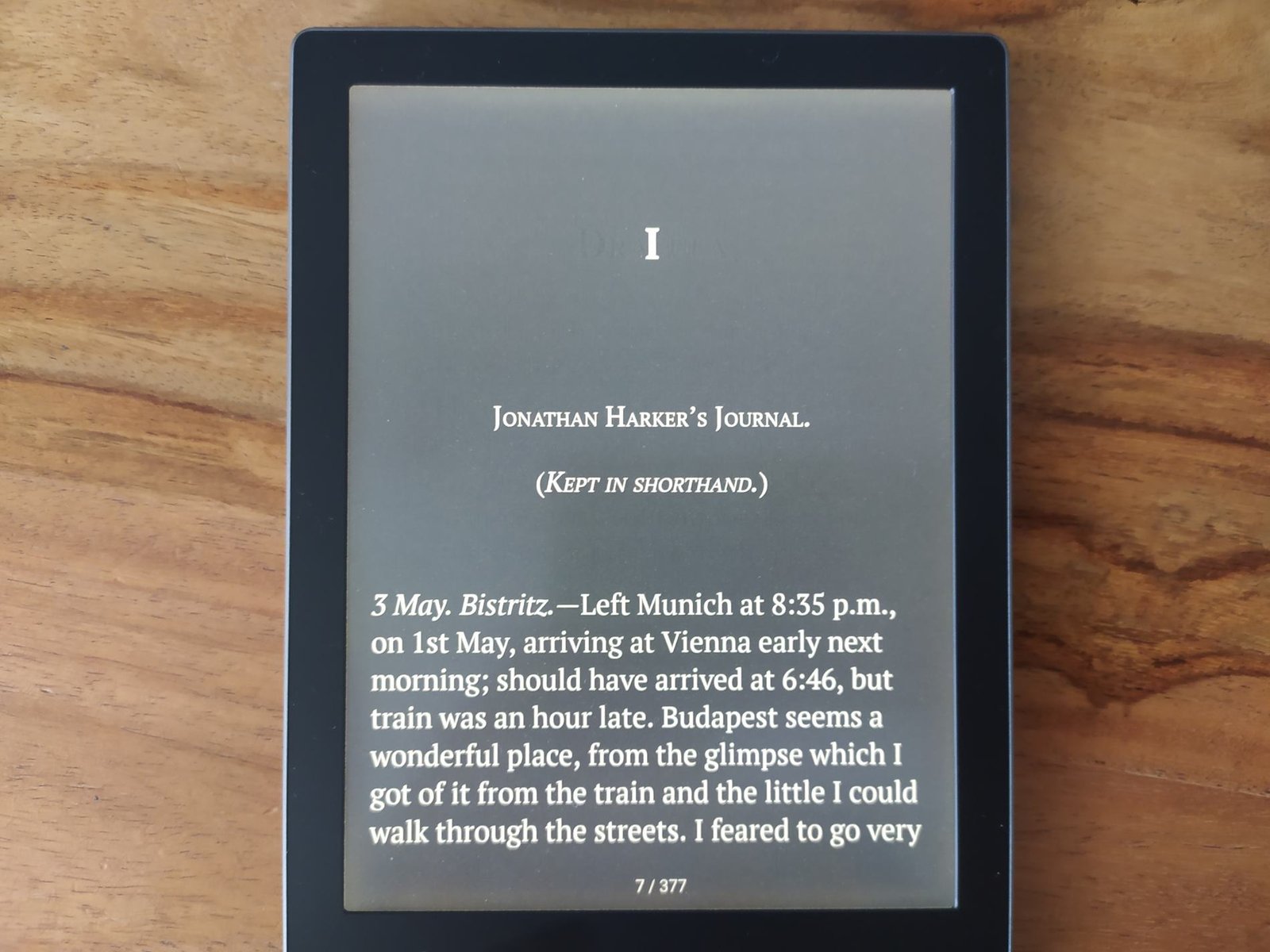
E-readers have revolutionized the way we read books, and millions of us around the world use one every day. But are you getting the most out of your e-reading experience?
This guide will show you how to change the settings on your e-reader to make reading more comfortable and enjoyable.
> TLDR: Don’t be afraid to experiment with different text settings to find what works best for you. Use the built-in reading statistics to track your progress and stay motivated. Consider using an external light source.
Find the right settings for your e-reader

image: configure text settings on a Pocketbook Verse Pro e-reader
When we buy an e-reader and use it, we often make the mistake of configuring it to reproduce the reading experience of a paper book.
But an e-reader allows us to be much more flexible and creative when it comes to displaying text.
So we need to experiment to find the text settings that suit us best. Here are a few examples:
- Change screen orientation
- Increase font size significantly
- Changing the font and installing new fonts on your e-reader
- Switch the e-reader to night mode with white characters on a black background
Personally, I’ve set up my e-reader with very large fonts and plenty of space between lines, which means I can read faster – even if I have to change pages more often.
Use the built-in reading progress statistics

Image: configure reading progress on Kobo e-readers
If you want to stay motivated or read more, you can use the built-in reading progress statistics on your e-reader:
Visualization of Progress: statistics like "time left in chapter" or "percentage of book read" give you a tangible sense of accomplishment. Seeing a number tick down or a percentage climb can be very motivating, especially when tackling a long book. Setting Goals: You can use statistics to set realistic reading goals. Knowing how long a typical chapter takes you to read allows you to aim for a certain number of chapters per day or week. Maintaining Momentum: Statistics can help you stay on track. Seeing how much you’ve read in a single sitting or over a period can encourage you to keep going, especially if you’re close to a milestone like finishing a chapter or reaching a certain percentage.
I therefore strongly recommend that you configure the display of statistics on your e-reader.
Use an external light source
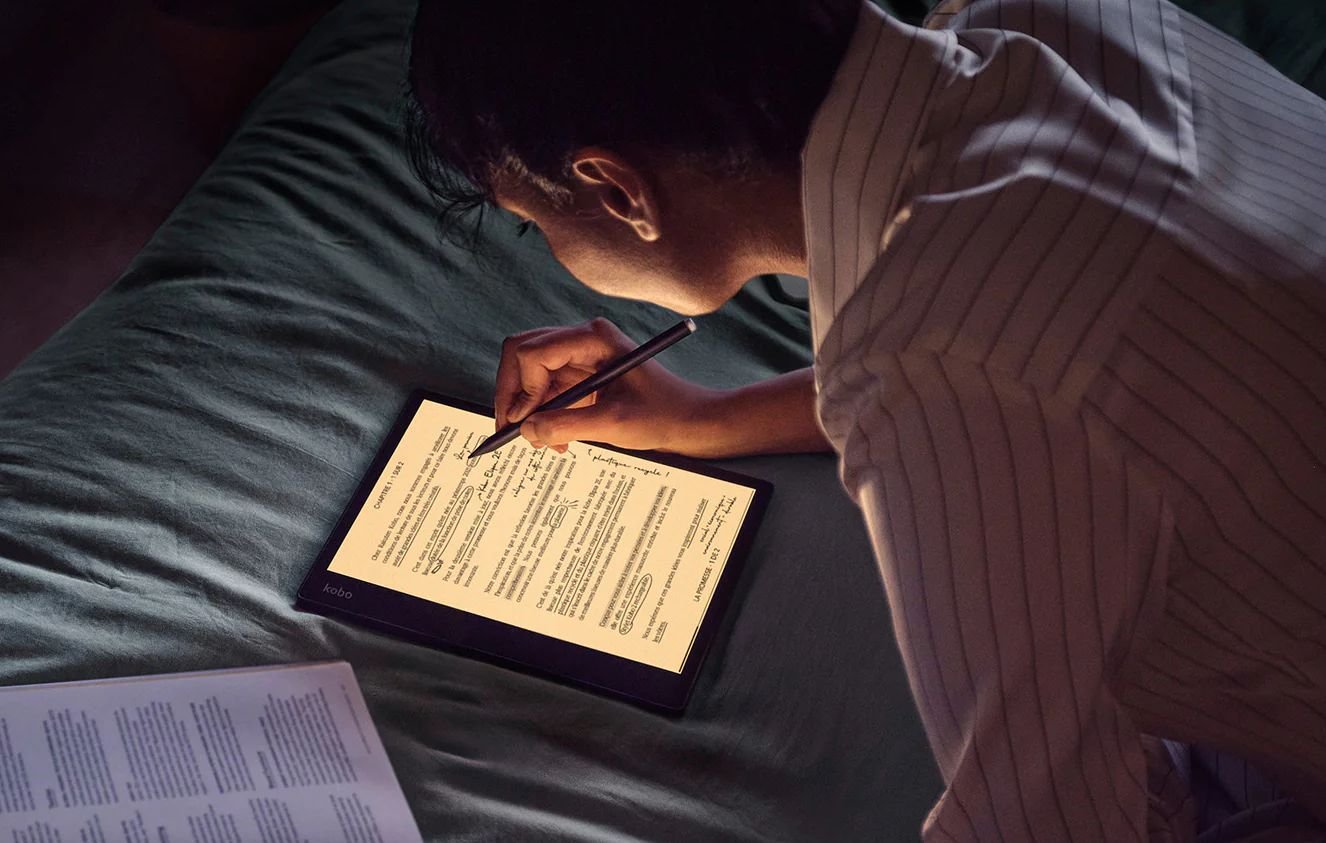
Image: you may feel tired when reading with the built-in light of your e-reader
Just because your e-reader has a screen with built-in lighting doesn’t mean you have to use it.
If you feel tired when reading an ebook on your e-reader, you can change the lighting settings, such as its intensity or the blue light filter.
I’d also recommend using a bedside lamp if your eyes get tired, or at least more tired than when reading a paper book.
How eco friendly are eBooks?
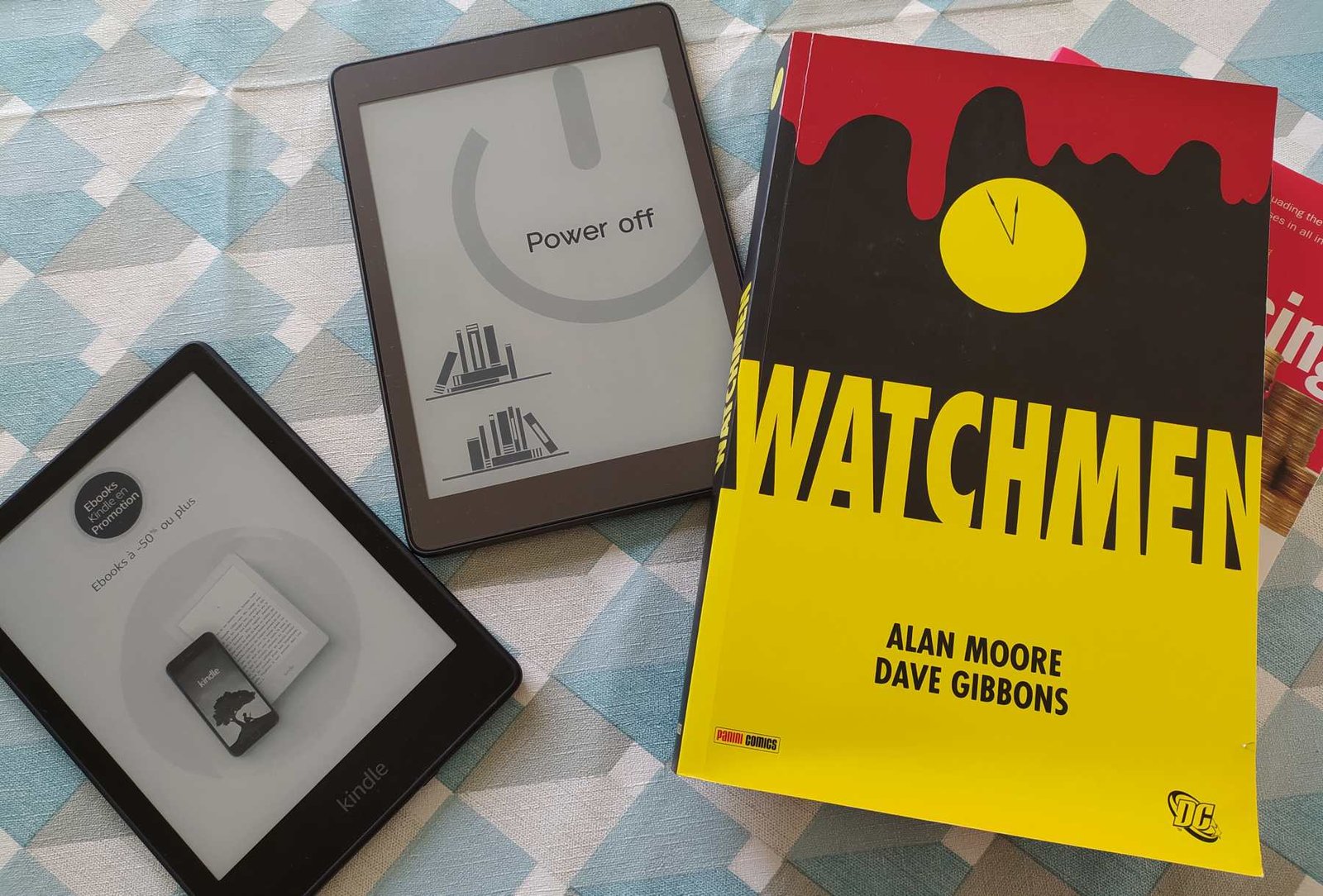
There’s a lot of information all over the Internet about the so-called polluting nature of ebooks. Quite simply, the figures are announced at the drop of a hat. It’s time to find out how eco friendly are eBooks!
TLDR: it’s much better (eco friendly) to read an ebook than to buy and read the paper version if you already own hardware capable of reading the ebook.
What is the carbon footprint of an ebook?
There are studies on the carbon footprint of e-readers and paper books, but not ebook reading alone.
Moreover, not all sources agree, since the studies are commissioned by e-reader manufacturers (Kindle) or paper book publishers (Hachette french publisher). And I think it’s all more or less false – but you can read it here if you’re interested: https://reporterre.net/Livre-papier-ou-liseuse-electronique-qui-est-le-plus-ecolo – French link.
Of course, the media pick up on all this without paying any attention to the fine print.
So let’s start again with what an ebook is.
> An ebook is a computer file of a few hundred Kb to a few Mb in size.
> This file is transmitted by an Internet server to your e-reader when you download it.
To take into account everything that goes into reading an ebook, we also need to take into account the download when calculating the carbon footprint of an ebook.
Note that this mode of operation is simple and corresponds almost identically to the way a web page is retrieved from a web server by your Internet browser.
We can therefore rely on existing studies on the subject to calculate this.
A study that seems to me to be fairly serious and reliable arrives at an average carbon footprint of 5 g of CO² for a web page. And therefore, for an ebook too. See here: https://en.reset.org/whats-carbon-footprint-your-website/
An ebook can be read, with a carbon footprint of around 5g of CO² on a smartphone, tablet, e-reader or computer! After all, it’s just a file downloaded onto a device.
On the other hand, the carbon footprint of a e-reader is undoubtedly greater, at around 100 to 200kg of CO² (compared with less than 100kg of CO² for a smartphone).
If you already own a device that allows you to read books, the most eco-friendly thing to do is to use the equipment you have at your disposal to read your digital books (ebooks), giving priority to the most energy-efficient devices:
- Smartphone
- Tablet
- E-reader
The use of a computer is not recommended, however, as the time it takes to read your book (5 to 10 hours) can consume a lot of electricity.
As far as the carbon footprint of electricity is concerned, if the vast majority of which comes from nuclear power, it is negligible. But this is a different and more complex subject.
Yes, ebooks are green!
In conclusion, it’s much better (eco friendly) to read an ebook than to buy and read the paper version if you already own hardware capable of reading the ebook.
So if you have a smartphone, tablet or e-reader, the ebook is much greener than the paper book when you buy it.
Reading an ebook could help combat global warming.
Pocketbook Era Color: the new color e-reader will be available in May 2024
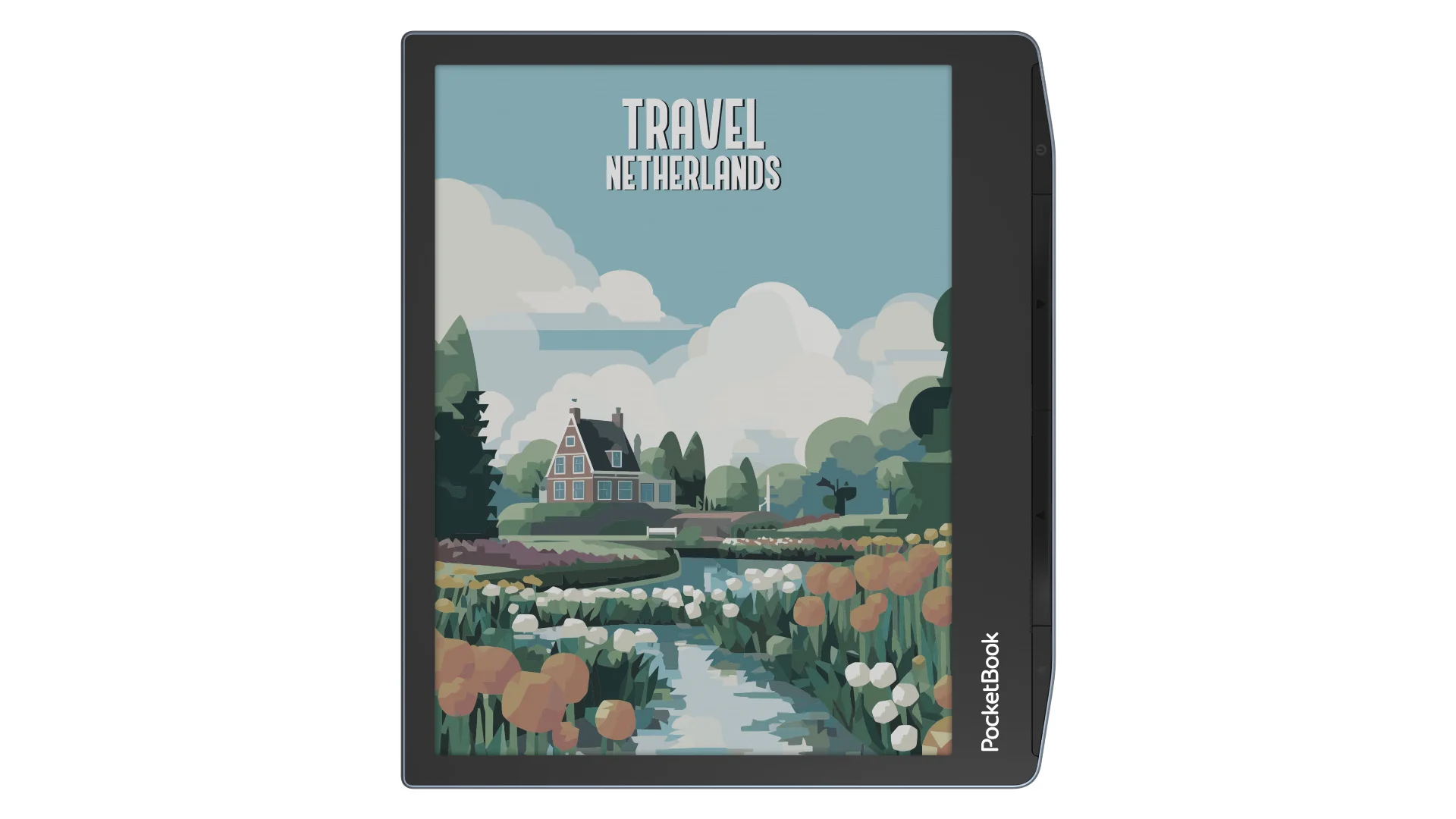
Pocketbook has announced a new color e-reader that could well change the game: the Pocketbook Era Color will be available in May, 2024.
The Pocketbook Era Color is a color version of the Era and also a competitor to the Kindle Oasis and Kobo Sage.
It features a 7-inch diagonal Kaleido 3 color e-ink screen with a resolution of 1264 x 1660 pixels (300 PPI) in black and white and 632 x 840 pixels (150 PPI) for color.
It features an asymmetrical design with buttons on the side, is IPX8 waterproof, has an illuminated touch screen and offers all Pocketbook's advanced software options, such as text-to-speech, audiobook reading and excellent compatibility with ebook file formats.
The Pocketbook Era Color is well equipped under the hood, with a quad-core 1.8 GHz ARM processor, 1 GB RAM and 64 GB storage.
Now we come to the great strength of this e-reader, which is its price. Pocketbook has announced a price of $259.99, with release scheduled for the end of April 2024 just like the new Kobo Libra Colour.
The price of the Pocketbook Era Color e-reader is almost identical to that of the Kobo Sage or Kindle Oasis, but with the added benefit of a color screen.
This is a significant testimony to the advances made in color e ink screen technologies, not only in terms of color rendering, but also in terms of the decreasing cost of manufacturing these screens.
With the price of such a complete e-reader well under $300, we can assume that future models costing over $200 will all have to switch to an e-ink color screen to remain relevant on the market.
I'd already had this impression with the release of the great Pocketbook InkPad Color 3, which ended up being barely more expensive than the Pocketbook InkPad 4 and its black-and-white screen: a minimal price difference that tips the balance in favor of the InkPad Color 3 in terms of value for money.
Finally, here are the technical specifications of this new Pocketbook Era Color e-reader:
- 7-inch color E Ink Kaleido 3 screen
- Resolution of 1264 x 1660 pixels (300 PPI) in black & white and 632 x 840 pixels (150 PPI) for color
- Touch screen
- SmartLight illumination with blue-light filtering
- 1.8 GHz quad-core ARM processor
- 1 GB RAM memory
- 64 GB storage
- Supported ebook file formats: ACSM, CBR, CBZ, CHM, DJVU, DOC, DOCX, EPUB, EPUB(DRM), FB2, FB2.ZIP, HTM, HTML, MOBI, PDF, PDF (DRM), PRC, RTF, TXT
- Speakers
- Bluetooth 5.4
- 2500 mAh battery capacity
- Dimensions: 134.3 x 155 x 7.8 mm
- Wifi
- USB-C
E-reader: How to put books on your e-reader (all brands)
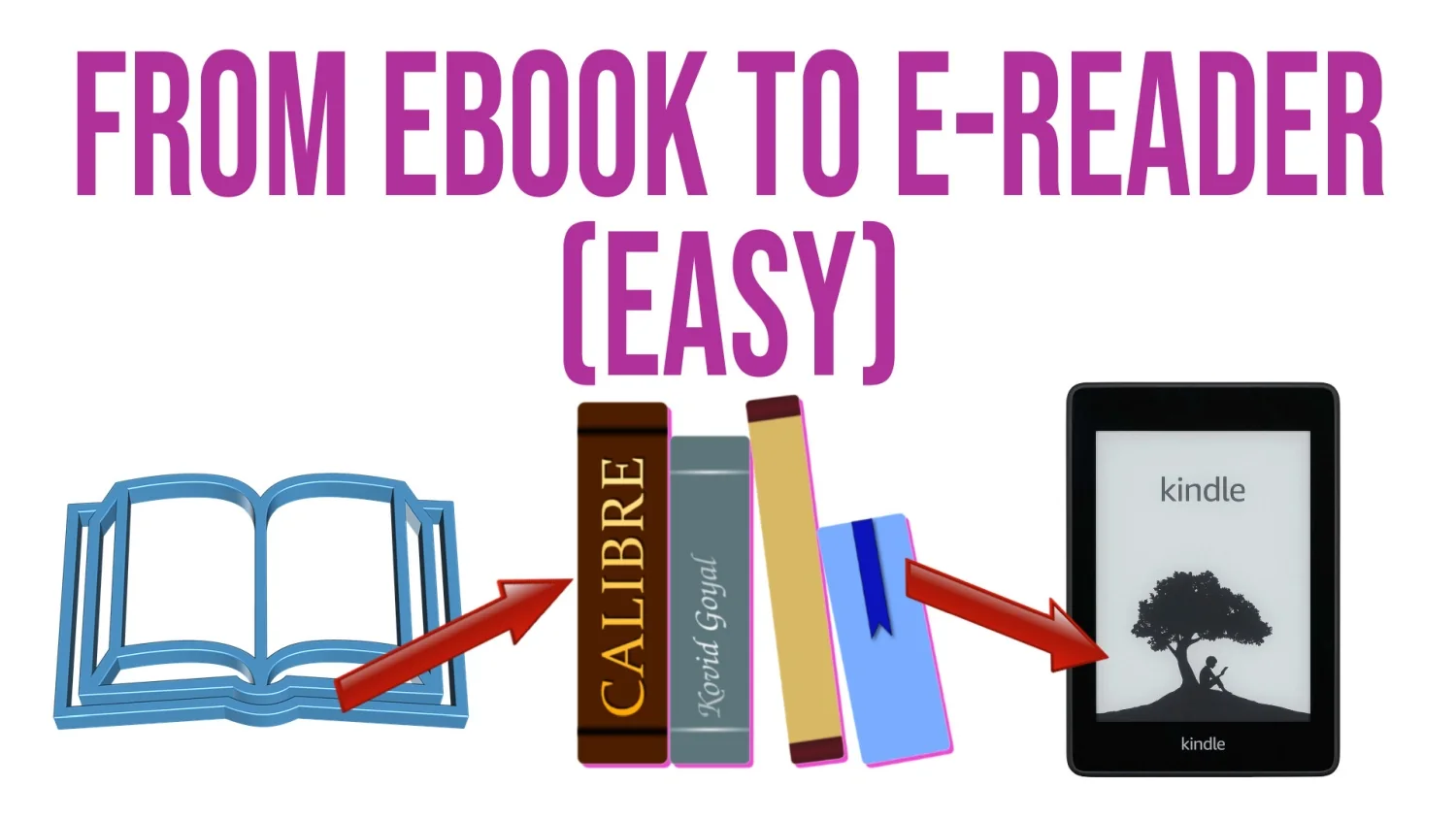
Do you have a e-reader and want to transfer books you’ve downloaded from the Internet to it easily?
Continue readingBigme inkNoteX Color: overpriced but interesting
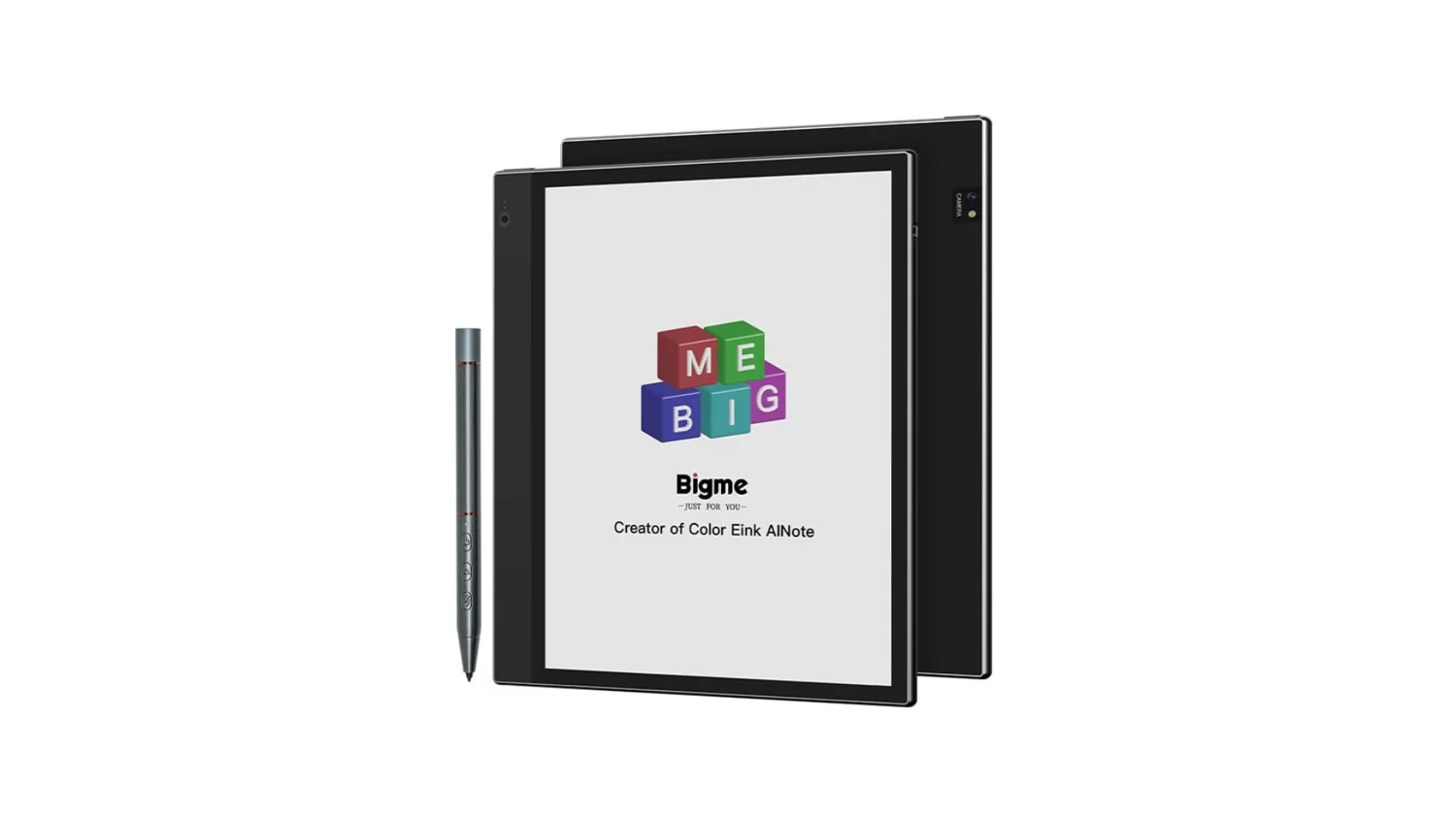
In the category of e-readers, which are also digital note-taking tools (or digital notepads), Bigme offers machines that push the technical boundaries ever further. But haven’t they gone too far this time?
Bigme inkNoteX Color: presentation
Bigme is an Asian brand offering e-readers and digital notebooks that compete with the Kindle Scribe, the Kobo Elipsa 2E and the ReMarkable 2.
The Bigme inkNoteX Color features a large, 10.3-inch color screen using Kaleido 3 technology. It is sold with a stylus and offers most of the options and functions found in this style of e-reader/tablet.
Bigme also highlights the presence of a fast 2.4 Ghz octa-core processor and features to optimize the user experience when it comes to the color screen:
- Bigme xRapid technology: minimizes ghosting, an unpleasant blurring effect that can occur during fast scrolling. A mode designed for sharper, more responsive display (better screen refresh).
- Bigme xColor color management algorithm: improves image clarity, color richness, contrast, brightness and black depth. A mode designed for games, videos and photos.
In addition, the Bigme inkNoteX Color uses 6 GB of RAM and 128 GB of storage.
All this is managed by the Android 13 system, allowing new applications to be added.
Bigme inkNoteX Color : technical specifications
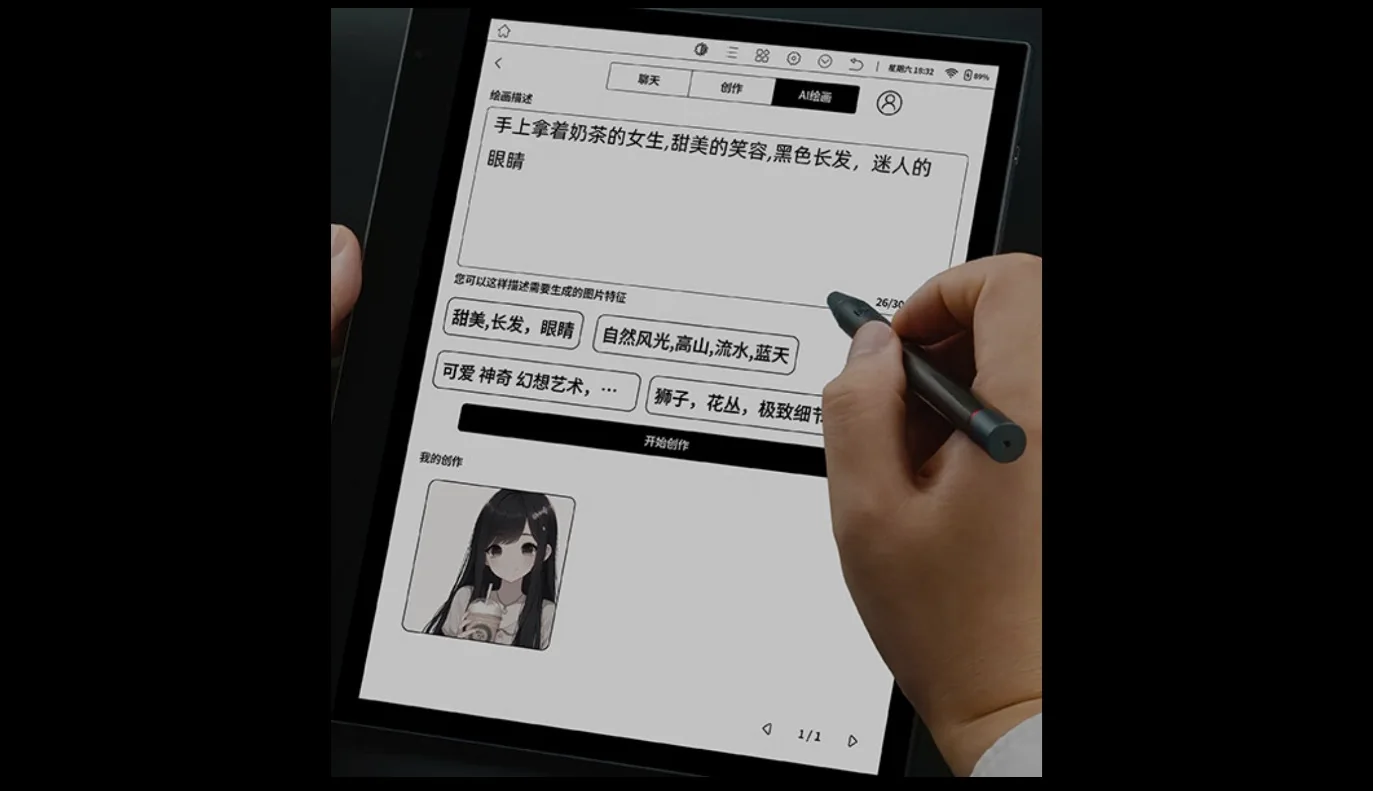
Here is a summary of the technical specifications of this machine:
- Screen: 10.3 inch color, E Ink Kaleido 3
- Resolution: Black & White: 300 PPI, Color: 150 PPI
- Front lighting: 36 levels of warm and cool light
- Blue light reduction
- Processor: octa-core 2.4 GHz ARM
- Random Access Memory (RAM): 6 GB
- Storage: 128 GB (expandable up to 1 TB with external memory card)
- Battery: 4000 mAh
- Operating system: Android 13 (third-party applications can be installed)
- Stylus: 4096 pressure levels
- Additional features: infrared pointer, voice remote control
- Microphone and speakers
- Front cameras: 5 MP, rear: 8 MP
- Connectivity: Wi-Fi, Bluetooth, USB Type-C port
- Security: fingerprint sensor integrated into power button
Bigme inkNoteX Color: too high a price?

This Bigme inkNoteX Color is priced at just under $800.
It’s a very high price, but one that reflects the technical specifications fairly well. In addition to the usual tablet components, it’s the large 10.3" Kaleido 3 screen that pushes up the price.
So the question arises: is it worth investing in a machine costing around $800, with a color screen that’s not as good as a tablet costing half that?
For the record, you can find a good Android tablet from a major brand like Samsung for this price, and even an iPad Mini.
As far as ebook reading functions are concerned, this Bigme inkNoteX Color offers everything you need, including the addition of new reading applications.
But its size makes it a machine that’s best suited to the home or office.
So, as far as I’m concerned, it’s not a reading machine, but a touch-screen tablet with a color e-ink screen.
In my opinion, machines of this type, which have the advantage of an e-ink screen, shouldn’t cost more than $100 than their equivalent with a conventional OLED or LCD screen.
The site (but this e-reader is not yet available): https://bigmestore.com/
How to find your Kobo e-reader model and serial number?
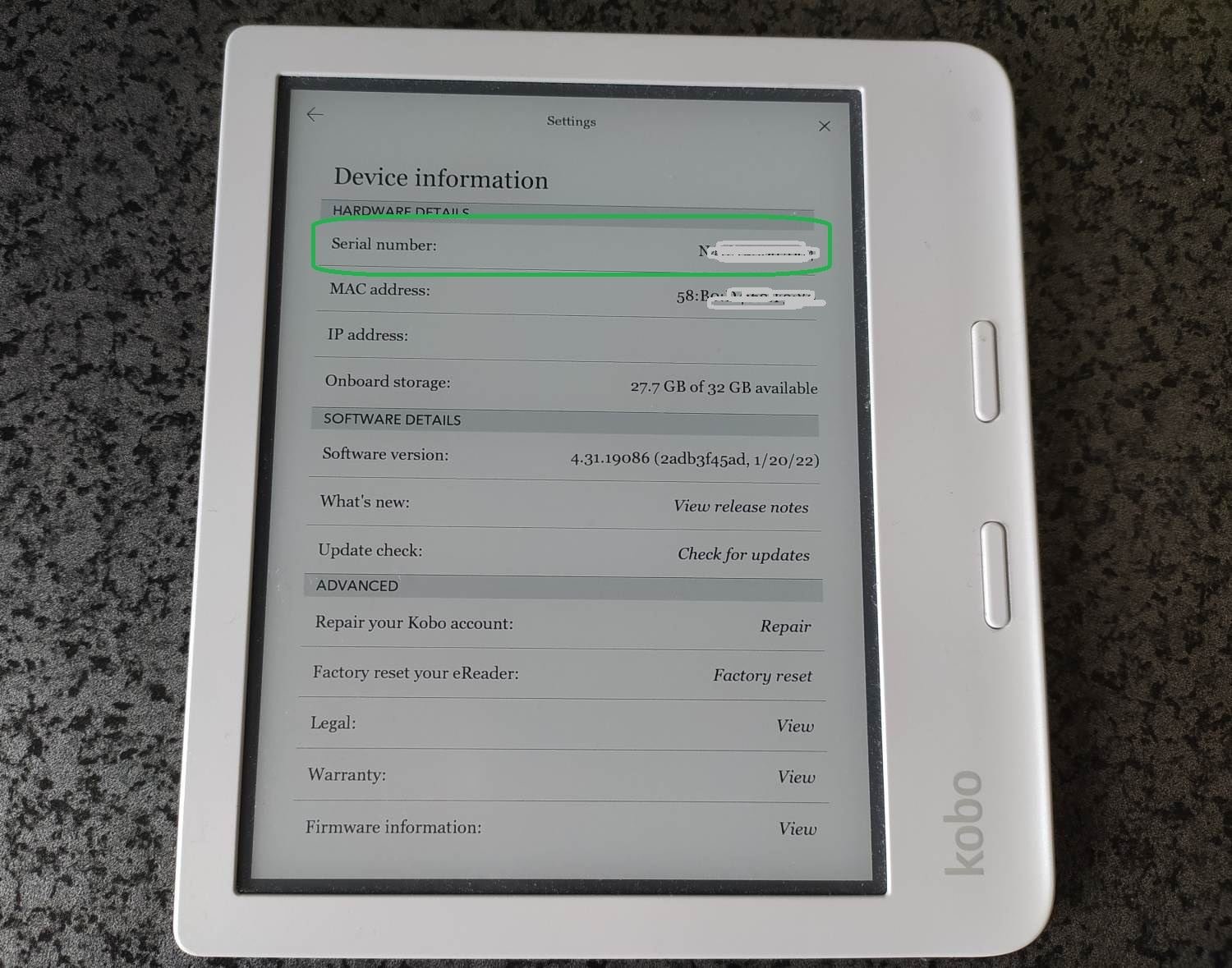
If you have a Kobo e-reader and would like to know the model and serial number, here’s how to find out.
Note that this article only concerns Kobo e-readers, and that you can find the equivalent article for Kindle e-readers here.
Why do you need to know which Kobo e-reader model you have and what its serial number is?
For the model (or version), it’s important to find out about its various features, whether you want to buy an accessory (a protective case or a charger) and its age (how long it’s been available).
It’s also important to find out the exact model name of the e-reader if you want to buy second-hand, to make sure you’re being sold the right model.
As far as the serial number of your Kobo e-reader is concerned, its main use is with the free Calibre software, which allows you to remove DRM from Kobo ebooks.
You’ll find a full tutorial on this page.
Here’s how to find the exact model name of your Kobo e-reader:
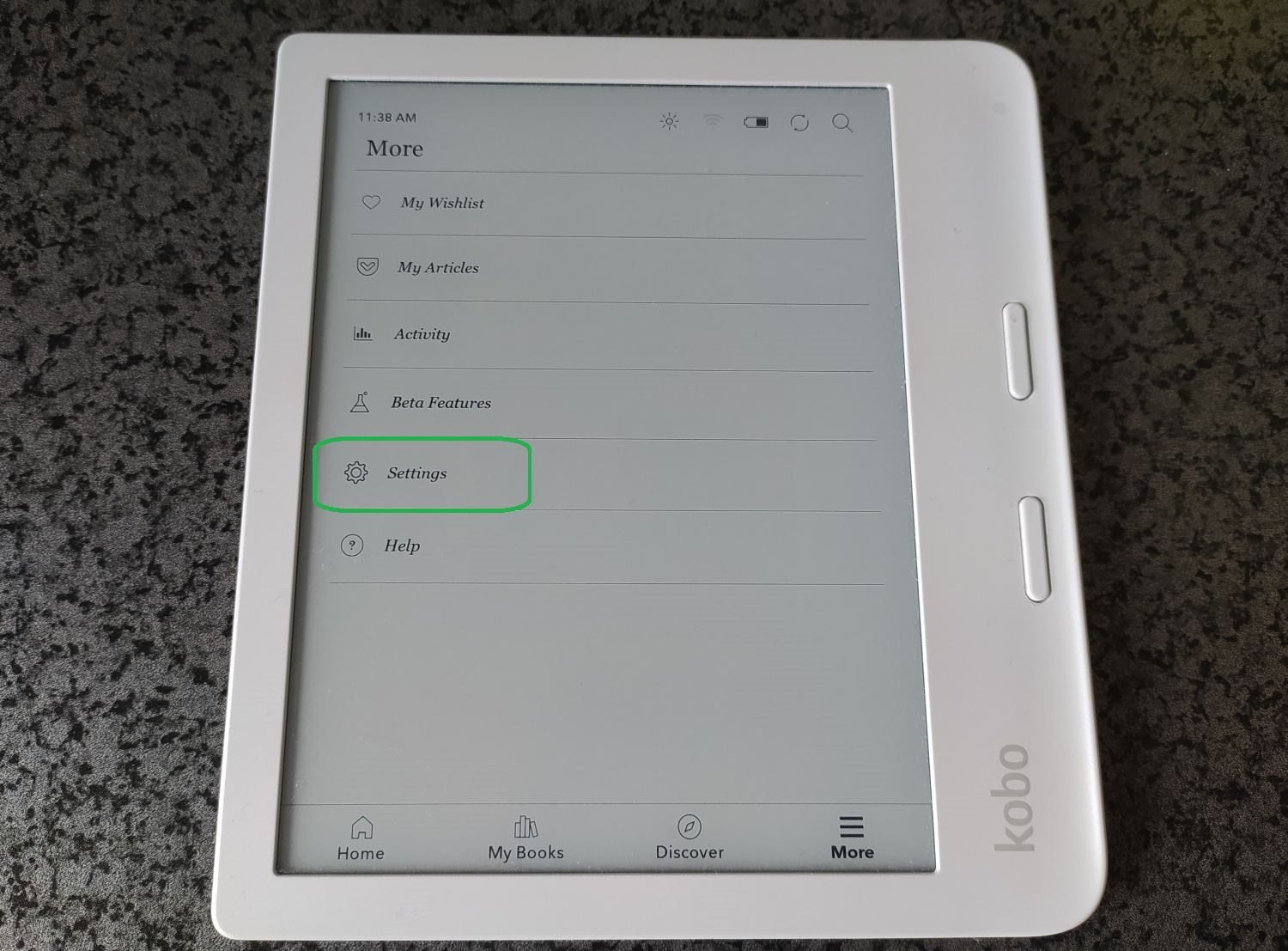
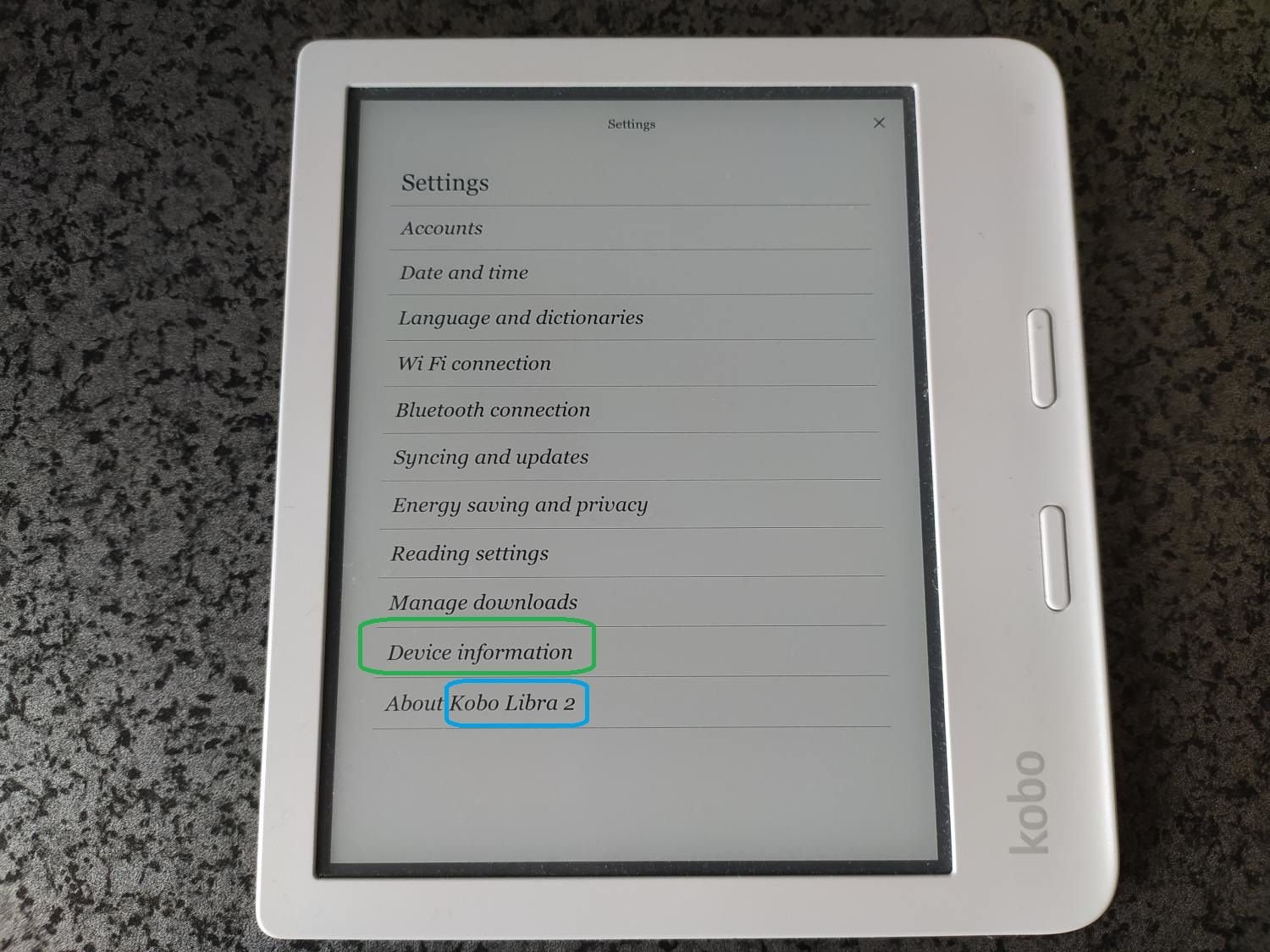
More > Settings: you’ll find the name of your e-reader at the bottom
Here’s how to find the serial number of your Kobo e-reader:
More > Settings > Device information
And screenshots to help you navigate your e-reader (on a Kobo Libra 2 e-reader, but it is almost the same on other Kobo devices):

Kobo color e-readers in 2024? Not sure…
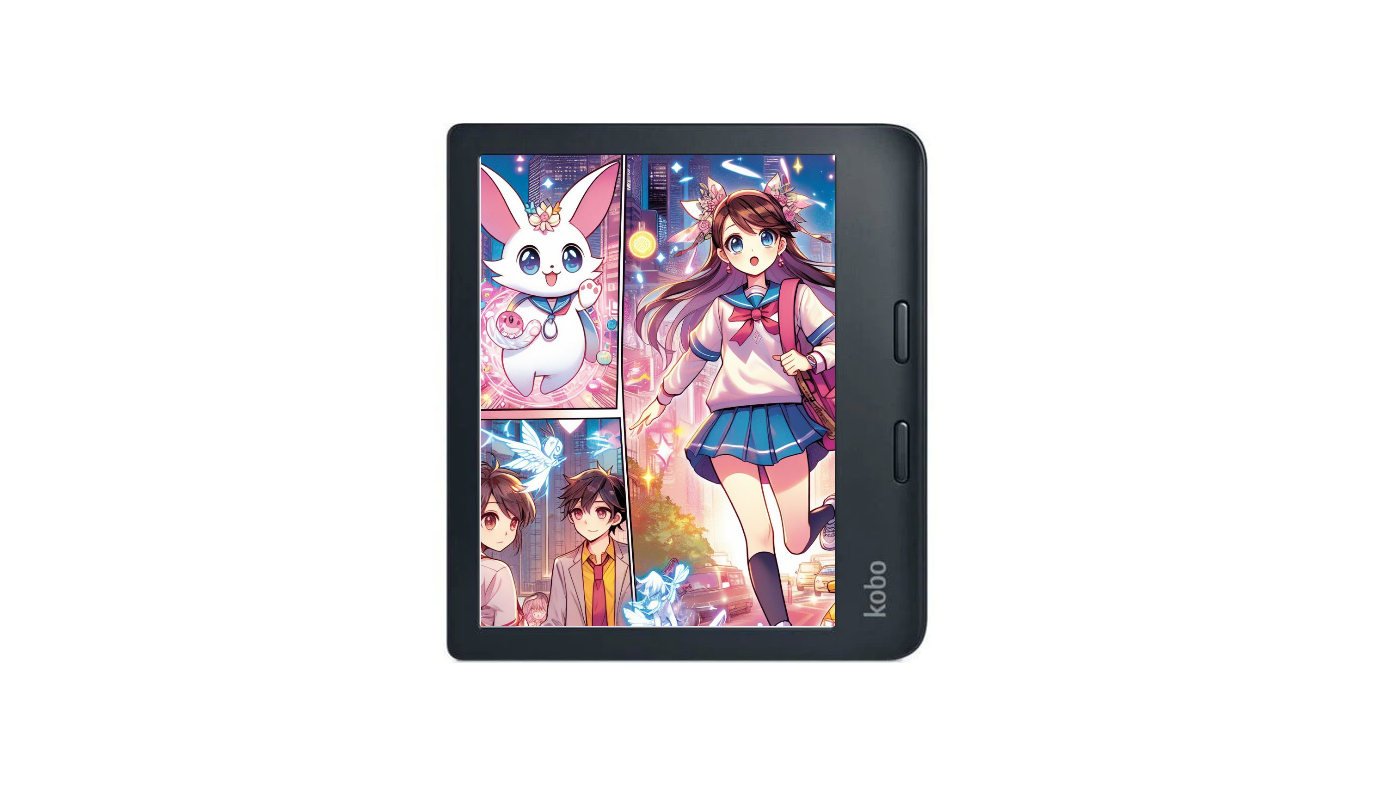
A new rumor has just emerged, suggesting that Kobo will be introducing color e-readers in 2024. But is it realistic?
UPDATE (5 april 2024): it is a Kobo Libra Colour e-reader!
As you know, Kobo will be renewing most of its e-readers this year. In any case, three new Kobo machines are expected for 2024, giving the range a fresh new look. Check the last news if you want to know more about it.
For a few days now, information has been circulating on the Internet about Kobo e-readers with color screens.
This follows the erroneous posting of product sheets for Kobo devices on a partner site and distributor of Rakuten products (Kobo’s parent company).
The devices put online are called Kobo Clara Color and Kobo Libra Color.
This means that Kobo is about to announce two color readers: a Kobo Clara and a Kobo Libra, both with color e ink screens.
What bothers me, however, is that the price remains the same as that of e-readers with black-and-white e-ink screens. So these two new e-readers wouldn’t cost any more, even though color screens are considerably more expensive to produce.

Clearly, this is unreliable information. We know that color screens are expensive, and that they are not yet produced on a large scale.
It seems unlikely to me that Kobo would release two color e-reader models at the same time at an unbeatable price. Color e-readers are mainly high-end models, like the Pocketbook InkPad Color 3, produced in small numbers and aimed at demanding readers.
As much as the prospect of a Kindle color e-reader in 2025 seems fairly certain to me, this one for Kobo seems rather unrealistic.
Note that the photo of the Kobo Libra Color e-reader is a photomontage and not a photo of a real Kobo e-reader.