Why do we read? Why do we read more? What are the advantages of reading, and what benefits does reading have for us? Here are some answers in this article.
Unlike other forms of entertainment, reading has many advantages.
When I read, I always feel a certain sense of well-being that sometimes continues for hours after a long reading session. So I looked into why and came across a lot of information on the subject that I wanted to share with you.
The first is well known: it’s an affordable pastime. Books are inexpensive and easy to borrow from friends and family, or from the library. You can even read for free (download ebooks).
With an average price of around $10, a book that will take 6 to 10 hours to read also offers a good entertainment/price ratio.
But it’s not the economic aspect of the thing that’s interesting, but the effects of reading on our bodies and, more broadly, on our lives:
reading allows you to deepen your knowledge
reading makes you more open-minded
reading helps us better understand the world around us
reading allows you to share and exchange with other readers
reading helps you understand yourself better
reading gives pleasure
reading helps you succeed in your professional life
reading helps you live longer (reading 30 minutes a day can add 2 years to your life)
reading reduces stress
reading lowers your heart rate
reading helps you earn more money (or more precisely: people who read a lot earn more on average than those who read less)
reading increases memory
reading reduces the risk of dementia
reading improves communication
reading improves concentration
reading develops analytical skills
reading increases empathy
Of course, this list is far from exhaustive. More and more studies are being carried out on the subject, and science is discovering new things every day.
I invite you to share my article with your friends and family, as fewer and fewer of us read, so spreading the word can’t hurt.
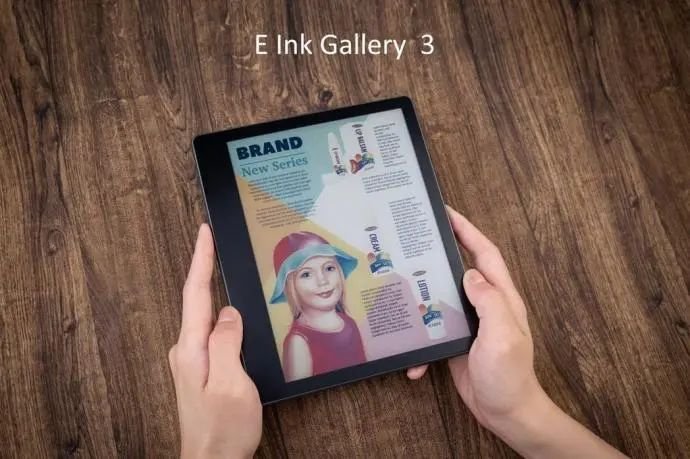
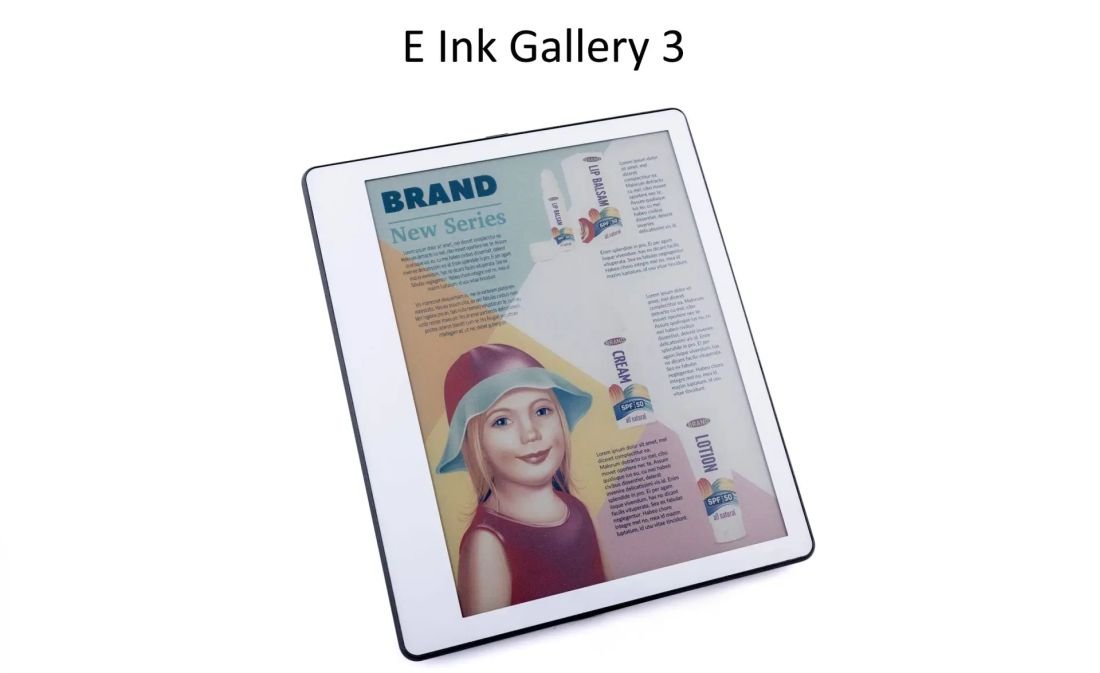
E Ink, the company that produces e-ink displays, has just surprised everyone: after announcing a new generation of Kaleido 3 color displays, they’re working on a brand new color technology with Gallery 3.
Gallery 3 is the trade name for the Advanced Color E-Paper (ACEP) color display technology.
It will therefore be possible to display 50,000 different colors on screens with resolutions starting at 8 inches. This new technology should nevertheless be suitable for smaller diagonal readers (we’re thinking of 6" to 7" machines, of course).
Unlike Kaleido’s e-ink color screen technology, Gallery 3 offers brighter colors and better resolution. Unfortunately, this screen is slower to refresh.
In practice, it takes 350 ms to refresh a screen with black and white. For color, the situation is much worse, and there are 3 options here:
A "fast" mode that refreshes a screen with color in 0.5 seconds
A "standard" mode that refreshes in 0.75 seconds
A "best colors" mode that refreshes in 1.5 seconds
In practical terms, this means that the Gallery 3 screen will take more than a second to refresh a page with the best color setting.
If you settle for a fast half-second refresh, you’ll get blander, less vibrant colors.
It remains to be seen whether future e-readers featuring this screen will be able to integrate software enabling us to choose the screen refresh mode, or whether the manufacturer will take care of this (and therefore the user won’t be able to change it).
In addition to this technical information, E Ink has announced that these new Gallery 3 color screens will be compatible with Wacom’s touch technologies (to have a touch screen) and with its own ComfortGaze lighting system, which reduces the effects of blue light during reading.
From the few visuals we have, it seems clear that this type of color screen is a clear plus over Kaleido screens.
However, it’s clear that the display of these screens will be very slow for the time being (so count on a good second to fully refresh the screen while displaying colors).
This is a major limitation, and it’s easy to see why the company is continuing to develop Kaleido color displays: they refresh much faster.
While we’ll have to wait and see before drawing any conclusions, it also seems that the Gallery 3 screen offers twice the color resolution of the Kaleido 3 screens (300 PPP for Gallery 3 vs. 150 PPP for Kaleido 3.
If this is indeed the case, Gallery 3 screens could finally make it possible to read comics comfortably on a e-reader, provided the diagonal is at least 10 inches.
Even if the screen takes a second to refresh a page, if the reading experience is as close to paper as E Ink claims, this could be a real revolution for digital reading.
If all goes well, we should soon have new images and videos to tell us more.
People are drawn to minimalism for a variety of reasons, often seeking a more intentional and fulfilling life. But what do minimalists do with books?
Not reading is out of the question, because reading has many benefits. The question of paper books still arises when you want to reduce your possessions.
First of all, let’s start with a few definitions.
Why anyone would want to become a minimalist?
People are drawn to minimalism for a variety of reasons:
Reduced stress and anxiety: Clutter, both physical and mental, can contribute to feelings of stress and overwhelm. Minimalism encourages decluttering physical possessions, leading to a calmer and more organized living space. This can have a positive impact on mental clarity and reduce overall stress levels.
Greater freedom and time: Owning less means spending less time cleaning, organizing, and maintaining possessions. This frees up valuable time and energy that can be used for more fulfilling activities, hobbies, and relationships. Minimalism also often translates to simpler routines, allowing for more flexibility and spontaneity.
Financial benefits: By focusing on needs over wants and reducing impulse buying, minimalism can lead to significant financial savings. This can free up resources for things that truly matter, such as experiences, travel, or supporting causes you care about.
Environmental concerns: Minimalism promotes mindful consumption and reducing waste. This aligns with environmental consciousness, as it encourages people to buy less, use what they have responsibly, and extend the lifespan of their belongings.
Intentionality and focus: Minimalism encourages living with intention, surrounding yourself with things that truly serve a purpose and bring you joy. This can lead to a greater sense of focus and clarity in life, allowing you to prioritize what matters most.
Personal fulfillment: Ultimately, minimalism is a personal journey towards a more fulfilling life. It’s not just about owning less, but about living more intentionally and finding joy in experiences and relationships rather than material possessions.
While the advantages of reading are undeniable, the desire to declutter can make holding onto physical books a tough call.
Here are some common strategies if you want to become a minimalist:
Curating a physical book collection
Keep only books that hold significant value: This could be due to sentimental attachment, reference value, or being a personal favorite they plan to reread.
Limit the number of books kept: This is a personal decision, but minimalists often have much smaller collections compared to the average person.
Prioritize high-quality editions: If keeping physical books, minimalists might prioritize well-made, durable editions that they appreciate aesthetically as well.
Selective buying and selling: Minimalists might only buy new books they are highly committed to reading and sell or donate books they’ve finished or no longer need.
Utilizing libraries: Borrowing books from the library is a great way to access a vast selection without adding to personal possessions.
Embracing ebooks and e-readers
E-readers allow minimalists to carry a large library with them without physical clutter. They can also borrow ebooks from libraries.
Benefits of e-readers for minimalists
Here are the pros of using a e-reader when you’re a minimalist:
Reduced physical clutter: Replacing physical books with an e-reader significantly reduces physical clutter in your home. This can lead to a more organized and peaceful living space, which is a key aspect of minimalism.
Increased portability: E-readers are lightweight and compact, allowing you to carry a vast library of books with you wherever you go. This eliminates the need to choose between bringing your favorite book and saving space in your bag.
Environmentally friendly: While the production of e-readers does have an environmental impact, studies suggest that over their lifetime, they can be more eco-friendly than printed books, especially when considering factors like paper production, transportation, and potential for book waste.
Concerns of e-readers for minimalists
Here are the cons:
The "feel" of physical books: Some readers value the tactile experience of holding a physical book and turning its pages. You can’t have the same feeling with an e-reader.
Eye strain: If you use an e-reader with a light, some people can have eye strain from prolonged e-reader use. If it is your case, you should adjust screen brightness, using nighttime mode, and taking breaks every two or three hours.
Which e-reader should I buy as a minimalist?
On the site, you’ll find a wealth of information about e-readers to help you find the one that’s right for you:
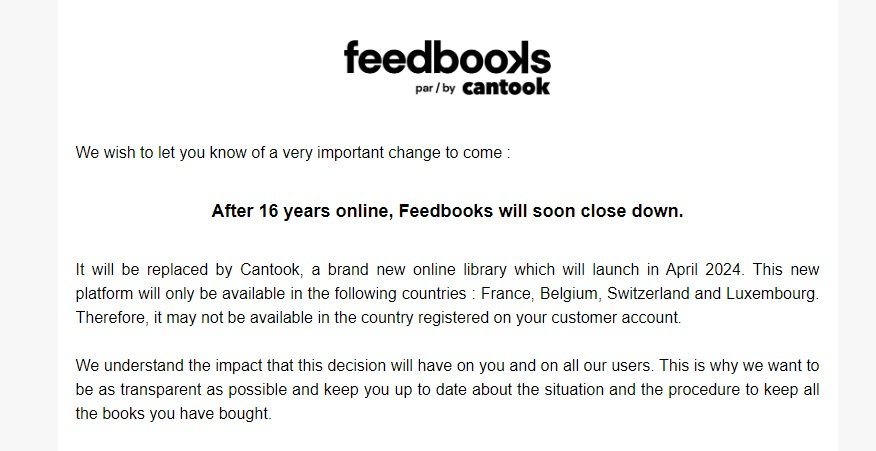
After 16 years online, Feedbooks will soon be closing its doors. It will be replaced by Cantook, a brand new online library to be launched in April 2024.
This new Cantook platform will only be available in the following countries: France, Belgium, Switzerland and Luxembourg. Therefore, it may not be available in the country registered in your customer account.
And out of luck, the new service is not available in the USA!
Since Feedbooks is going to close, it’s very important to get your books back on the platform before March 15, 2024, to save them before they disappear!
Why is it important to download your books locally?
As Feedbooks closes its doors and Cantook will only be available in a limited number of countries, it’s crucial to download your books locally to maintain permanent access to your ebooks.
Once downloaded, you’ll be able to read them offline, without depending on an internet connection or the availability of the platform.
Here’s how to download your books from Feedbooks:
Log in to your Feedbooks account.
Access your library.
Select the book you wish to download.
Click on the "Download" button.
Save the file to your device (computer, tablet, e-reader).
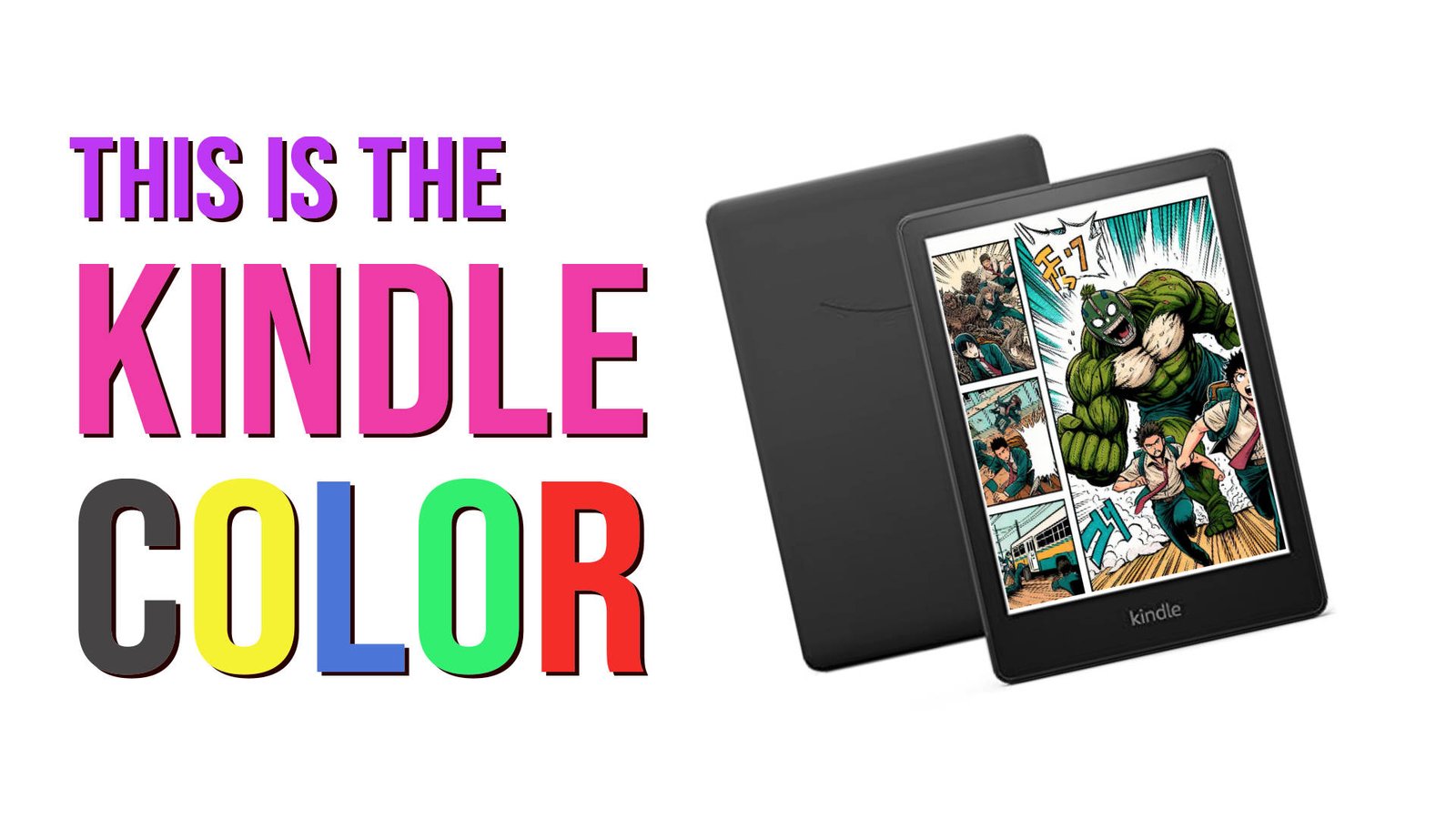
After a fairly quiet year for Amazon and its Kindle e-readers, we can expect some new e-readers in the coming months, including the hypothetical arrival of a (long-awaited) color Kindle e-reader.
Writing a news story about a rumor is always difficult, but writing a news story about a rumor concerning both the Kindle e-reader range and color e-ink screens is virtually impossible.
And yet, that's what I'm trying to do here 🙂
The facts
So, it all starts with a piece of information given by KGI Securities analyst Ming-Chi Kuo a few month ago. Ming-Chi Kuo is a trusted reference for all consumer electronics news.
So, he has published that one or more color Kindle e-readers are expected from Amazon in the next fex months.
Manufacturing of these e-readers will start in 2024, for commercial release either in 2024 (Christmas) or early 2025.
All this, then, is just a statement from a source described as "reliable", but which may be wrong.
I think that a Kindle with a Kaleido 3 is a safe bet, because both Kobo and Pocketbooks brands have released such e-readers in the last weeks. So I doubt that the new Kindle e-reader will have a Gallery 3 screen.
What we really know about the Kindle Color (the safe and the very safe)
Picture: this is a photomontage of a Kindle color e-reader
Next, we know that color screens are much more affordable now with the release of the Kobo Clara Colour and Kobo Libra Colour e-readers.
So a Kindle Paperwhite e-reader with a Kaleido 3 color screen would cost about $180, wich is not to bad!
But a simple 6-inch color Kindle would be sold for around $140 – $150 – which still makes it an affordable e-reader, given the technology involved.
What we also know is that Amazon has been investing heavily in color screens for years, and rumors of a color e-reader crop up regularly. Amazon even bought a color screen technology called Liquavista, without success.
It's clear, then, that they're interested in this subject and are actively working to bring out a Kindle e-reader with a color screen, especially as some of the software has been ready for years, such as the Kindle in Motion animated books.
Finally, we know that Amazon has made no announcement about the release of a color Kindle (at the time of writing).
Will Amazon release a color Kindle e-reader?
Here are my predictions on the subject.
First of all, I think we'll obviously see a color Kindle e-reader in the years to come. Kobo has released new color e-readers this year, so Kindle need to compete in this market.
I also think that Amazon is only going to release one Kindle color e-reader, probably at $180 in the end of the year 2024 or early 2025.
We can therefore expect a Kindle with a 7-inch diagonal screen to cost in the region of $180.
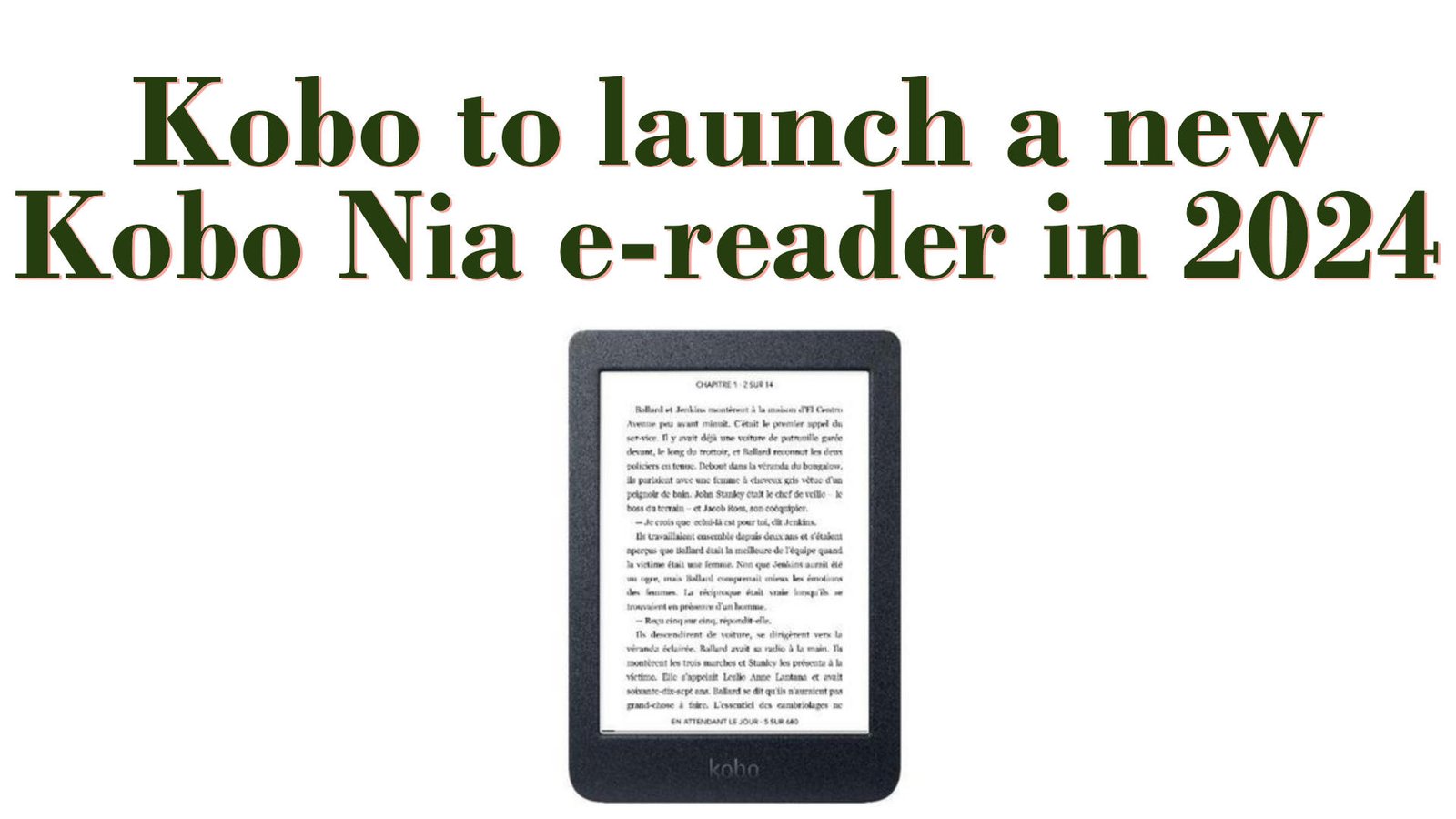
The Kobo e-reader brand has indicated that it will market a new e-reader under the reference Kobo NOIKBN367.
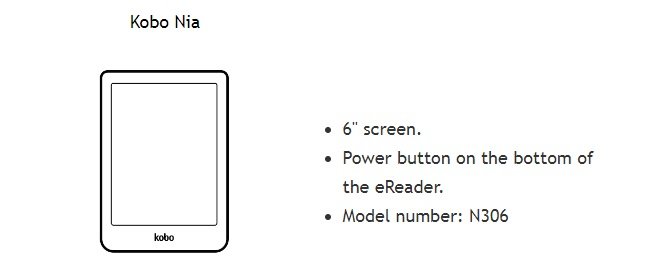
This reference NOIKBN367 is very similar to the current Kobo Nia reference NOIKBN306. So everything suggests that this new e-reader will be a 6-inch model, replacing the current Kobo Nia, which is getting on in years (to be taken with a pinch of salt, as nothing is official).
As for the release date, expect it to arrive in autumn or late 2024. We have no name for this e-reader, but it might be one of those:
Kobo Nia 2
Kobo Nia 2E
In fact, this is the third new Kobo e-reader announced for 2024. And, as yet, no e-reader has been released or officially unveiled.
The problem with the Kobo Nia is its slow system. It's slower than other e-readers, and even though this problem has been partially solved by an update, this puts it at a disadvantage compared with other affordable e-readers.
Apart from this speed issue, this Kobo Nia offers a convincing screen that displays characters well. So it's a good choice if you like the Kobo e-reader ecosystem.
So Kobo is right to release a new version of this e-reader by the end of 2024. A new Kobo Nia with a sweet price tag could well be a hit!
For the time being, however, this is just speculation, and if you're looking for a Kobo e-reader, you can turn to the current models in the range.
Onyx is an Asian company that regularly brings new e-readers to market. The year 2024 is already busy with different models announced, and it’s the Onyx Boox Kant 2 that caught my eye.
Onyx is a company that markets a lot of e-readers. Some of the models on offer are only available for a very limited time, and are sometimes impossible to find.
But Onyx also innovates and tries to offer new things in digital reading.
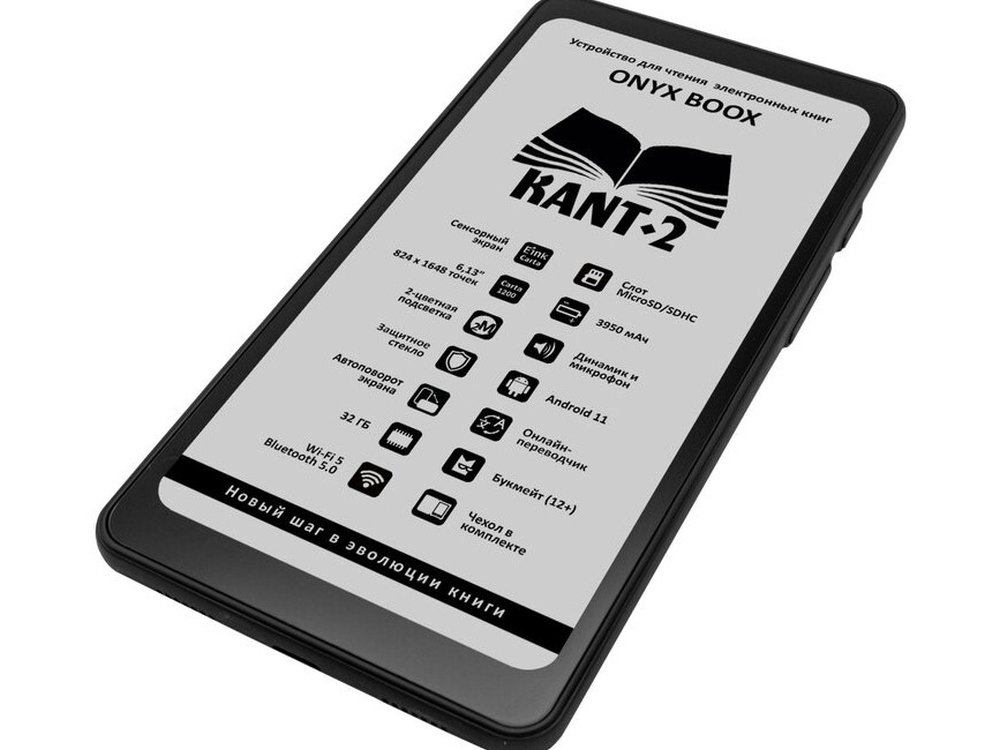
The Onyx Boox Kant 2 is one of the most original e-readers on the market, with a smartphone-like design and a 6.13-inch diagonal e-ink screen with a 2:1 ratio (twice as high as it is wide).
The touchscreen is illuminated (with "Moon light 2" blue light filter) and has a resolution of 824 x 1648 pixels. The pixel density is high enough to display characters in excellent conditions.
The Onyx Boox Kant 2 e-reader is also waterproof (with as yet undisclosed IPX certification), and the operating system on offer is Android 11.
Clearly, Onyx has based its e-reader on a smartphone, omitting the color screen and mobile connection and telephony capabilities. Interestingly, however, this is a highly portable e-reader that can easily be slipped into a pocket or bag.
The presence of a touch screen and Android 11 will enable the use of a multitude of reading applications, which was the weak point of another highly portable e-reader: the Woxter Scriba reviewed on the site.
To complement the e-ink screen, this e-reader also has a speaker, so you can enjoy your audio books on it.
Unfortunately, we have no real information on the availability of this e-reader. What’s more, as the name suggests, this is the second version of this model.
The first Onyx Boox Kant was marketed very confidentially, but this second version seems to indicate that Onyx has decided that it is a success. You should also note that Onyx has a similar e-reader named Onyx Boox Palma Mobile ePaper that you can already buy on amazon.
It is therefore likely that the Onyx Boox Kant 2 will be marketed more widely throughout the world, and why not in the USA too (a major markets for Onyx).
For those of you looking for a space-saving, affordable e-reader, I suggest you read our review of the Woxter Scriba, widely available worldwide.
This time, it looks as if the venerable Kindle Oasis is going to bow out (at least for a while) and join the graveyard of Kindle e-readers alongside the Kindle DX, the Kindle Voyage and other Kindle with keyboard.
Not only is the Kindle Oasis no longer available in the USA, but it also seems to be out of stock in many other countries – including France, a major market for digital reading.
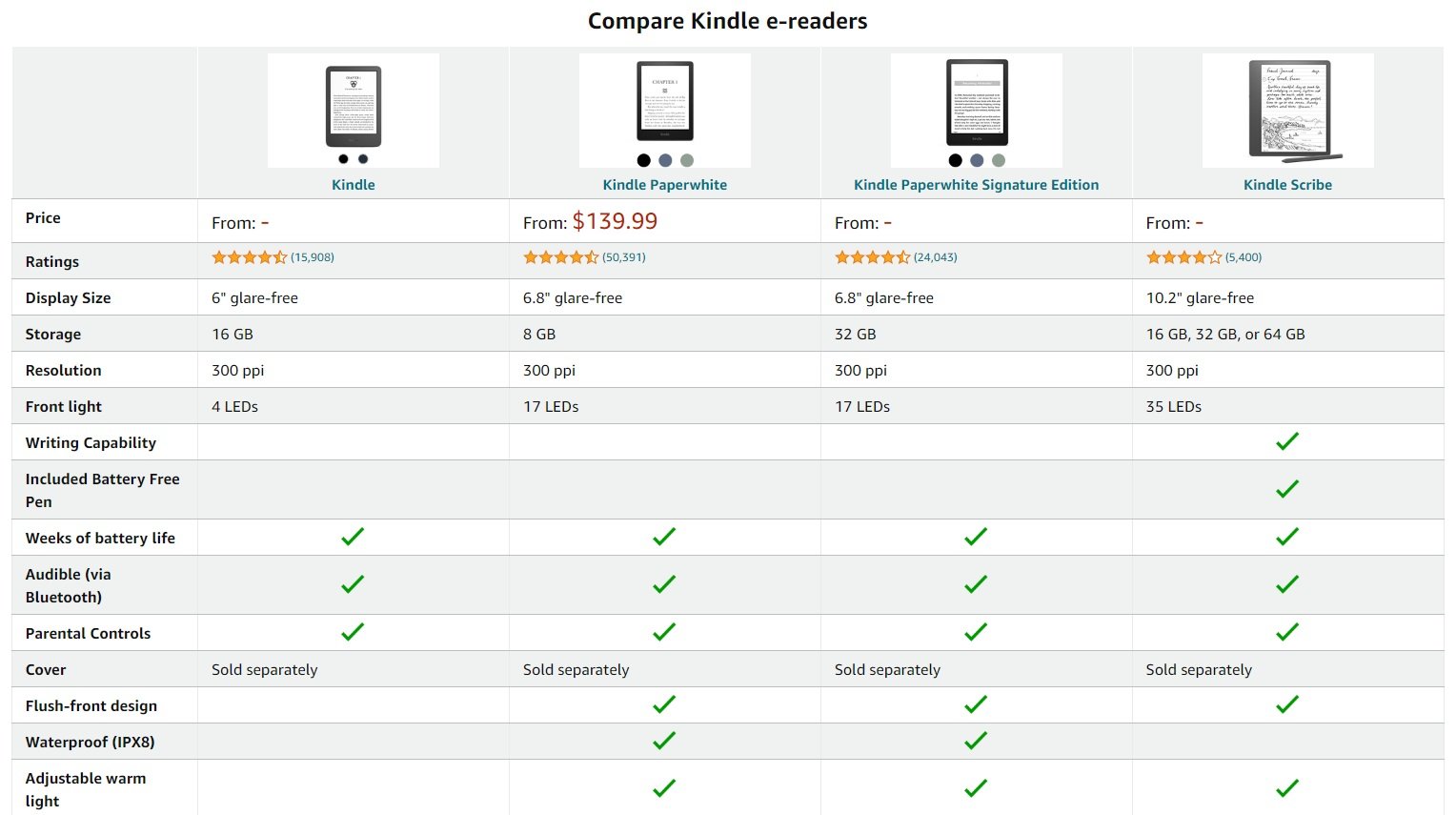
On Amazon.com, it is no longer even listed in the Kindle comparison chart available on the merchant site.
The Kindle Oasis has been available since 2016, and its current version dates from 2019. We can't say that this e-reader has had a long career, even if it has remained widely available until 2023.
The Kindle Oasis is a very high-end version of the Kindle e-readers and one of the first machines to introduce an asymmetrical design with buttons on the side of the screen. Of course, it offers all the best features found on e-readers today: 32 GB of storage, a beautiful 7-inch HD screen (300 PPI), a blue light filter, IPX8 waterproofing, etc.
Even if you can't buy a brand-new e-reader, you may still be interested in it if you're looking for a bargain or second-hand e-reader. Indeed, it can sometimes be found at a reasonable price (well, considering its launch price, which was well over $240), and it could be a good deal if you find a recent model in the $100 to $150 range.
While the Kindle was the first e-reader to make its mark on the general public, the choice of ebook-reading devices is now wide and offers interesting alternatives to Amazon's Kindle for 2025.
After a promising launch in 2007, the Kindle e-reader continues to seduce readers all over the world.
The undisputed leader, the Kindle (and its variants Kindle Paperwhite, Kindle Scribe and Kindle Oasis) is no longer the only one on this market.
Here are 3 e-reader brands that are also making a name for themselves with their convincingly functional machines.
Kobo e-readers
Designed in Canada, Kobo e-readers are well known in USA. This means you can see and handle these readers in stores, which is always a nice touch.
Kobo's journey began not as a standalone company, but as a cloud-based eReading service called Shortcovers, launched by Canadian bookstore chain Indigo in 2009. Recognizing the potential of the e-reading market, they spun off Kobo as an independent company in December of the same year.
Today, Kobo remains a strong competitor in the e-reader market, known for its diverse device offerings, competitive prices, and user-friendly interface. With a focus on continuous innovation and reader experience, Kobo continues to captivate bookworms worldwide.
Key factors for Kobo's success:
Early mover advantage in the Canadian market
Focus on price competitiveness and strategic partnerships
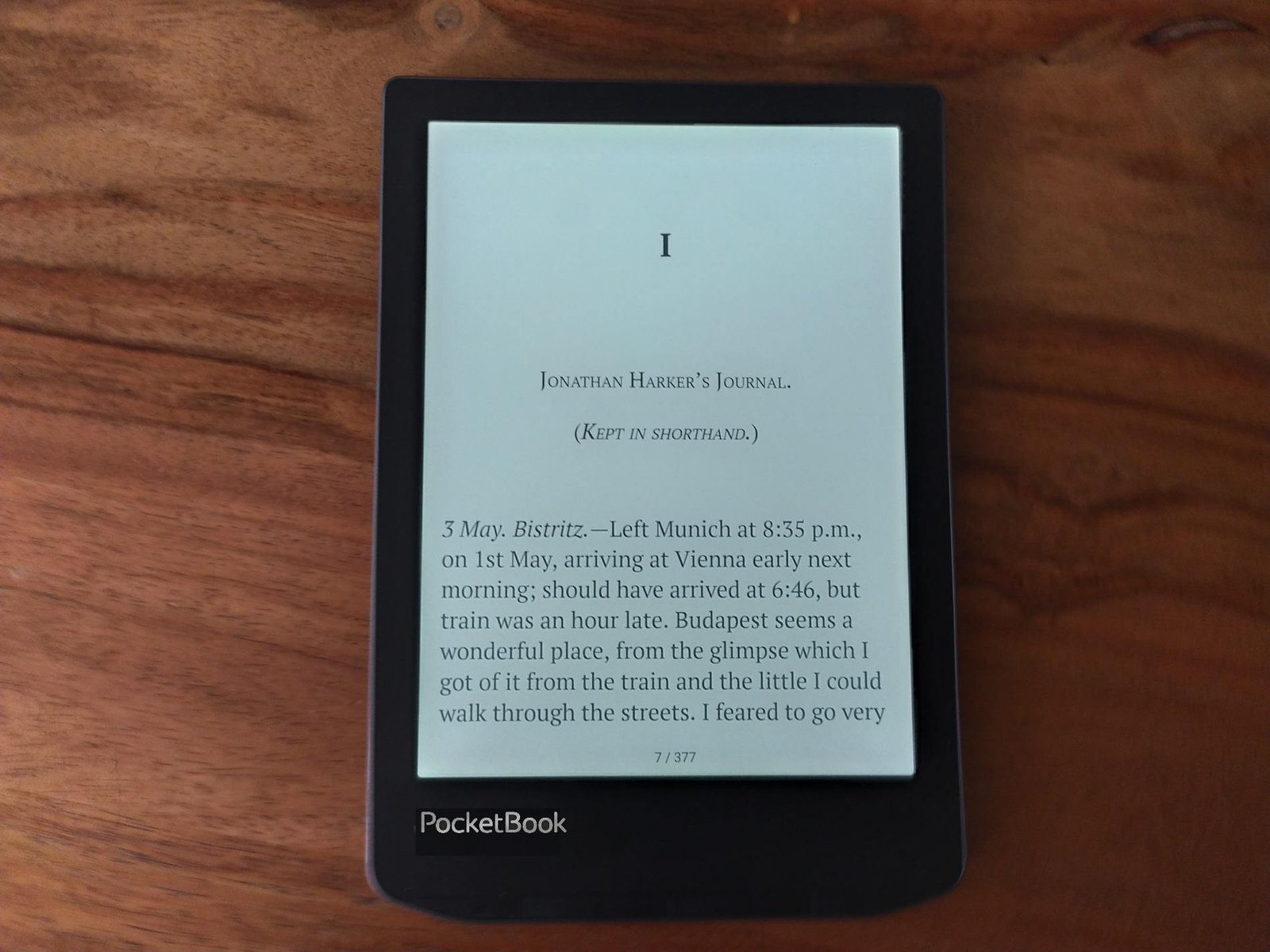
Since their inception, PocketBook has established itself as a leading global brand in the e-reader market, boasting a diverse range of devices catered to every reader's preference.
Here's what sets PocketBook apart:
Cutting-edge Technology: PocketBook utilizes the latest e-ink technology, ensuring eye-comfort and glare-free reading, mimicking the natural experience of traditional paper.
Unmatched Variety: From compact, lightweight options to feature-packed powerhouses, PocketBook offers a device for every reading style and budget.
Open Ecosystem: Enjoy the freedom to choose from millions of ebooks across various formats and online libraries, without restrictions.
Smart Functionality: Annotate, translate, listen to audiobooks, and access apps on select models, making your reading experience truly interactive.
Sleek Design: PocketBook e-readers are renowned for their stylish and ergonomic design, making them a pleasure to hold and use.
Nook eReaders are a line of eReaders developed and sold by Barnes & Noble. The first Nook was released in 2009, and the line has since expanded to include a variety of models, including the Nook Simple Touch, Nook Glowlight, and Nook Tablet.
Nook eReaders are designed for reading eBooks, and they offer a variety of features that make them comfortable and convenient for reading, such as a long-lasting battery, a backlit display, and a variety of font sizes and styles.
What is the best Kindle alternative?
Now that we've looked at the various brands that are interesting alternatives to a Kindle, you may be wondering which e-reader to choose?
It obviously depends on a number of things, such as the screen size you want, or the features you want (blue-light filtering, waterproofing).