E-reader sales figures are kept secret by the manufacturers (Kindle, Kobo, Pocketbook, etc.), but thanks to various industry figures, it is possible to make estimates of Kindle e-reader sales.
According to my estimates, Amazon will sell around 900,000 Kindle e-readers in 2023 in the USA alone.
The e-reader market is estimated at $20 billion for 2023.
While the study is not free, it does contain some interesting figures.
First of all, there's this graph showing the evolution of the e-reader market over time, with forecasts for the future:
The figure of a market worth around $15.6 billion for 2017 is also present.
With 5% average annual growth, we get a market worth $20 billion for the year 2023 (actually almost $21 billion, but I prefer to make a lower estimate).
For the purposes of this article, I'm going to take the Kindle Scribe out of the equation, since it's a recent release and its price means that it's likely to sell far less than other Kindle e-readers.
The average price of a Kindle e-reader available for sale is around $179. This price does not take into account the various discounts that often apply (Mother's Day, Christmas or Prime Day).
I therefore prefer to take an average price of $150 to have a lower and more accurate estimate of the average price of a Kindle e-reader sold.
Kindle e-reader sales
Next, we need to know the market share of Kindle e-readers.
The figure that comes up most often is Amazon's 67% market share for digital book sales. But this figure includes sales of Apple and Google ebooks.
It seems more conservative to use the figure of 70% to 80% market share for Amazon in e-book sales for e-readers. We also assume that every reader and user of a Kindle, Kobo, iPad or Pocketbook reads the same number of books.
These figures give us an idea of Kindle sales.
The numbers are :
200 million for the global e-reader market in the USA
Average price of a Kindle e-reader: $150
70% market share in digital reading for e-readers
67% market share in ebook sales
We therefore estimate sales of Kindle e-readers at around 900,000 for 2023.
This figure also only concerns the USA, and is obviously an estimate of Kindle sales.
But, according to the various studies I've been able to find, it seems to reflect reality fairly well, and the e-reader is still a device that appeals to many people.
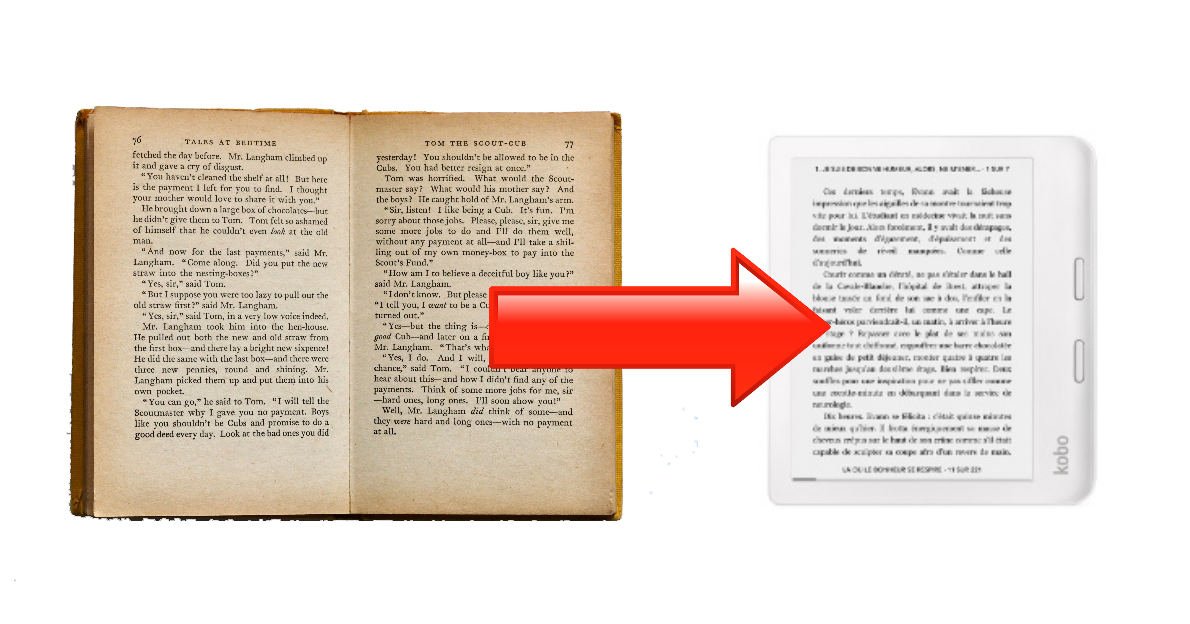
For some people, reading on an e-reader seems too modern and too far from the experience of reading a paper book. I’ve come up with a solution that transforms the display of any ebook into a style that mimics an old book.
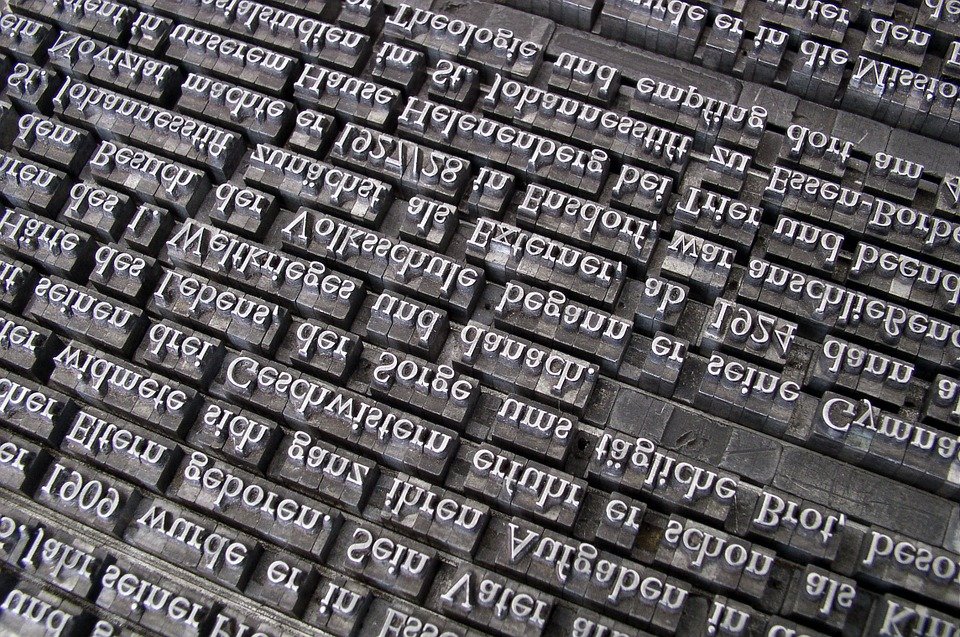
As you may know, printouts of old books have a specific and characteristic font that isn’t as clean and regular as recent printouts.
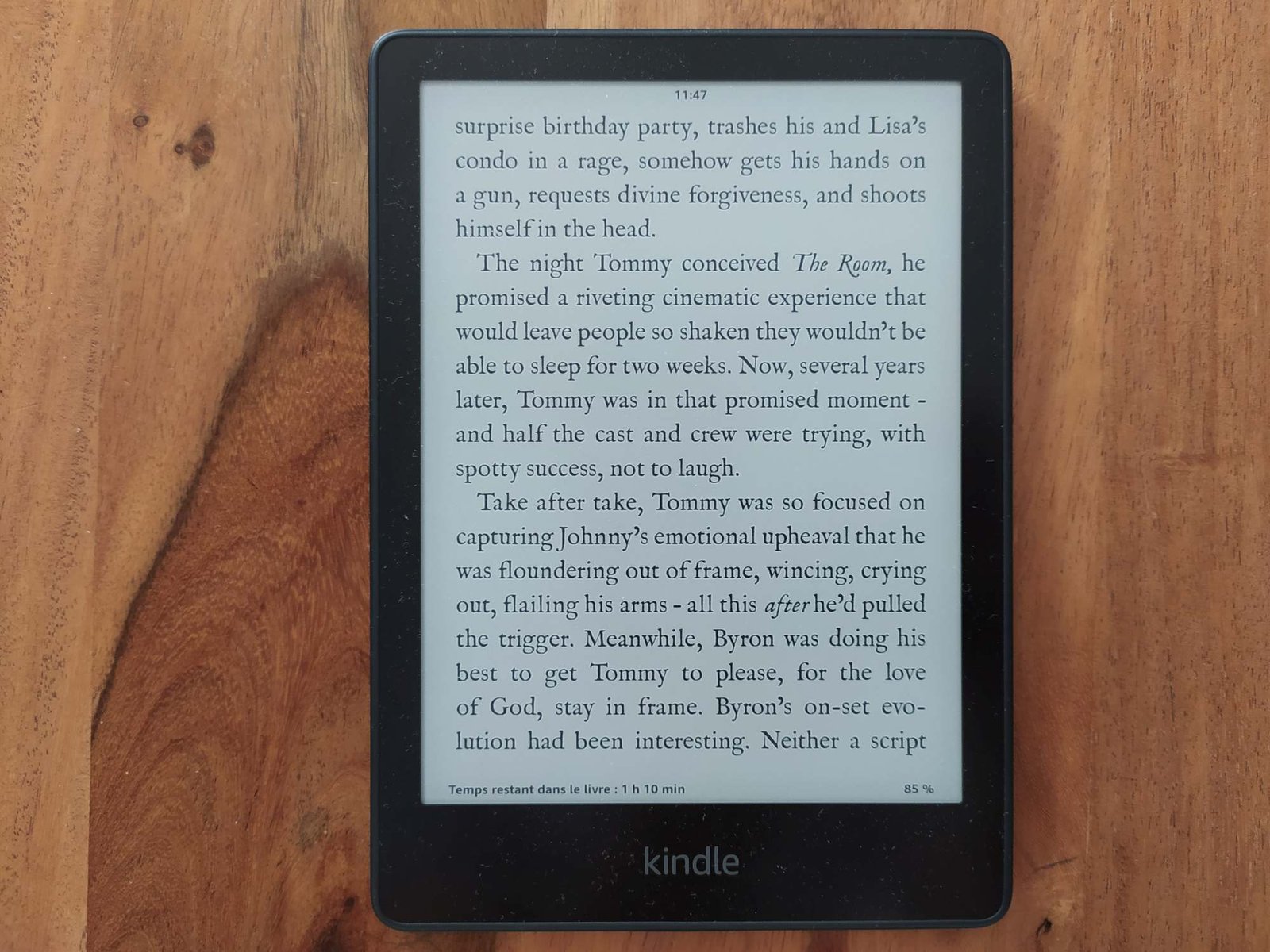
As a visual example is better than a long explanation, here’s a text displayed by the Bookerly font followed by the display we want to achieve:
If you can’t simply change the font of the page displayed on a reader, it is possible to use a new font that will reproduce some of the characteristics of these old scripts.
The best font I’ve found is called IM Fell English and can be downloaded from various websites at the following addresses:
You can use this font on your computers, but what we’re interested in here is using it on a reading device. I’ve already published several guides to installing fonts on Kindle e-readers:
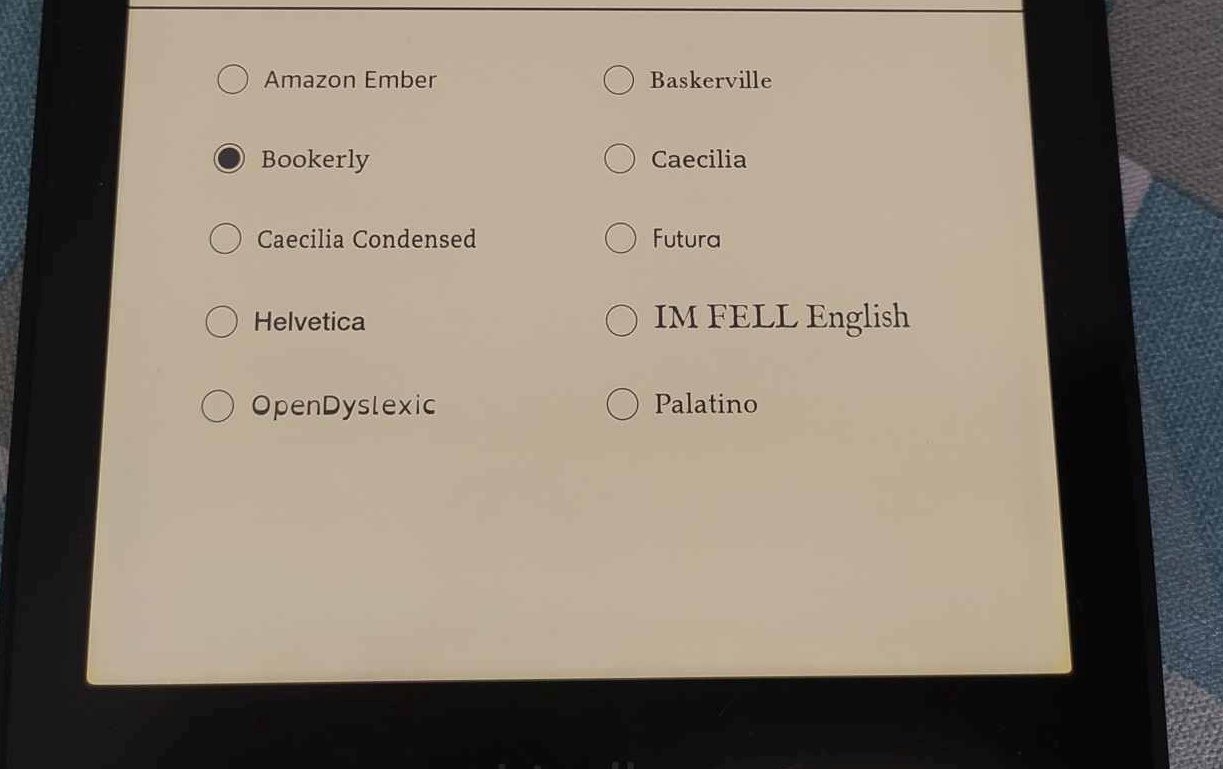
Once the font is on your e-reader, you can select it to obtain the desired display on the e-reader:
I’ve already read several hundred pages with this font, and I’m very pleased with it. The fact that the characters are not so well aligned on a line makes the text display subtly closer to that of a paper print.
The characters are also less smooth. These are details, but they all contribute to a more traditional reading experience.
However, not everything is perfect. I find the capital Q a little unsightly. The apostrophes are also a little too large.
Still, if you want to bring a slightly vintage reading experience to your e-readers, I highly recommend this font, which should work on all your reading devices.
Amazon allow the software that runs its e-readers to install custom font on your Kindle. This tutorial will help you add custom font on your Kindle, Kindle Paperwhite or Kindle Oasis.
Many e-reader brands have been allowing users to add their own fonts for a very long time. But with Kindle, it took more than 10 years to get it working.
How do you add fonts to your Kindle?
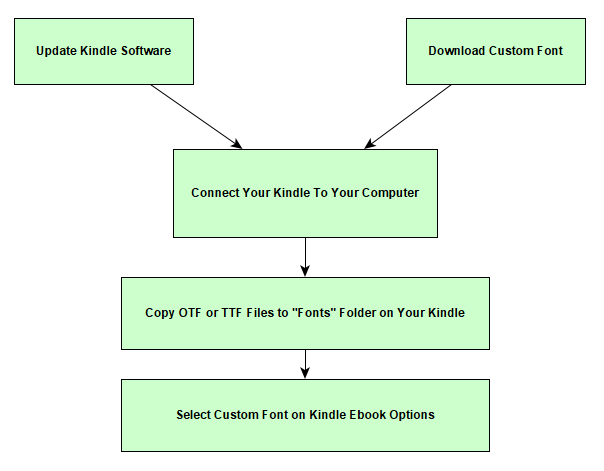
First of all, you need to update your Kindle with the latest firmware.
To do this, you need to be connected via WiFi and check that a new version is available in the Kindle preferences.
The first version of the firmware that supports fonts is numbered "5.9.6". If you see a more recent version, it should work.
Next, you need to connect your e-reader to your PC or Mac.
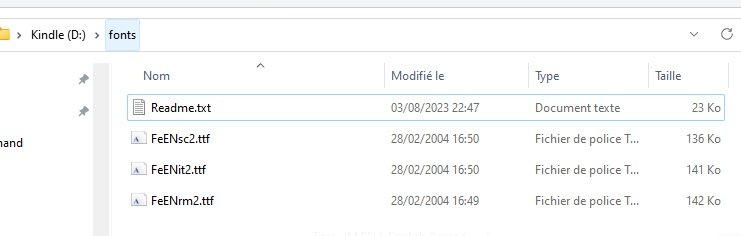
Using File Explorer, you should see a folder called "Fonts".
The word "font" refers to a typeface.
Simply add the font file of your choice to this folder.
Here’s how it looks on a Windows computer:
After logging out of the e-reader, you should be able to select this font for your Kindle ebooks.
As you can see from the image below, the new "IM Fell English" font is indeed present on the e-reader’s selection screen:
If you can’t see the font, you’ll need to check that the font format is supported by your Kindle (see below). If in doubt, you can also restart your Kindle.
What font file formats are supported on Kindle?
The fonts accepted by the e-reader can be of two different formats:
However, before you start looking for and adding new fonts, it’s worth pointing out that the default fonts for e-readers are already excellent and perfectly designed for digital reading.
So, barring exceptional cases, there’s little chance that you’ll be able to significantly improve your Kindle reading experience by adding a new font.
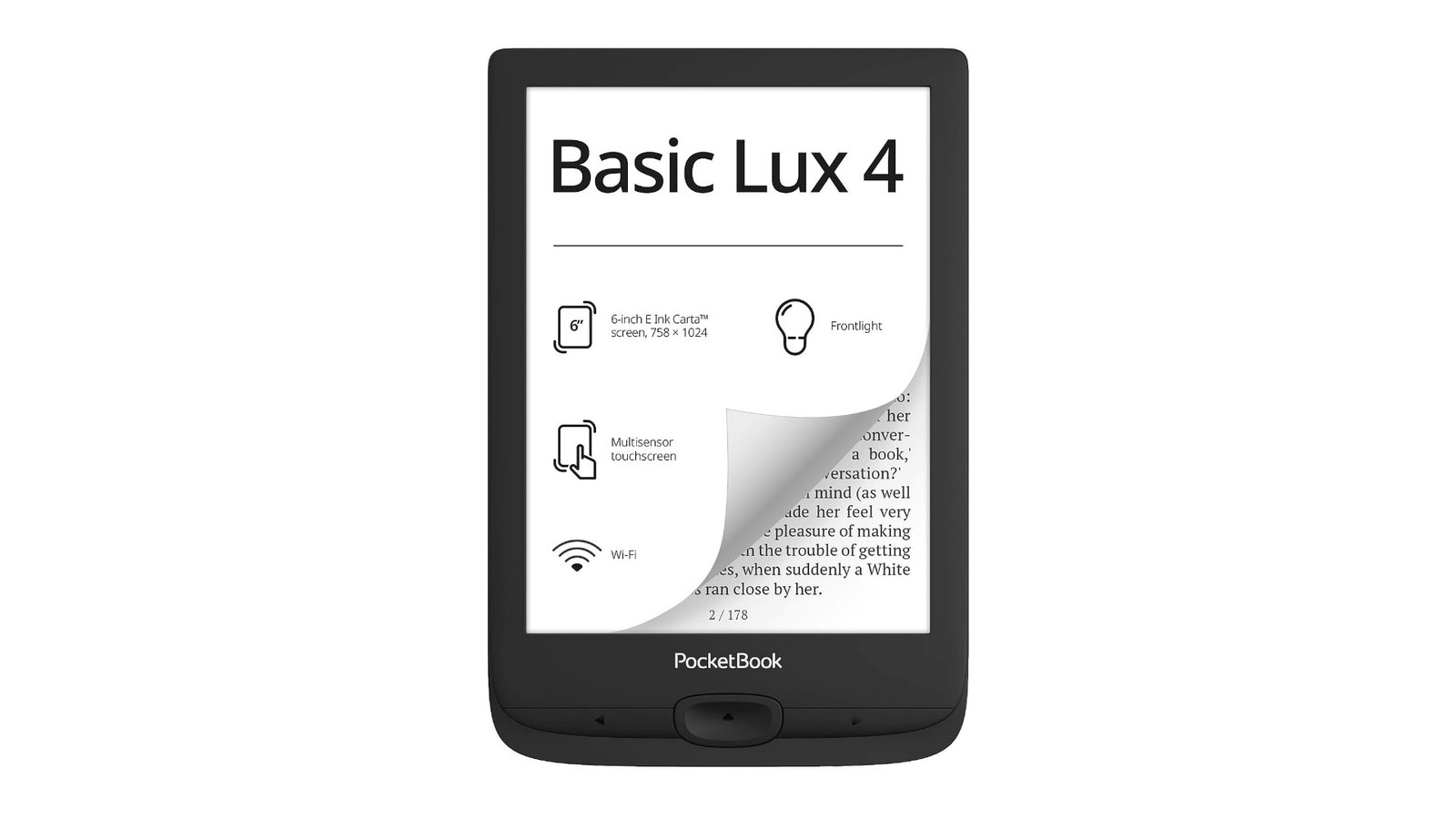
Pocketbook is redoubling its efforts to bring out new ereaders, and it’s only logical that the manufacturer should go for an entry-level model with the Pocketbook Basic Lux 4.
I was a university student for 5 years, and even though it's already been a few years, I think a e-reader could have helped me. I'm going to tell you how a e-reader can help you with your studies, and which are the best e-readers for students available in 2025.
What is an e-reader?
First of all, it's worth remembering that an e-reader is an electronic device that lets you read books while reproducing the experience of reading on paper.
Unlike other devices (tablet, PC, smartphone), they use an e-ink screen optimized for long reading sessions.
Using an e-reader doesn't tire your eyes any more than reading a paper book, so you can keep on reading for long sessions.
E-readers are a complement to paper reading, even if there are a few advantages to using one for a student (non-exhaustive list):
Access to a large number of more published works
Reads EPUB and PDF files
Average price of books lower than the price of paper versions
Small footprint (you can store hundreds of books)
Greater autonomy than a computer or touch tablet
Now that we've got the introductions out of the way, here are a few of the best e-reader I think might be of interest to students.
E-readers that can only read ebooks (digital books)
The first category of e-readers is those that can only be used to read books. As we'll see later, there are also e-readers that allow you to take notes – but these are more expensive.
So, these readers have a screen between 6 and 7.8 inches, are the most affordable and are designed for students who need to read a lot of books (literature, social sciences, psychology, etc.).
You can easily find on the site the guide to the best e-readers of the moment for a selection of excellent models.
Here are some of the best e-reader models to consider for students in 2024:
If you need to take notes during your studies, you can use a computer or a good old sheet of paper.
But these tools have their drawbacks.
On the one hand, computerized note-taking sometimes makes it difficult to draw the diagrams and other graphics you need to learn certain concepts.
On the other hand, while taking notes on paper makes it easy to create drawings, graphs and other diagrams, it doesn't allow you to quickly transfer your notes to a computer, or to carry out quick text searches.
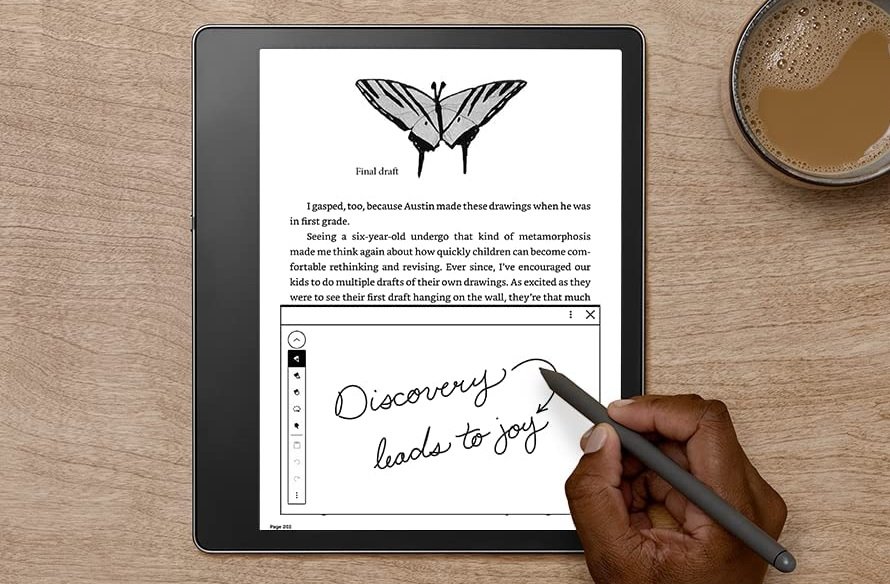
Large-format e-reader models solve this problem by offering, in addition to ebook reading tools), software that enables you to capture handwritten notes and transfer them into digital format.
Some of these devices also offer handwriting recognition to automatically transform your notes into typed documents. You can then easily share them or search within the text.
These notebook readers are unfortunately more expensive than the simpler models, but they can help you during your studies if they suit your use and learning style.
Here are some interesting digital notebook models for students in 2025:
You can, of course, go for a second-hand used or reconditioned e-reader, but you can also wait for a promotion and benefit from a better price on a new and better e-reader.
E-readers are very solid devices, and I don’t think it’s a bad idea to buy a used or reconditioned one.
In fact, I’ve had e-readers in good working order for over 10 years.
Among the e-readers I’ve used a lot, we can note a Kindle Paperwhite used intensively for 2 years, a Pocketbook Touch Lux 5 (also 2 years) and now I read on Kobo Libra 2 almost every day since its release.
By browsing the classified ads sites or the used and refurbished pages of the major e-commerce sites, you can find many models of e-reader at good prices.
Here are the e-reader models you can buy used in 2024
I’ve put together a selection of the best e-readers to buy new, and it’s clear that if you can find one of these models cheap, it’s a great opportunity.
Here’s my selection of the best values (because they’re good e-readers):
Whether a protective cover is sold with the e-reader (this can be a plus, as a new protective cover can cost $30)
General condition of the case
Screen condition (scratches, poor lighting, etc.)
If you can, also ask whether the e-reader has been transported a lot (public transport, for example).
Generally speaking, a e-reader that has been kept at home has a better chance of being in good condition.
You should also ask about the price of the new e-reader or the new price of its replacement model.
For example, the Kobo Clara HD has been replaced by the Kobo Clara 2E. The Pocketbook Touch Lux 4 has been replaced by the Pocketbook Touch Lux 5, and so on.
If you put forward the argument that the e-reader is no longer on the market and that a new version exists, it may be easier to negotiate a good price.
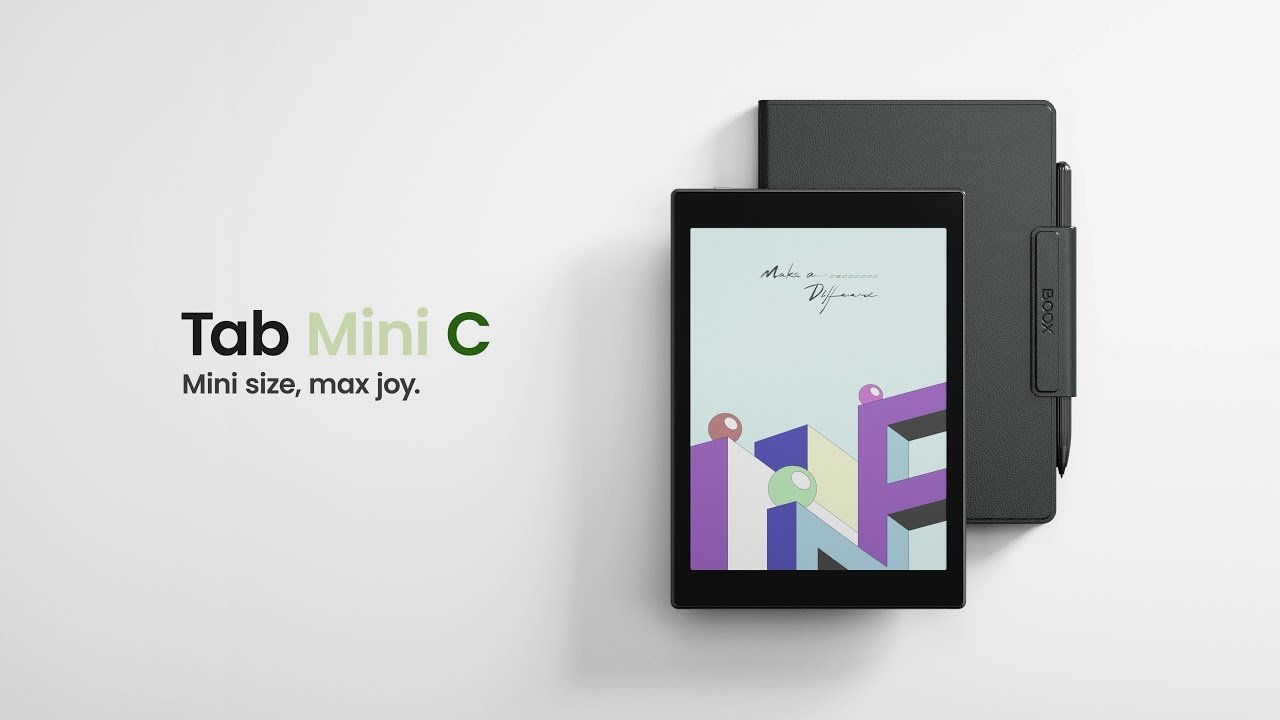
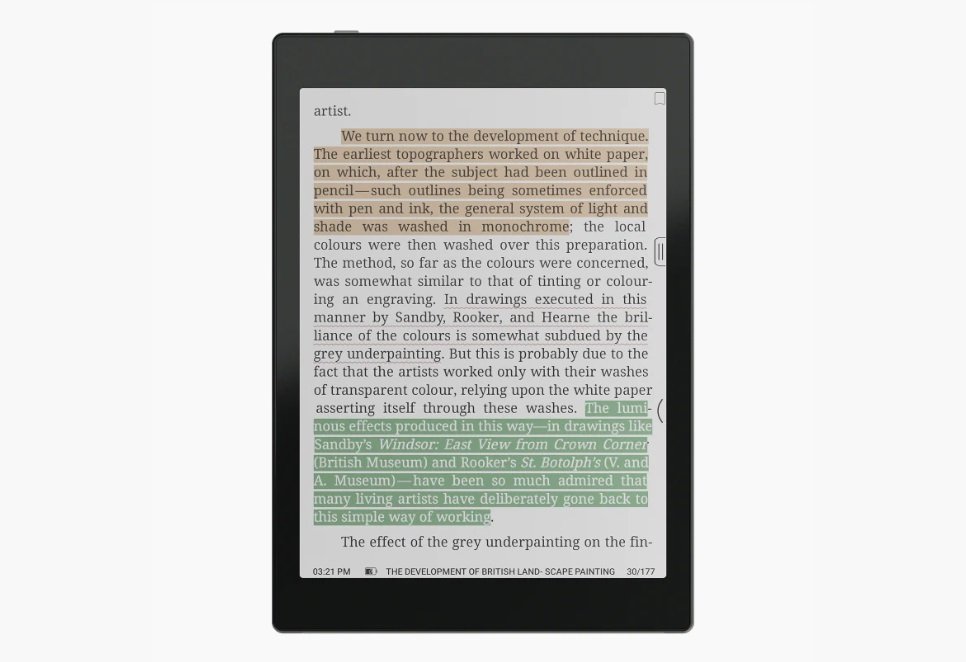
The Onyx Boox Tab Mini C is the first 7.8" color e-reader available with the latest generation Kaleido 3 e-ink screen. While its price may be a little steep, it does have a number of assets that could make it attractive.
The big recent innovations in e-readers come almost exclusively from Asia, and this Onyx Boox Tab Mini C is no exception.
Indeed, while classic brands such as Kindle, Kobo and Vivlio capitalize on tried-and-tested, reliable e-reader formulas, Asian manufacturers vie with each other in their ingenuity to offer ever more, even if it means sometimes going a little too fast with software that isn't always up to scratch or intuitive.
In any case, this Onyx Boox Tab Mini C is a reading device with a 7.8-inch screen featuring Kaleido 3 technology, the latest color electronic ink screen.
After months of announcements from E Ink (the company that designs these color screens), we'll finally be able to find out more and see whether or not there's a big difference with the previous generation.
This e-reader is equipped with Android 11 and Google Play. This means you can install any reading or productivity application you like.
You can therefore use the Kindle or Kobo application (for example), on this Onyx e-reader to access (and read) your ebooks already purchased on these stores (or your old e-reader).
The Onyx Boox Tab Mini C reader comes with its own ebook reader, which already supports many formats. But, if this one doesn't suit you, there's nothing to stop you using another, like Aldiko, among a selection of good reading apps for smartphones and tablets.
There's also a whole range of software that lets you take notes and export them as PDF files.
So we're on to something very classic, since a new Chinese e-reader of this type is offered almost every month (just check out the latest news on the site to find out for yourself).
We're back to what seems to make the success of these machines, which are halfway between a reading device (for reading books) and a productivity tool (stylus and note-taking system):
A reader with a large e-ink screen (color or not)
A stylus
An Android system for adding applications
The originality of this e-reader, however, comes from its new Kaleido 3 color screen. Fortunately, even though I wasn't able to get my hands on this e-reader, the videos available on the Internet clearly show an improvement over the previous generation of color e-readers (including the Kaleido Plus screens found in the Pocketbook InkPad color 2).
From my observations, the reading part is still limited by the color screen. Pages of text appear darker (and blander) than the text displayed on a dedicated e-reader such as the Kindle Paperwhite, Kobo Libra 2 and even the Pocketbook InkPad 3 (or the version 4 also available).
In my opinion, this isn't a problem with the Onyx Boox Tab Mini C in particular. It's more a feature of the technology used here.
The good news is that color display has progressed considerably. This Kaleido 3 screen displays colors that are brighter and richer than other older-generation color readers.
So, for the time being, this color e-reader is the best option available on the market for enjoying your comics, mangas and color PDF documents.
So, if you're looking for a color e-reader and don't mind buying an Asian machine, this Onyx Boox Tab Mini C could tempt you.
But be warned, you'll have to pay a hefty price for it, and expect to pay about $450 for this Onyx Tab Mini C e-reader.
The Kaleido Plus screen is a second-generation color screen similar to that of the Pocketbook Inkpad Color 2. So it's not the most recent technology (which is Kaleido 3), but it's not the oldest either.
The big advantage of this e-reader is the Android 12 system, which enables new applications to be installed.
While the e-reader offers a default reading application for your ebooks and PDF documents, it will still be possible to install applications from Kindle, Kobo, Pocketbook and others.
But, as always with this type of e-reader, it's not a machine optimized for reading. The reading experience is therefore a compromise when using the Kindle application (for example).
This will be the Android version available for smartphone or tablet, and not the simplified reading interface available on Kindle e-readers.
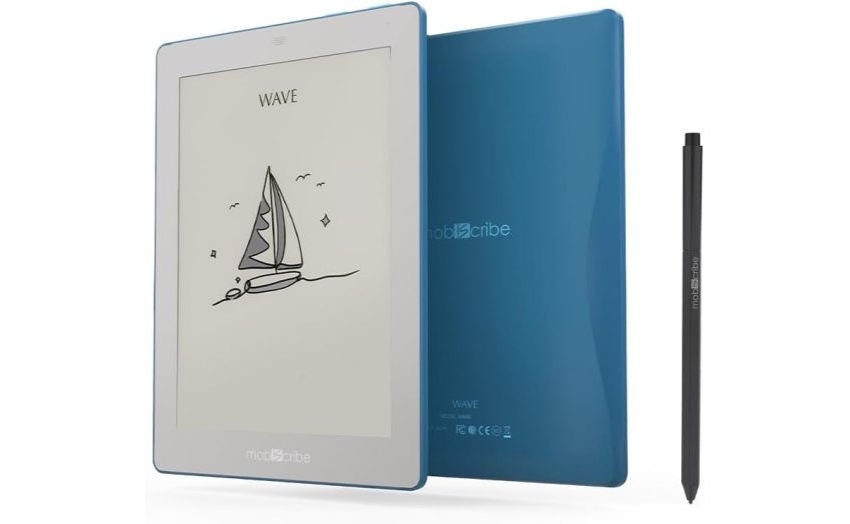
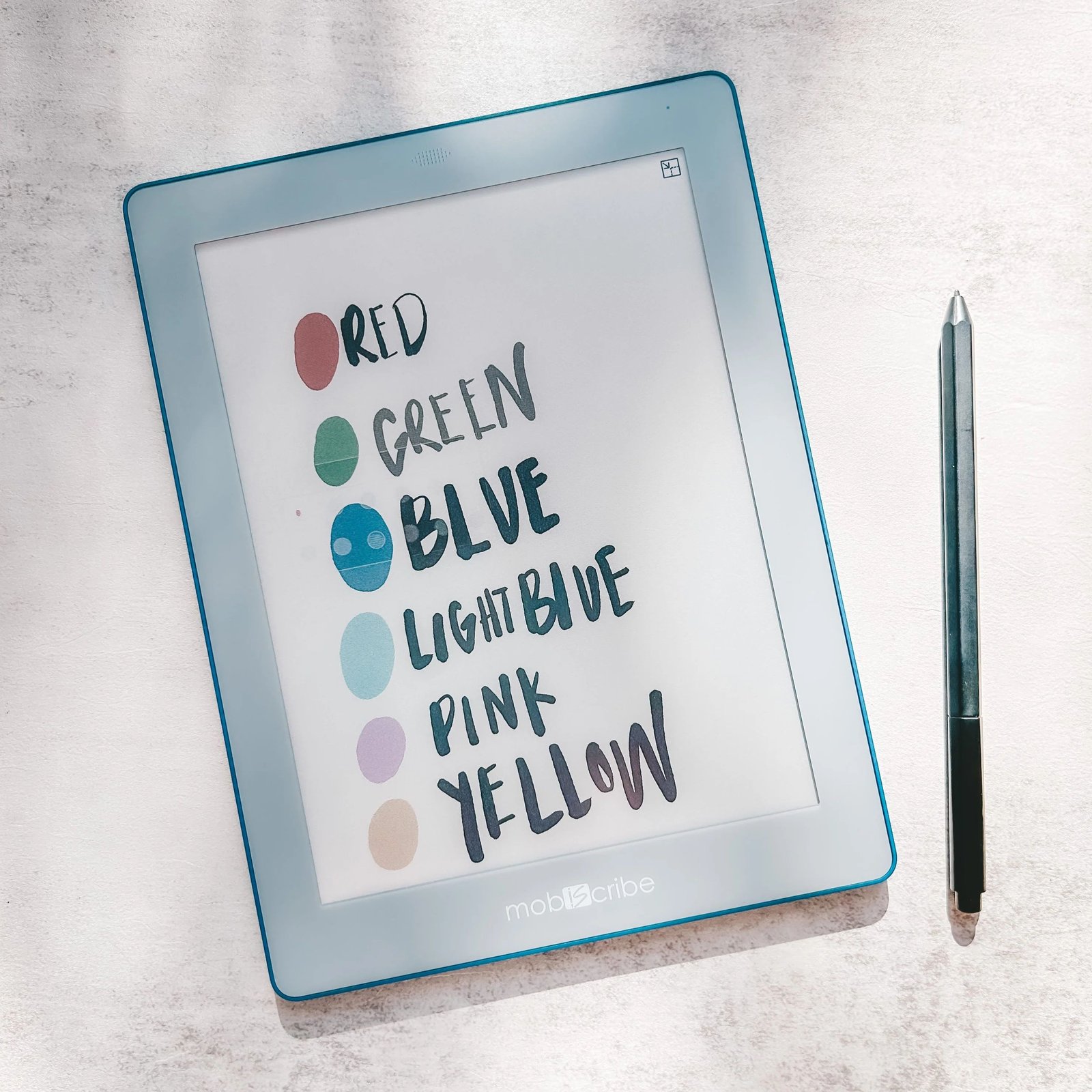
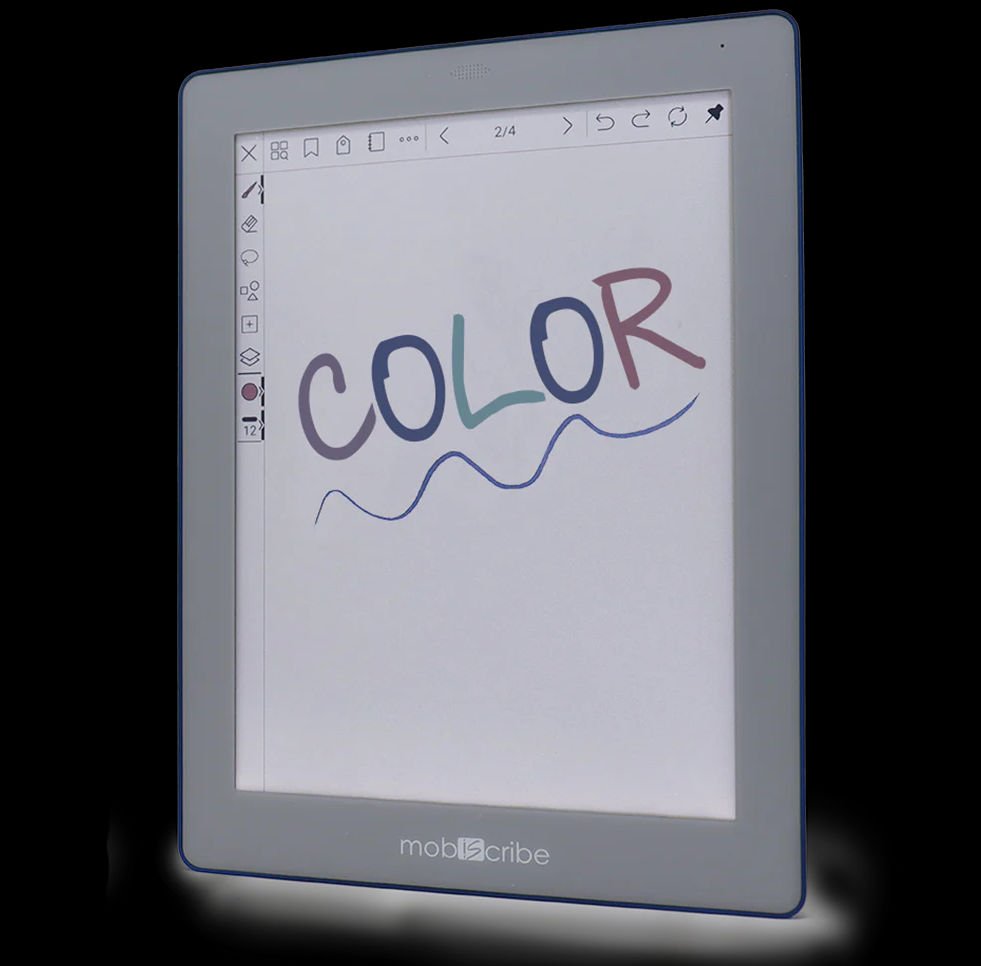
That said, the Mobiscribe Wave Color is primarily designed as a productivity tool. A stylus for note-taking (Wacom technology with 4096 pressure levels) is supplied with the e-reader.
The color screen, though limited, makes it easy to consult and annotate PDF documents.
For comic book readers, this Mobiscribe Wave Color may also be a good reading aid, since the PDF format is well supported. Given the size of the color screen (7.8 inches), we can imagine using this e-reader to read mangas and comic books.
Here are the Mobiscribe Wave Color's technical specifications:
7.8-inch screen with Kaleido Plus electronic color ink
Resolution: 1404 x 1872 for black & white (300 PPP), 468 x 624 for color (100 PPP)
Storage capacity: 64 GB
RAM memory: 4 GB
Wifi
Bluetooth for connecting headphones or speakers
Speakers
Android 12
IPX7 certification (water and dust resistant)
2500 mAh battery
Wacom stylus with 4096 pressure levels
This Mobiscribe is equipped with speakers and Bluetooth connectivity, so it's also possible to play music or audio books.
This Mobiscribe Wave ereader is therefore ideal for mixed use: note-taking and reading.
It's worth noting, however, that you'll need to be familiar with the Android system to use this machine, as it won't be as easy to get to grips with as a dedicated reading device (Kindle, Kobo, Pocketbook, etc.).
For a price equivalent (or almost, you'll have to reckon with between $300 and $400) to the larger black-and-white note-taking e-readers (Kindle Scribe or Kobo Elipsa), the choice isn't an easy one.
On the one hand, you've got a bigger screen and the ease of use of the mass-market e-readers available everywhere, and on the other, you've got a e-reader with a color screen but more obscure and less well distributed (so customer service may not be up to scratch).
For work, I think the following e-readers are more appropriate:
We already know that updates are regular for these models, which won't be the case for the Mobiscribe Wave Color (in my opinion).
On the other hand, if you like a bit of tinkering and you're desperate for a color screen (e-ink) at an attractive price, this Mobiscribe could be just what you're looking for.