Unlike some devices, e-reader prices tend to move up rather than down, and with few exceptions they keep climbing year after year. But why are e-readers so expensive?
TL;DR: E-readers stay expensive mostly because of one part: the e-ink screen. A single company, E Ink (owned by Taiwan’s Prime View International), controls more than 90% of the e-reader screen market. It got there by buying up nearly every rival technology, creating a near-monopoly that keeps prices high. Bigger players like Samsung tried and gave up, because e-ink is hard to manufacture at scale and the market is much smaller than the one for LCD or OLED screens. Prices probably won’t fall until a new competitor, most likely from China, enters the market.
You’ve probably noticed that the price of large-screen TVs keeps dropping year after year. That’s not the case for e-readers, whose large-screen models keep selling for a lot, even years after they first hit the market.
To understand this, you first have to look at what costs the most inside an e-reader: the e-ink screen.
A single 10-inch screen can already cost around $200 if you buy it at retail. Even though the price is lower when it’s used to build an e-reader, it already puts a heavy cost on the final device.
When you look into who makes the e-ink screens in e-readers, you quickly land on E Ink, a Taiwanese company that controls between 60 and 70% of the electronic paper market, and more than 90% of the e-reader segment. The real figure is probably closer to 95% or 98%.
For example, screens from this company are found in Kindle, Kobo, and Pocketbook e-readers. The “Carta” and “Kaleido” type screens come from E Ink.
Electronic ink was invented in 1997, and its patent expired in 2017.
Today, any company could come and compete with E Ink in this segment and offer e-ink screens that rival the ones E Ink supplies.
So why don’t e-reader prices go down?
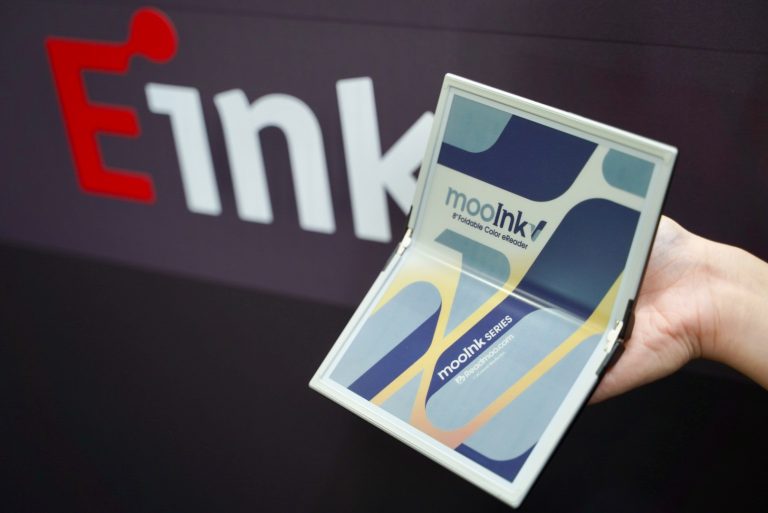
The reason is fairly simple: E Ink was bought by the company that manufactures E Ink screens, Prime View International, the largest display maker in Taiwan. To put it plainly, it’s a bit like the factory buying the technology (source).
At the same time, Prime View International “simply” bought up every competitor that could pose a threat to its e-ink screen manufacturing:
- Philips “e-paper” screens in 2005: Prime View International acquired Philips Electronics’ e-paper business and partnered with E Ink to supply e-reader screens, including the Sony Reader and the Kindle 2 and Kindle DX.
- Hydis Technologies in 2008: it acquired 74% of Hydis Technologies in Korea, quadrupling its production capacity for the transistor backplanes used in e-paper. (source)
- SiPix (2012): in August 2012, E Ink signed a definitive agreement to buy the majority of shares in SiPix Technology and its subsidiary SiPix Imaging, makers of electrophoretic displays based on micro-cup technology, located in Fremont, California and Taiwan. (source)
In this context, it’s Prime View International that holds practically all of the electronic ink technology, and it can therefore set its own prices to squeeze the most out of its investments. It’s a monopoly.
But why don’t other big companies come and compete with Prime View International and E Ink?
There have actually been attempts, and big companies like Samsung took an interest in this technology.
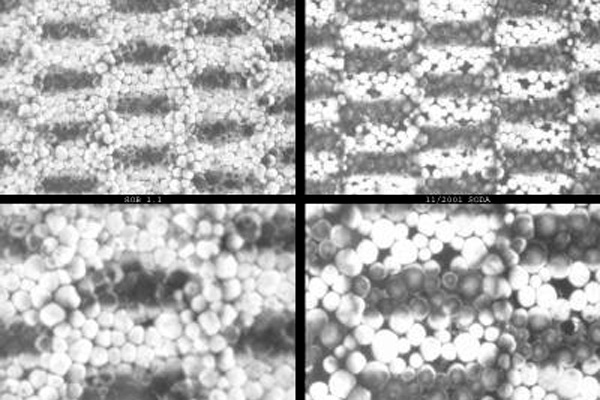
But there’s a real technical difficulty with electronic ink: filling millions of microcapsules uniformly, with no defects, is very tricky, and failures increase with screen size. Many companies (Samsung, Qualcomm, Xerox, Clearink, and others) gave up.
Another good example is Liquavista, a company founded in 2006, bought by Samsung in 2010, then by Amazon in 2013, and finally shut down in 2018 without anyone ever knowing what became of the technology.
On top of that, the market isn’t as lucrative as the one for the LCD or OLED screens you find everywhere. So it’s just not worth the effort for these big companies.
That doesn’t mean other companies don’t make e-ink screens, but they’ve simply moved away from e-readers to focus on industrial uses, supplying tools and signage hardware. Here are a few examples:
- Guangzhou OED Technologies (China): makes screens for the packaging, advertising, signage, labels, and smart card sectors, with products exported to more than 20 countries. Its main focus stays on electronic shelf labels (ESL) and signage rather than consumer e-readers.
- Pervasive Displays (Taiwan): an E Ink partner, focused on displays for industry and healthcare.
- DKE (China): a factory that manufactures under license but doesn’t seem to develop its own technology.
- Tianma (China): makes small screens for industry, and seems to focus on automotive.
So that’s why e-readers are expensive: it’s essentially because of a monopoly tied to the manufacturing of e-ink screens.
And it’s likely to last a few more years, unless there’s a big announcement from a competitor, probably Chinese, that starts selling an e-reader screen. Maybe it could come from Guangzhou OED Technologies?
Pingback: E Ink: the delayed launch of new e-readers is creating tension – World of eReader